
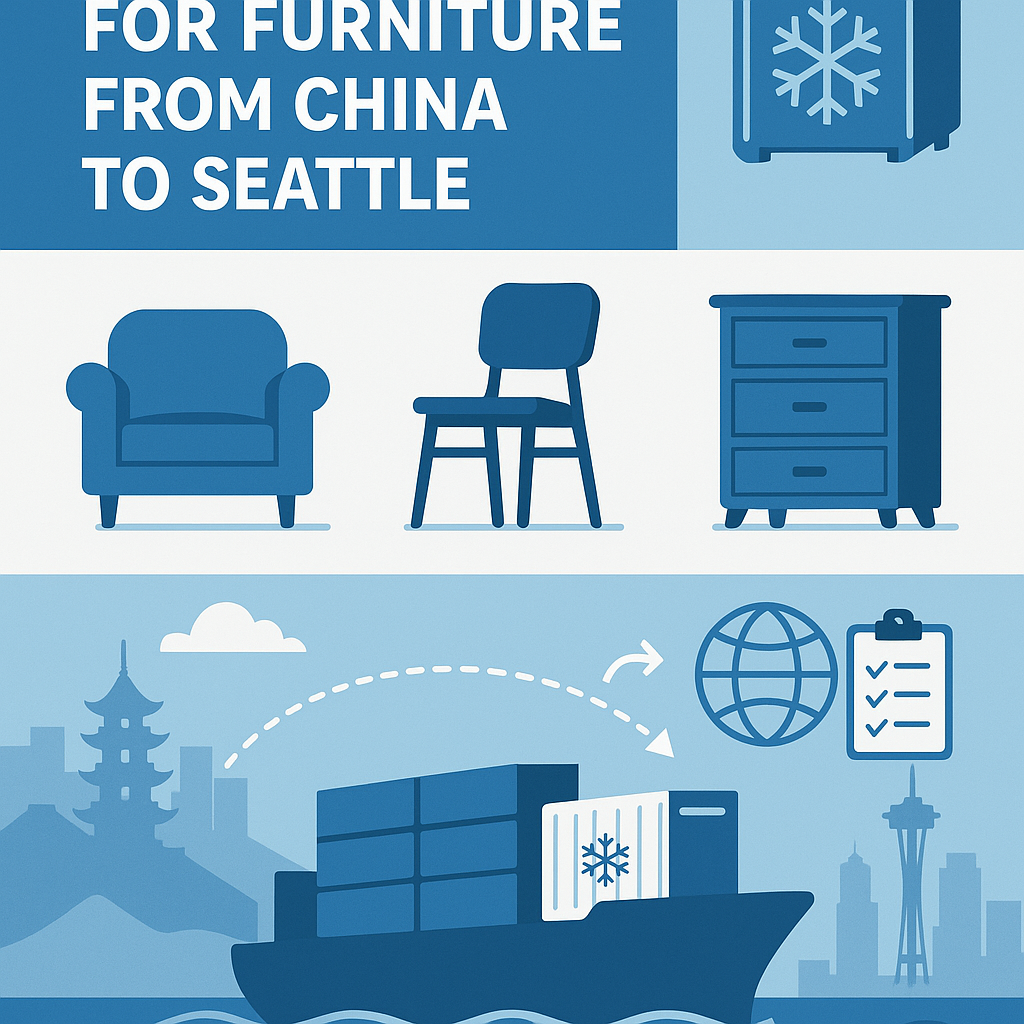
Because temperature-sensitive wooden furniture requires steady transport conditions, many importers closely evaluate the Reefer FCL freight rate for furniture from China to Seattle to keep budgets predictable and transit conditions safe. Although the rate varies with seasonality and carrier availability, shippers can still secure stable pricing with structured planning and early space booking. For deeper route insights and logistics solutions, you can also refer to our homepage at Top China Freight.
Why Do Reefer FCL Freight Rates Matter for Furniture Shipments?
Furniture made of solid wood, veneers, or natural materials reacts strongly to humidity and temperature fluctuations. Therefore, a reefer container keeps moisture levels stable while preventing mold and swelling. Moreover, a predictable freight rate allows buyers and supply-chain teams to plan procurement budgets more accurately, especially when shipment volumes spike before major U.S. retail seasons.
What Factors Influence the Reefer FCL Freight Rate From China to Seattle?
Although furniture is non-hazardous, the logistics behind reefer transport introduce several price-shaping variables.
Key Pricing Components
- Power & Amplification Charges:reefer containers consume more energy at ports
- Carrier Rotation & Sailing Demand:peak seasons raise the base rate
- Furniture Dimensions & Packing Density:oversized pieces reduce cost efficiency
- Cold-Chain Availability:reefer slots are limited and sell out quickly
Additionally, inland haulage from manufacturing cities — such as Foshan, Dongguan, Ningbo, and Quanzhou — affects the final cost.

What Are the Typical Ports Used for Reefer Furniture Shipments to Seattle?
Most exporters of wooden and upholstered furniture consolidate loads in three major coastal hubs:
- Shanghai – best for East China furniture suppliers
- Ningbo – strong for manufacturers in Zhejiang and Fujian
- Shenzhen/Yantian – key hub for Guangdong furniture factories
Although all ports handle reefer units, Ningbo and Shanghai generally offer the fastest gate-in procedures for large furniture volumes.
For port-specific planning, many importers rely on sea freight solutions from Top China Freight, especially when coordinating multi-supplier consolidation.
How Much Does a Reefer FCL Cost for Furniture From China to Seattle?
Below is a realistic market-reference table (non-binding), reflecting typical ranges influenced by seasonality, fuel indexes, and reefer availability.
Reference Reefer FCL Freight Rate for Furniture (China → Seattle)
| Service Type | Estimated Rate Range | Notes |
|---|---|---|
| Standard Reefer FCL | USD 4,200–6,000 | Market-dependent |
| Premium Slot Guarantee | USD 6,200–8,000 | Peak-season priority loading |
| Factory-Direct Consolidation | USD 4,600–6,800 | Multi-supplier cargo |
Although rates fluctuate weekly, predictable procurement cycles help stabilize cost performance.
Case Studies
Shanghai → Seattle (High-End Wood Furniture)
Cargo: 40’ Reefer FCL, 21 CBM of solid-wood dining sets
Route: Shanghai → Seattle
Transit Time: 16 days
Freight Rate: USD 5,480
Key Outcome: Pre-loading dehumidification and airflow spacing reduced moisture buildup. Moreover, the shipper avoided a projected USD 2,500 warehouse conditioning cost in Seattle.
Ningbo → Seattle (Upholstered Furniture + Veneer Cabinets)
Cargo: 40’ Reefer FCL, 26 tons
Route: Ningbo → Seattle
Transit Time: 18 days
Freight Rate: USD 6,120
Key Outcome: A premium slot guarantee secured loading just before the holiday congestion, preventing a week-long rollover and preserving inventory timelines for a major U.S. retailer.
How Can Top China Freight Support Reefer Furniture Shipments?
Because furniture exporters need strict humidity control and dependable sailing schedules, Top China Freight offers route planning, space booking, reefer loading supervision, and full export handling. Additionally, with our FCL & LCL solutions, importers gain access to stable carrier options and optimized consolidation strategies.
Furthermore, our team ensures seamless customs compliance and end-to-end coordination from factory pickup to Seattle delivery.
What Documents Are Required for Reefer FCL Furniture Shipments?
Below is a simplified compliance checklist frequently used for China–Seattle reefer furniture shipments.
Key Export & Import Documents
| Document | Purpose |
|---|---|
| Commercial Invoice | Declares product value and classification |
| Packing List | Identifies furniture pieces and measurements |
| Bill of Lading | Confirms ownership and shipment details |
| Fumigation/ISPM-15 Proof | Ensures wood compliance |
| CO / Form A | Origin certification |
| Arrival Notice | Cargo release preparation |
Proper documentation significantly reduces the chance of delays at the Port of Seattle.
What Is the Estimated Transit Time for Furniture to Seattle?
Below is a general timeline reference based on popular origin ports.
Estimated Transit Times (China → Seattle)
| Origin Port | Transit Time | Notes |
|---|---|---|
| Shanghai | 14–17 days | Most reliable rotation |
| Ningbo | 15–18 days | Slightly longer due to routing |
| Yantian | 16–20 days | South China cargo consolidation |
Although transit times vary, furniture shipped in reefers is less vulnerable to moisture-related damage during extended voyages.
Conclusion
In summary, the Reefer FCL freight rate for furniture from China to Seattle depends on inland trucking, reefer availability, seasonal demand, and port performance. Moreover, temperature- and humidity-controlled transport significantly reduces furniture damage and preserves product quality. If you need customized routing advice or updated reefer pricing, our freight specialists are ready to help you plan a stable and efficient supply chain.
Request A Free Quote
Start shipping smarter with TopChinaForwarder today! 🚢✨ Request a Free Quote 📝 and get a tailored logistics plan built around your cargo and timeline.
FAQ:
How early should I book a reefer FCL for furniture?
Booking 10–14 days in advance ensures space availability and avoids seasonal rollovers.
What temperature is ideal for wooden furniture in a reefer?
A range of 16–22°C with moderate airflow protects most wood and veneer furniture.
How can I avoid moisture damage during shipping?
Use desiccants, breathable wrapping, and proper airflow spacing inside the container.
Do U.S. customs inspect reefer units more often?
Not necessarily. Clean documents and accurate classification reduce inspection risks.
Is transit tracking available for reefer FCL shipments?
Carriers provide real-time tracking with temperature logs and movement updates.