
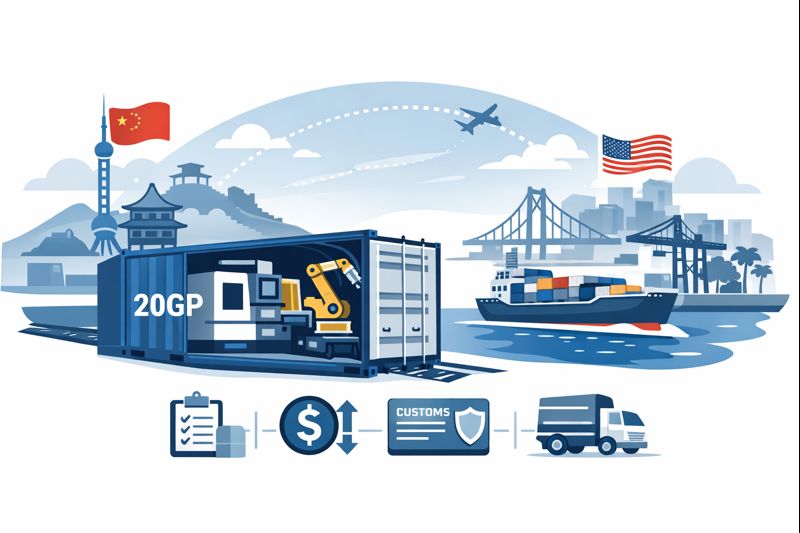
When manufacturers and importers evaluate the 20GP FCL freight rate for machinery from China to Long Beach, cost transparency and delivery reliability often become the biggest challenges. However, with the right container strategy, documentation planning, and carrier selection, those risks can be reduced significantly. Therefore, this guide breaks down real pricing drivers, transit expectations, and proven tactics you can apply immediately, starting with support from an experienced partner like Top China Freight.
What Does the 20GP FCL Freight Rate for Machinery from China to Long Beach Include?
nderstanding what is actually included in a quoted rate is essential before comparing offers. Although prices vary by season and carrier, most quotations follow a similar structure.
Core Cost Components You Should Expect
First, the ocean freight portion covers the containerized sea transport from a Chinese port to Long Beach. In addition, most quotations include terminal handling charges at origin, basic documentation fees, and carrier surcharges. However, costs such as destination port handling, customs clearance, and inland delivery are usually quoted separately.
Typical Inclusions vs. Common Exclusions
| Cost Item | Usually Included | Often Excluded |
|---|---|---|
| Ocean freight (China–Long Beach) | ✔ | |
| Origin terminal handling | ✔ | |
| Export documentation | ✔ | |
| Destination THC | ✔ | |
| Import customs clearance | ✔ | |
| Inland trucking | ✔ |
Because machinery shipments often involve high value and irregular dimensions, clarification at this stage prevents disputes later.
Why Is 20GP FCL Preferred for Machinery Shipments?
Machinery importers frequently choose FCL over LCL, and the reason goes beyond cost alone.
Stability and Protection During Transit
Unlike consolidated cargo, a dedicated 20GP container minimizes handling. As a result, sensitive equipment faces lower risk of impact damage or moisture exposure during transshipment.
Better Cost Control for Heavy Cargo
Although LCL may appear cheaper at first, machinery is typically dense and heavy. Therefore, LCL charges based on weight and volume can escalate quickly, making FCL the more economical choice over longer distances.
What Documents Are Required for Machinery Imports?
Accurate paperwork prevents customs delays and unexpected storage costs.
Key Shipping and Customs Documents
- Commercial invoice with HS codes
- Packing list with net and gross weights
- Bill of lading (original or telex release)
- Import licenses (if applicable)
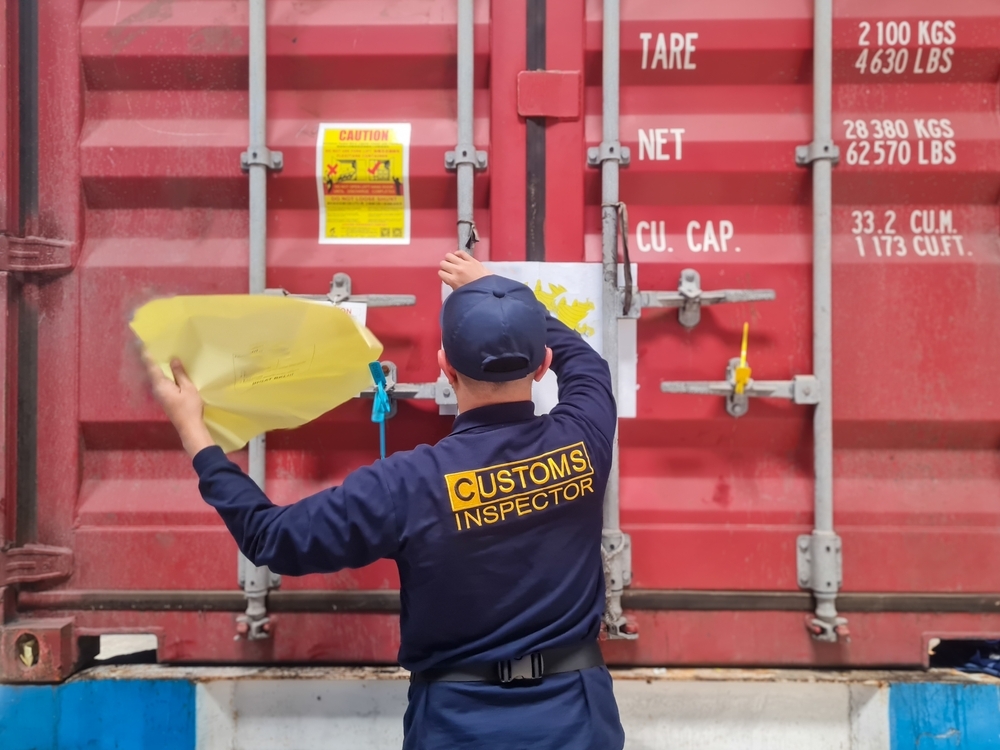
For smoother processing, many importers rely on professional customs brokerage support to manage compliance efficiently.
How Much Is the 20GP FCL Shipping Cost for Machinery from China to Long Beach?
While exact figures change weekly, importers can work with realistic ranges to support budgeting decisions.
Reference Freight Rate Ranges
| Route | Transit Time | Typical Rate Range* |
|---|---|---|
| Shanghai – Long Beach | 14–18 days | USD 1,400–2,200 |
| Ningbo – Long Beach | 15–19 days | USD 1,450–2,300 |
| Shenzhen – Long Beach | 16–20 days | USD 1,500–2,400 |
*Rates shown are indicative only and exclude destination charges.
Because fuel surcharges and space availability fluctuate, confirming validity periods is critical before finalizing bookings.
Case Studies
CNC Equipment Shipment to Long Beach
Route: Ningbo → Long Beach
Cargo: CNC milling machine, 8.2 tons
Container: 1 × 20GP FCL
Ocean Freight Cost: USD 1,780
Transit Time: 17 days port to port
Because the importer secured early booking, the shipment avoided peak surcharges and arrived ahead of schedule.
Packaging Machinery Export from Shanghai
Route: Shanghai → Long Beach
Cargo: Automated packaging unit, 6.5 tons
Container: 20GP FCL
Ocean Freight Cost: USD 1,650
Transit Time: 16 days
By coordinating documentation in advance, customs clearance was completed within 48 hours, reducing storage expenses.
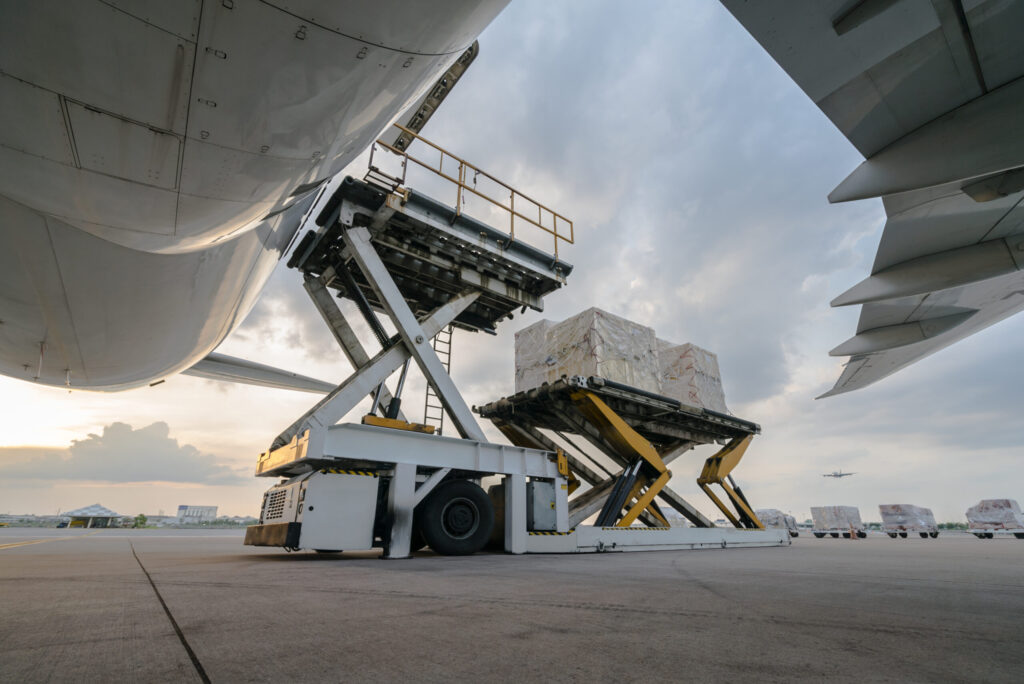
Can Air or Rail Freight Compete with 20GP FCL for Machinery?
In most cases, ocean freight remains the most economical choice for heavy machinery. Still, alternative modes play a role in specific scenarios.
Comparing Transport Modes for Machinery
| Transport Mode | Cost Level | Transit Speed | Best Use Case |
|---|---|---|---|
| Ocean FCL | Low | Moderate | Heavy, non-urgent machinery |
| Air Freight | Very High | Fast | Critical spare parts |
| Rail Freight | Medium | Medium | Asia–Europe routes |
While air freight works for urgent components, full machinery units rarely justify the premium. For Asia–Europe movements, rail can help, yet for China–U.S. West Coast routes, ocean FCL remains dominant.
Should You Choose Port-to-Port or Door-to-Door for Machinery Shipments?
After confirming the ocean freight portion, importers often face another decision: whether to stop at the port or extend delivery inland. The right choice depends on control, cost visibility, and risk tolerance.
When Port-to-Port Makes Sense
If you already work with a local U.S. trucking partner and customs broker, port-to-port shipping provides flexibility. In that case, you control inland costs directly and negotiate trucking separately once the container is released at Long Beach.
Why Door-to-Door Reduces Operational Risk
However, for many machinery buyers, door-to-door service simplifies coordination. Because port congestion, chassis shortages, and appointment delays remain common, a single point of responsibility often prevents costly miscommunication. With an integrated door-to-door solution, timelines and accountability stay clear from factory to final destination.
Why Partnering with an Experienced Forwarder Matters
Beyond pricing, execution quality often defines success.
A provider like Top China Freight supports machinery importers by coordinating carrier selection, documentation accuracy, and delivery planning under one workflow. As a result, cost predictability improves while operational friction decreases, especially for repeat shipments or multi-origin sourcing strategies.
Conclusion
In summary, the 20GP FCL freight rate for machinery from China to Long Beach depends on cargo characteristics, timing, and service scope rather than ocean freight alone. By understanding rate components, planning inland delivery early, and addressing customs requirements proactively, importers gain stronger control over total landed cost. With the right logistics structure in place, machinery shipments can move reliably and cost-effectively across the Pacific.
Request A Free Quote
Start shipping smarter with TopChinaForwarder today! 🚢✨ Request a Free Quote 📝 and get a tailored logistics plan built around your cargo and timeline.
FAQ:
What is included in a 20GP FCL freight rate quote?
It usually includes ocean freight and origin charges, while destination handling, customs clearance, and trucking are quoted separately.
How often do China–Long Beach machinery freight rates change?
Rates can change weekly due to fuel costs, space availability, and seasonal demand shifts.
Is FCL always cheaper than LCL for machinery?
For heavy or dense machinery, FCL is typically more cost-effective due to weight-based LCL pricing.
Do I need special permits for machinery trucking?
Oversized or overweight machinery may require permits, depending on dimensions and U.S. state regulations.
Should I insure used machinery shipments?
Yes. Used equipment still carries significant value and benefits from all-risk cargo insurance.