
- By rudy
- December 1, 2025
- Freight knowledge, Shipping
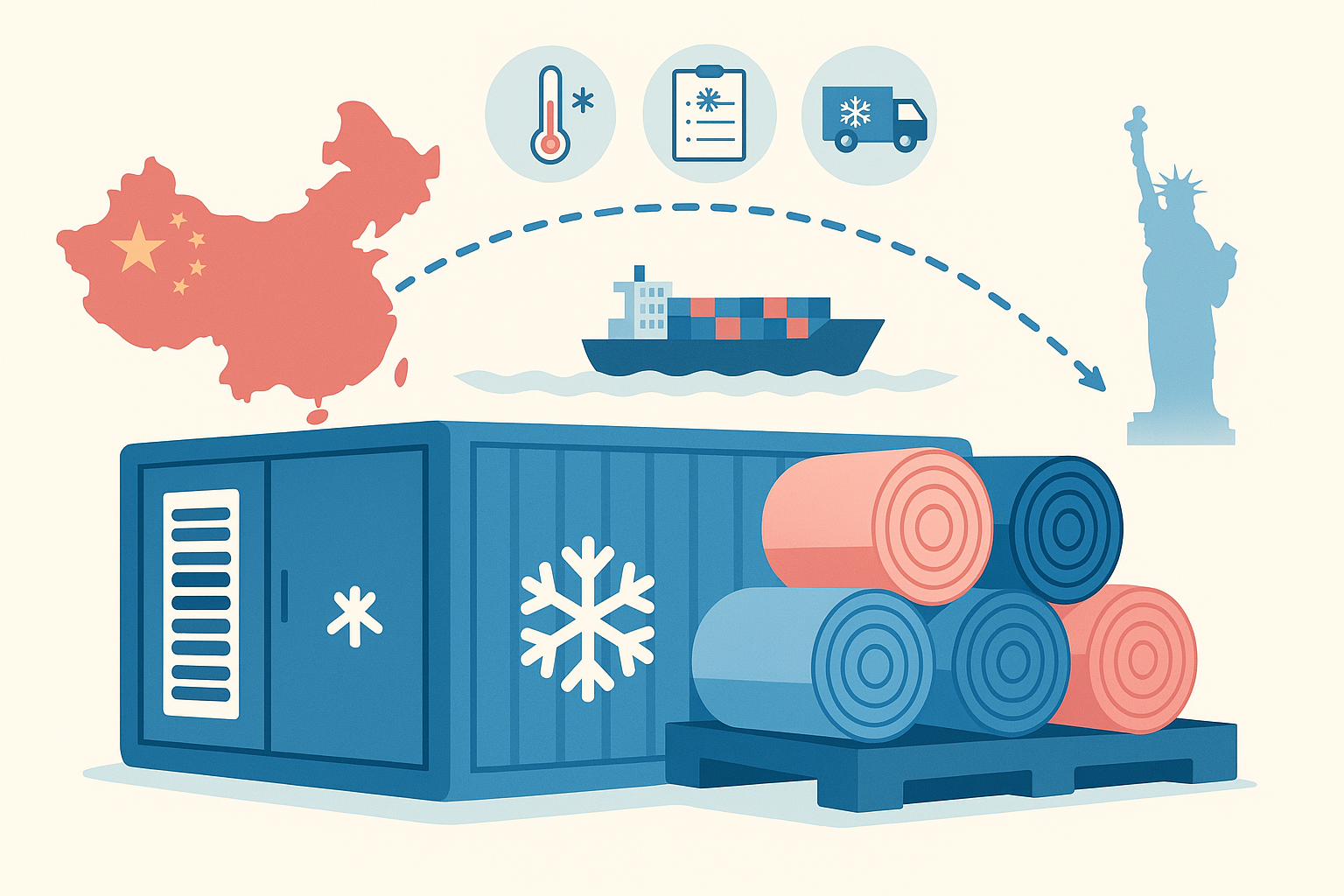
Understanding the Reefer FCL transit time for textiles from China to New York is crucial for textile brands that depend on controlled humidity, consistent temperatures, and predictable logistics cycles. Therefore, this guide outlines a practical and actionable approach to planning cold-chain textile shipments, optimizing routing, and avoiding moisture damage while collaborating with experienced partners like Top China Freight. Moreover, you will discover how to stabilize schedules, reduce risk, and support long-term supply chain performance.

What Defines Reefer FCL Transit Time for Textiles From China to New York?
Reefer transit time depends on routing, port congestion, vessel schedules, and temperature-control requirements. Although shipping times vary, most China–New York reefer shipments follow a general pattern shaped by carrier availability, route performance, and weather conditions.
Moreover, textile cargo—especially cotton, wool, viscose, denim, and premium garment lines—must avoid exposure to humidity swings. Therefore, reefer transit times directly affect quality, moisture levels, and fabric integrity.
Why Do Textiles Require Reefer Conditions on Long China–USA Routes?
Textile fibers absorb ambient moisture quickly. Consequently, extended exposure during ocean transit may cause:
- Mold growth
- Color fading
- Fiber softening
- Odor issues
- Packaging deterioration
Although dry containers can work for low-risk cotton shipments, temperature-controlled reefers reduce the risk of humidity damage—especially during summer sailings, long transshipment routes, or voyages crossing tropical climates.
Moreover, U.S. retailers expect consistent textile quality. Therefore, controlled reefer conditions ensure fabric integrity upon arrival in major distribution centers across New York and New Jersey.
How Long Does Reefer FCL Transit Take From China to New York?
Transit times vary by routing method:
- Direct Pacific + Rail to East Coast: 22–28 days
- Pacific to West Coast + Transload: 24–30 days
- Panama Canal Route: 28–36 days
- Transshipment via Europe: 32–45 days
Although reefers receive priority handling at ports, transit times still depend on vessel reliability, weather, and port congestion. Moreover, importers shipping during peak seasons must anticipate additional buffer time.
What Factors Influence Reefer Transit Stability for Textile Cargo?
Vessel Rotation & Schedule Consistency
Carriers offering strong Pacific loops typically maintain more stable reefer ETDs and ETAs.
Port Congestion at Both Ends
Ports such as Shanghai, Ningbo, and Shenzhen can experience equipment shortages, while New York sees peaks around major retail seasons.
Temperature Requirements
Tighter temperature or humidity settings may require more specialized reefer slots, influencing departure availability.
Weather & Seasonal Trends
Storm seasons, monsoon conditions, and winter disruptions affect transit reliability.
Therefore, textile importers must coordinate booking patterns with market behavior and carrier reliability trends.
Case Studies
Ningbo → New York (Premium Fabrics)
Cargo: Linen, viscose, cotton blends
Container: 40HQ Reefer
Temperature: 20°C
Transit Time: 29 days
Outcome: Cargo arrived moisture-free with no quality complaints.
✔ Insight: Pacific + Panama route balanced cost and transit stability.
✔ Tip: Factory pre-drying reduced moisture before loading.
Shenzhen → New York (Finished Garments)
Cargo: Branded apparel
Container: 40HQ Reefer
Temperature: 22°C low-humidity
Transit Time: 33 days
Outcome: Minor port delay added one day, but garments arrived flawless.
✔ Insight: Choosing low-humidity mode protected sensitive fibers.
✔ Tip: Early booking avoided equipment shortages during garment season.
What Does the Complete Reefer FCL Transit Workflow Look Like?
Although reefer transit seems complex, textile importers can follow a structured workflow that keeps quality stable from factory loading to arrival in New York.
Complete Reefer FCL Transit Workflow for Textiles
| Step | Description | Notes |
|---|---|---|
| 1 | Confirm reefer capacity | Match textile volume to 40HQ reefer |
| 2 | Set temperature/humidity | Confirm based on fabric type |
| 3 | Book reefer space | Secure 2–3 weeks early |
| 4 | Pre-loading inspection | Check moisture + packaging quality |
| 5 | Stuffing & sealing | Protect airflow inside reefer |
| 6 | Export customs | Verify HTS + fiber composition |
| 7 | Ocean transit | Monitor temperature logs |
| 8 | U.S. arrival | Reefer plug-in + CBP inspections |
| 9 | Inland distribution | Truck or rail to NY/NJ DCs |
This workflow keeps transit consistent and protects textiles during long ocean routes.
What Cost Components Affect Transit Planning for Reefers?
Even though this article focuses on transit time, understanding cost drivers helps buyers decide which route best fits their schedule.
Cost Components Influencing Transit Planning
| Cost Element | Impact | Notes |
|---|---|---|
| Base freight | Medium–High | Varies weekly |
| Reefer surcharge | High | Linked to temperature setting |
| Port electricity | Medium | Charged during delays |
| Customs exams | High | Adds time and cost |
| Inland trucking | Medium | Influences NY/NJ delivery time |
Although these factors impact budgeting, they also influence transit reliability.
Why Working With Specialized Forwarders Improves Transit Stability?
Cold-chain textile shipping requires precision. Therefore, importers benefit from expert partners who can:
- Recommend the best temperature setting
- Secure reefer equipment earlier
- Compare routing options
- Monitor transit time variations
- Support customs documentation
- Provide inland delivery coordination
Top China Freight helps textile importers optimize transit schedules and improve delivery reliability across New York distribution networks.
Conclusion
To summarize, the Reefer FCL transit time for textiles from China to New York depends on routing method, reefer availability, port congestion, and documentation accuracy. Moreover, when textile importers plan temperature settings carefully, load cargo responsibly, and follow a structured workflow, they ensure smooth and consistent delivery. Therefore, choosing reliable carriers and partnering with experienced forwarding specialists helps maintain fabric quality and reduces transit risks throughout the China–New York cold-chain journey.
Request A Free Quote
Start shipping smarter with TopChinaForwarder today! 🚢✨ Request a Free Quote 📝 and get a tailored logistics plan built around your cargo and timeline.
FAQ:
What is the typical reefer transit time to New York?
Transit ranges from 22–45 days depending on routing and carrier schedules.
How early should I book a reefer container?
Booking 2–3 weeks early ensures equipment availability.
What causes transit delays for textile reefers?
Customs exams, port congestion, weather, and equipment shortages.
How do I avoid moisture issues in textile shipments?
Use low-humidity mode, airflow pallets, and factory pre-drying.
Do Panama Canal routes influence timing?
Yes, Panama routes are slower but provide predictable scheduling.