
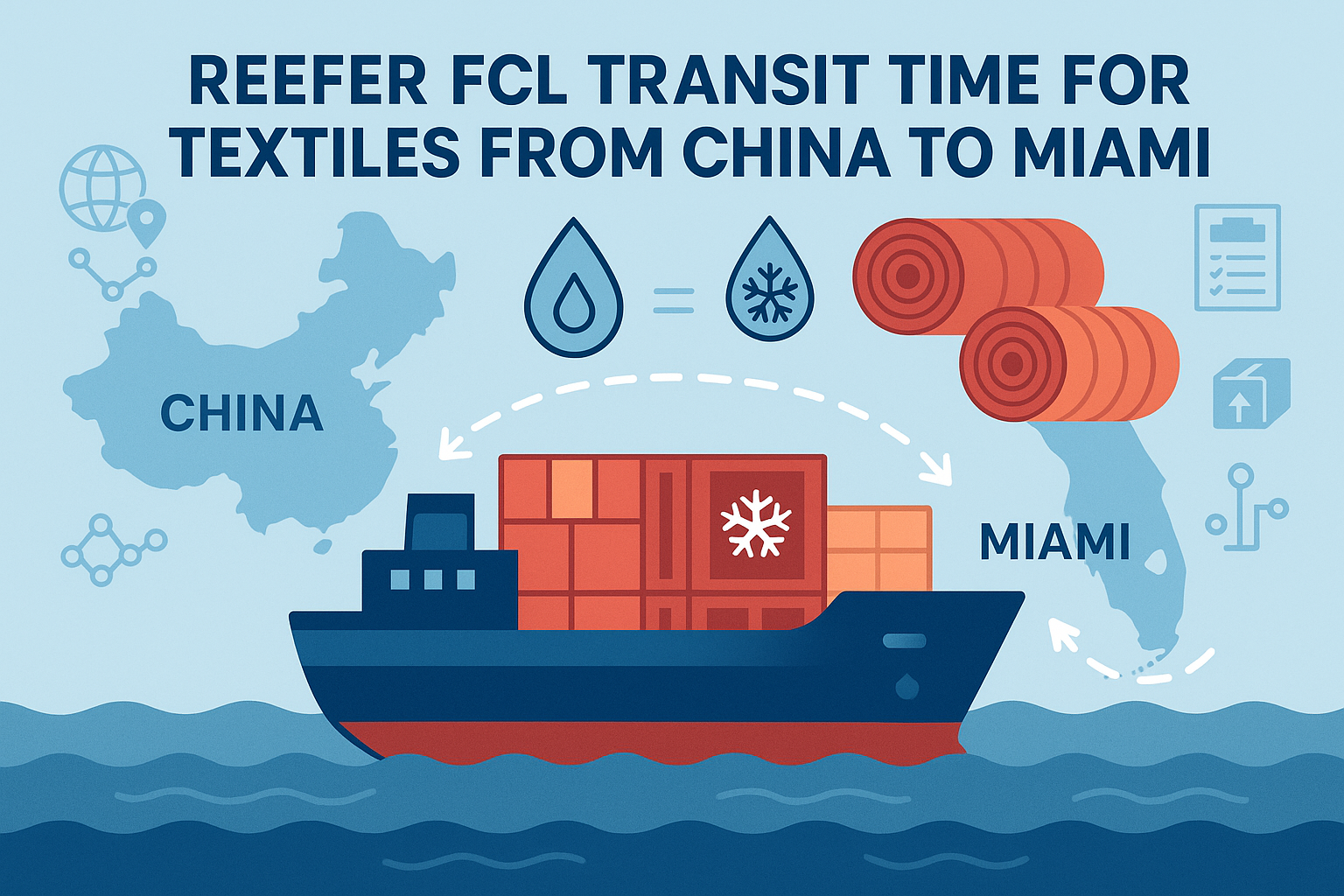
Because textile cargo is highly sensitive to humidity and improper handling, understanding the Reefer FCL transit time for textiles from China to Miami becomes essential for importers who aim for predictable delivery and fabric integrity. Although transit time varies by routing and carrier, this guide reveals practical methods to optimize schedules while protecting textiles end to end. As you plan your shipments, you may also explore global routing support via the Top China Freight homepage, ensuring smoother execution from factory to distribution center.
What Defines Reefer FCL Transit Time for Textile Shipments to Miami?
Transit time reflects the full movement from the loading port to Miami, including vessel rotation, transshipment delays, and reefer container availability. Moreover, textiles require humidity-controlled conditions, so reefer containers stabilize moisture and temperature during long-haul transit.
Key Factors
- Direct vs. transshipment routing
- Reefer container plug-in availability
- Carrier schedule reliability
- Seasonal demand affecting berth priority
Consequently, planning around these variables helps importers maintain predictable lead times.
Which China Ports Offer the Most Reliable Reefer FCL Routes to Miami?
Several Chinese ports maintain strong connections with US East Coast gateways. Additionally, port selection affects transit time since some locations offer more frequent reefer capacity.
Common Export Ports for Textiles
- Shanghai
- Ningbo
- Shenzhen (Yantian / Shekou)
- Qingdao
- Xiamen
Miami-bound textiles often move via transshipment hubs such as Kingston, Cartagena, or Freeport, which further influence timing.
How Long Is the Typical Reefer FCL Transit Time from China to Miami?
Transit time ranges vary because textile cargo may move through different hubs. Nevertheless, carriers maintain relatively stable schedules.
| China Port | Miami Transit Time | Notes |
|---|---|---|
| Shanghai | 32–38 days | Consistent via Caribbean hub |
| Ningbo | 33–40 days | Slightly longer due to feeder timing |
| Yantian | 30–36 days | Fastest southern option |
| Qingdao | 35–42 days | Longer due to rotation patterns |
This table shows ranges rather than fixed guarantees, as reefer capacity and seasonal rotations may shift.
Why Are Textiles Shipped in Reefer FCL Containers to Miami?
Although textiles are non-perishable, they absorb moisture easily and may warp, wrinkle, or become mold-prone. Therefore, reefer containers provide consistent humidity levels that protect fabric quality during long ocean transit.
Primary Protection Benefits
- Moisture control to prevent mildew
- Reduction of condensation risk inside packaging
- Stabilized temperature when moving across climates
- Less exposure to dockside heat during peak seasons
Because Miami is humid year-round, maintaining control during transit is especially valuable.
Case Studies
South China to Miami Textile Shipment
Origin: Yantian
Cargo: 28 pallets of cotton and blended fabrics
Container: 40HQ Reefer
Transit Time: 31 days
Routing: Yantian → Freeport → Miami
Outcome: With humidity-controlled settings, fabric deformation dropped significantly, and the buyer reported improved production quality on arrival.
East China to Miami High-Value Apparel Shipment
Origin: Shanghai
Cargo: 18 pallets of premium garments for a US retailer
Container: 40GP Reefer
Transit Time: 34 days
Routing: Shanghai → Cartagena → Miami
Outcome: The consignee improved shelf-readiness due to stable humidity control, reducing reconditioning costs and speeding distribution.
How Do Freight Rates Influence Reefer FCL Transit Planning for Textile Cargo?
Freight rates fluctuate with carrier availability, fuel costs, and seasonal pressure from agricultural reefer markets. Moreover, textile peak seasons coincide with holiday retail cycles, creating competition for space.
Example Cost Components
| Cost Element | Description |
|---|---|
| Ocean Freight | Reefer container base rate |
| PSS / GRI | Seasonal rate adjustments |
| Port Plug-in Fees | Applied at departure and hubs |
| Documentation & THC | Export handling charges |
| Miami Handling Costs | Varies by terminal |
Textile importers often reduce rate volatility by forecasting demand earlier in the buying cycle.

Why Partnering with a Professional Logistics Provider Improves Transit Reliability
The complexity of shipping textiles in reefer FCL containers requires dependable planning, documentation accuracy, and equipment availability. Consequently, working with experienced providers like Top China Freight supports stable transit times, end-to-end humidity protection, and tailored routing solutions across China–Miami corridors.
Furthermore, integrated services—such as FCL & LCL shipping solutions or door-to-door delivery—help importers consolidate shipments and accelerate distribution across the US.
How Do Buyers Manage Seasonal Volume Fluctuations in Textile Supply Chains?
Because textile demand rises before US retail seasons, planning shipment cycles becomes essential. Moreover, aligning buy plans with carrier availability helps prevent last-minute freight rate surges.
Seasonal Planning Tips
- Lock reefer FCL space four to five weeks ahead of Q3 fashion peaks.
- Use multi-origin loading points to avoid congestion in a single China port.
- Coordinate production batches with shipping cut-off dates.
- Reserve buffer time for unexpected Caribbean weather systems.
Strategic planning ensures a smoother shipping calendar for importers working with diverse textile categories.
Conclusion
The Reefer FCL transit time for textiles from China to Miami depends on routing, hub selection, reefer equipment availability, and seasonal demand cycles. Although these variables differ between carriers, importers achieve far greater predictability by optimizing documentation, packaging, and scheduling strategies. Therefore, textile buyers who adopt tailored reefer solutions and flexible routing gain stronger supply chain resilience. To refine your next textile logistics plan, feel free to request a customized route assessment or schedule consultation.
Request A Free Quote
Start shipping smarter with TopChinaForwarder today! 🚢✨ Request a Free Quote 📝 and get a tailored logistics plan built around your cargo and timeline.
FAQ:
What determines reefer FCL pricing for textiles?
Pricing depends on container availability, seasonality, fuel adjustments, and hub routing. Comparing multiple carriers helps achieve a stable rate.
How can importers avoid clearance delays in Miami?
Accurate invoices, correct HS codes, and proper labeling help prevent customs inspection holds.
Can reefer cargo be mixed with non-textile products?
Yes, but only when humidity tolerance levels match and both goods fit inside the same controlled environment.
How soon should I book reefer space during fashion peaks?
Book at least three to four weeks before cargo readiness to secure reliable equipment.
Are reefer containers available year-round for textile shipments?
Generally yes, although Q3 agricultural season tightens availability.