
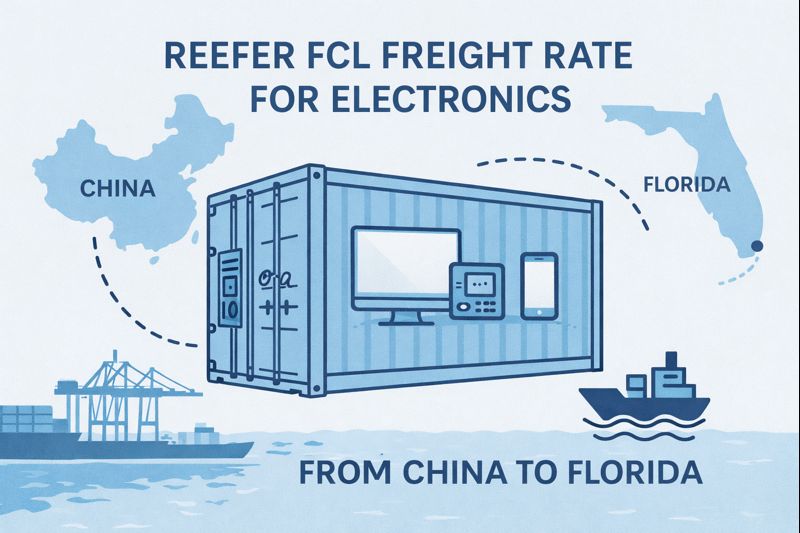
As demand for high-value electronics continues to rise, the Reefer FCL freight rate for electronics from China to Florida has become a key concern for importers seeking both cost control and cargo protection. However, pricing refrigerated containers involves more than a base ocean rate, since temperature stability, equipment availability, and port congestion all affect the final cost. Therefore, this guide breaks down real pricing logic, transit variables, and optimization strategies, drawing on practical experience from projects handled through Top China Freight.

Why do electronics shipments use Reefer FCL containers?
Although electronics are not perishable, they are highly sensitive to heat, humidity, and condensation. Products such as semiconductors, control boards, servers, and precision components often degrade when exposed to fluctuating temperatures during long ocean voyages. As a result, many exporters choose Reefer FCL to stabilize the internal environment.
Moreover, Reefer FCL offers full container exclusivity, which reduces handling risks compared with consolidation. Consequently, while the freight rate is higher than standard FCL, the reduction in damage risk often justifies the premium.
What factors determine the Reefer FCL freight rate?
Reefer FCL pricing is not a single number; instead, it reflects a combination of operational and market-driven elements. Therefore, understanding each component helps importers evaluate quotations more accurately.
Container type and size
Rates vary between 20RF, 40RF, and 40HQ reefer containers. Larger units usually offer better unit economics but require stable cargo volume.
Power and equipment surcharges
Because reefer containers consume electricity at terminals and onboard vessels, carriers apply additional surcharges that fluctuate with energy costs.
Seasonality and capacity availability
During peak seasons, reefer equipment shortages can push rates upward. Conversely, off-peak windows often present cost-saving opportunities.
Can freight rate volatility be managed?
Freight rate volatility remains a persistent challenge in global shipping. However, electronics importers can reduce exposure through proactive planning.
Key strategies include:
- Booking space earlier to lock in rates
- Selecting stable carriers with consistent reefer performance
- Aligning shipping schedules with production cycles
In addition, working with an experienced sea freight service provider often improves rate predictability by consolidating volume and negotiating capacity allocations.
ng elit. Ut elit tellus, luctus nec ullamcorper mattis, pulvinar dapibus leo.
What is the typical Reefer FCL freight rate range?
Although exact prices fluctuate, importers often request reference ranges to support budgeting decisions. The table below illustrates indicative pricing logic rather than fixed quotations.
| Route Example | Container Type | Transit Time | Reference Freight Range |
|---|---|---|---|
| South China → Florida | 40HQ Reefer | 32–38 days | USD 6,500 – 9,200 |
| East China → Florida | 20RF Reefer | 34–40 days | USD 5,200 – 7,800 |
These ranges reflect ocean freight only and exclude inland delivery, customs duties, and insurance. Therefore, a complete landed-cost analysis remains essential.
Case Studies
Consumer Electronics Shipment to Florida
Origin: Shenzhen, China
Destination: Jacksonville, Florida
Cargo: High-value consumer electronics, 40HQ Reefer FCL
Cargo Value: USD 320,000
Transit Time: 35 days
Freight Cost Range: USD 8,400
Although a standard FCL option was cheaper, the importer selected Reefer FCL to prevent humidity damage. As a result, post-arrival inspections reported zero defects, avoiding replacement costs that previously exceeded USD 25,000 per shipment.
Industrial Electronics to South Florida
Origin: Ningbo, China
Destination: Miami, Florida
Cargo: Industrial control modules, 20RF Reefer FCL
Cargo Value: USD 210,000
Transit Time: 37 days
Freight Cost Range: USD 6,900
During peak season, reefer space tightened and rates increased. However, early booking and optimized inland delivery reduced terminal dwell time, keeping total logistics cost within budget while maintaining stable cargo conditions.

How do inland and terminal charges affect the final freight rate?
While ocean freight forms the core of the Reefer FCL freight rate for electronics from China to Florida, inland and terminal charges often account for a sizable share of the total cost. Therefore, importers who focus only on the carrier’s base rate may underestimate their real expenses.
Key cost elements typically include:
- Origin trucking and port handling in China
- Reefer plug-in fees at origin and destination terminals
- U.S. port handling and demurrage risk
- Inland delivery within Florida
Because reefer containers incur electricity costs whenever they remain at terminals, even short delays can raise overall spend. As a result, aligning arrival schedules with downstream distribution plans becomes essential.
Should electronics importers choose port-to-port or door-to-door pricing?
Choosing between port-to-port and door-to-door pricing directly influences cost transparency. Although port-to-port quotes appear cheaper, they often shift risk and coordination responsibility to the importer.
By contrast, door-to-door solutions bundle ocean freight, inland transport, and coordination into a single structure. Consequently, many electronics brands favor integrated models, especially when temperature control remains critical throughout the journey. In practice, combining Reefer FCL with a structured door-to-door transportation plan often stabilizes both cost and delivery timelines.
Reefer FCL vs air freight for electronics
Although air freight offers speed, its cost profile differs dramatically from Reefer FCL. Therefore, importers often evaluate both options based on urgency and value density.
| Transport Mode | Cost Level | Transit Time | Best Use Case |
|---|---|---|---|
| Reefer FCL Sea Freight | Medium | 30–40 days | Stable, high-volume electronics |
| Standard Air Freight | High | 5–7 days | Urgent or high-margin products |
In many cases, electronics brands use Reefer FCL as the primary mode while reserving air freight services for urgent replenishment or product launches.
Conclusion
The Reefer FCL freight rate for electronics from China to Florida reflects far more than an ocean shipping price. By understanding cost components, managing seasonal risks, and optimizing container utilization, importers can balance protection and efficiency. Ultimately, a well-structured reefer strategy turns freight cost planning into a predictable, controllable process rather than a reactive expense.
Request A Free Quote
Start shipping smarter with TopChinaForwarder today! 🚢✨ Request a Free Quote 📝 and get a tailored logistics plan built around your cargo and timeline.
FAQ:
What is included in a Reefer FCL freight rate quote?
Reefer FCL quotes usually include ocean freight, reefer surcharges, and basic terminal handling, but exclude customs duties and inland delivery.
Why are Reefer FCL rates higher than standard FCL?
Reefer containers require power, specialized equipment, and monitoring, which increases operational costs for carriers.
How often do Reefer FCL freight rates change?
Rates may change monthly or even weekly, especially during peak seasons or when energy costs fluctuate.
Which Florida ports are commonly used for reefer electronics?
Miami, Jacksonville, and Port Everglades are frequent entry points due to reefer infrastructure.
How can importers avoid unexpected reefer charges?
Early booking, accurate documentation, and minimizing port dwell time help prevent extra fees.