
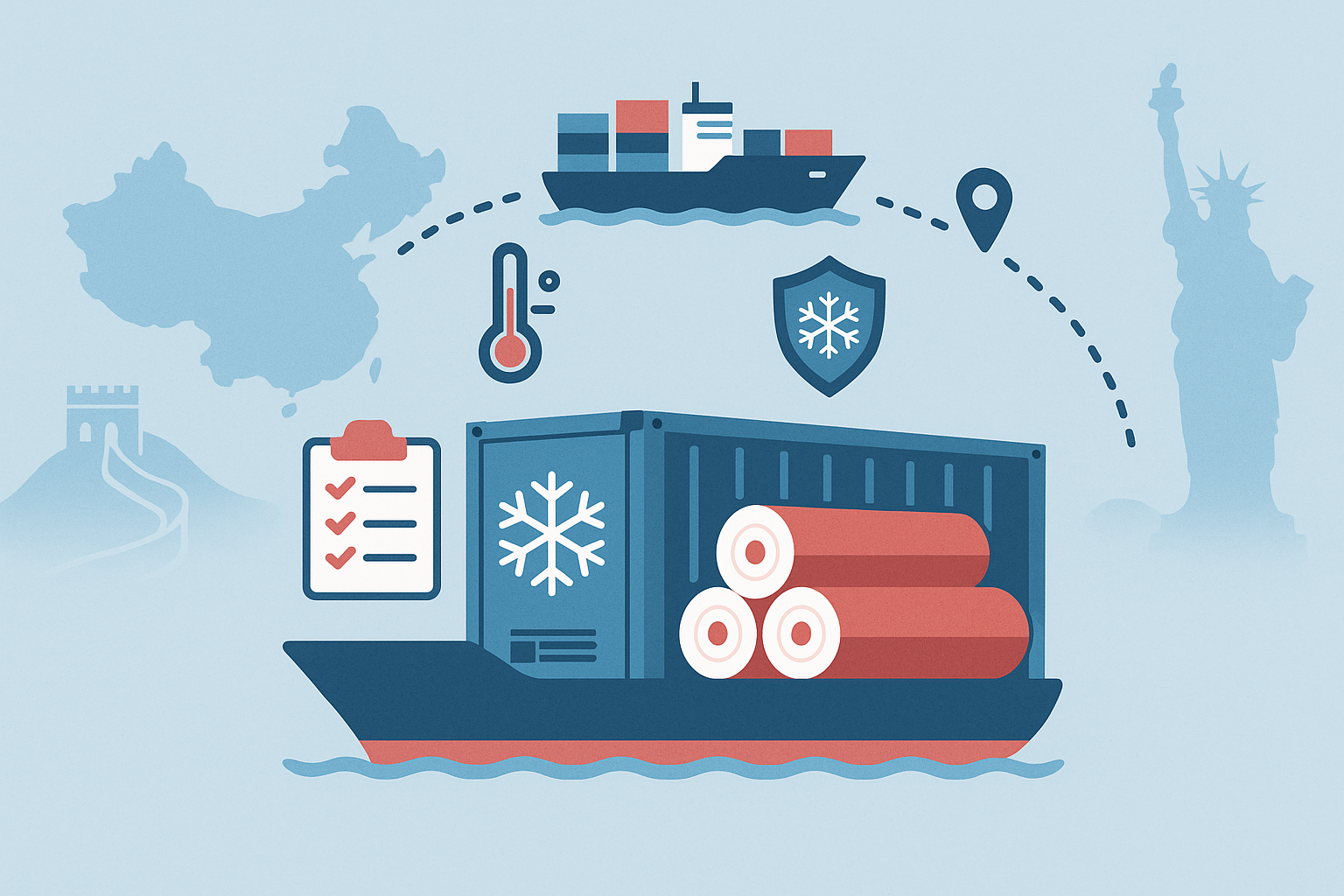
Managing the Reefer FCL booking process for textiles from China to USA has become increasingly important as textile brands seek better temperature stability, moisture protection, and predictable delivery cycles. Therefore, this guide offers a clear, practical framework for securing reefer space, preparing compliance documents, and coordinating door-to-port operations with expert partners like Top China Freight. Moreover, you will learn how to reduce risk, control cost, and streamline the entire cold-chain booking process.
What Makes Reefer FCL Booking Essential for Textile Shipments?
Although many buyers assume reefers are only for perishable goods, textiles—especially premium fabrics, sensitive fibers, and finished garments—also benefit from temperature-controlled environments. Consequently, reefer FCL prevents moisture damage, mold growth, and humidity-related discoloration during long ocean transits.
Moreover, textile shipments often include cotton blends, silk, wool, denim, athleisure fabrics, and functional materials that degrade quickly when exposed to moisture variations. Because U.S. importers face strict quality expectations, protecting textiles during the journey helps reduce claims and stock write-offs.
Why Do USA-Bound Textile Shipments Require Controlled Conditions?
The U.S. textile market demands precise quality standards. Therefore, importers must protect fabrics from moisture, mildew, and temperature swings—especially during summer voyages or routes passing through tropical regions. Although reefer containers cost more than dry FCL, they offer predictable conditions that prevent costly quality issues.
Additionally, U.S. retailers typically run highly synchronized supply chains linked to seasonal collections. Moreover, textile delays or cargo damage directly impact profit margins, distribution planning, and customer experience.
How Does the Reefer FCL Booking Process Work for Textile Cargo?
Textile shippers must follow a structured approach to secure reefer space efficiently.
Below is a simplified overview:
- Confirm textile volume + required 40HQ reefer type
- Check required temperature/humidity settings
- Compare carriers offering reefer capacity on China–USA lanes
- Book equipment early due to limited reefer availability
- Schedule factory loading with cargo pre-inspection
- Prepare compliance documentation
- Coordinate export customs
- Monitor vessel ETD and temperature logs
Because reefer availability tightens during peak seasons, early planning is crucial.
What Documentation Is Required for Textile Reefer Shipments to the USA?
Documentation accuracy ensures smooth U.S. customs compliance.
Below is a reference checklist:
USA Textile Reefer Documentation Checklist
| Document | Requirement | Notes |
|---|---|---|
| Commercial Invoice | Required | Must list fabric composition |
| Packing List | Required | Match SKU breakdown |
| Bill of Lading | Required | Confirm reefer mode |
| Temperature Settings Sheet | Required | Provided by shipper |
| Fiber Composition Certificate | Often required | Needed for CBP classification |
| HTS Code List | Required | Must match textile category |
| COO Certificate | Required | For U.S. duty assessment |
Accurate documents reduce clearance delays and prevent reefer plug-in charges at terminals.
How Does Origin Port Choice Influence the Reefer Booking Process?
Different Chinese ports handle reefer shipments with varying efficiency.
- Shanghai / Ningbo: best reefer container availability
- Shenzhen / Guangzhou: strong for apparel and garment exporters
- Qingdao / Tianjin: reliable but sometimes limited reefer slots
- Moreover, USA-bound reefer routes vary by port:
- Los Angeles / Long Beach: fastest Pacific transit
- Seattle / Tacoma: stable for textiles
- New York / Savannah: longer but ideal for East Coast distribution
Additionally, textile importers can use multimodal options like sea + rail for inland USA distribution.

Case Studies
Shanghai → Los Angeles (Cotton & Viscose Textiles)
Cargo: Cotton blends + viscose fabrics
Container: 40HQ Reefer
Temperature: 20°C, low humidity
Transit Time: 18 days
Result: Cargo delivered in perfect condition; no mold risk observed.
✔ Insight: Early booking secured reefer space during high-demand season.
✔ Tip: Factory pre-drying reduced moisture issues.
Shenzhen → New York (High-Value Finished Garments)
Cargo: Branded garments
Container: 40HQ Reefer
Temperature: 22°C
Transit Time: 32 days
Result: Minor customs inspection added one day, but garments arrived undamaged.
✔ Insight: Accurate HTS code classification avoided longer delays.
✔ Tip: Use airflow pallets for even circulation.
How Can Importers Reduce Reefer FCL Booking Delays?
Textile importers can speed up the process by:
- Reserving reefer equipment 2–3 weeks before cargo readiness
- Confirming temperature and humidity specs early
- Using moisture-proof packaging
- Checking HTS codes with customs experts
- Preparing compliance documents before factory loading
- Coordinating vessel schedules ahead of cutoff times
Additionally, collaboration with experienced reefer specialists such as Top China Freight minimizes delays in both booking and transit.
Should Importers Consider Alternatives to Reefer FCL?
Although reefer FCL is ideal for most textiles, alternatives exist:
- Dry FCL + Desiccant Packs for low-risk cotton shipments
- LCL Reefer for partial loads
- Air Freight for premium-season products
- Sea + Air Hybrid when time is critical
Below is a comparison.
Comparison of Reefer vs Other Shipping Modes for Textiles
| Mode | Cost | Protection | Transit Time | Best For |
|---|---|---|---|---|
| Reefer FCL | Medium–High | Excellent | 14–36 days | High-value textiles |
| Dry FCL | Low | Medium | 14–36 days | Basic fabrics |
| Air Freight | High | Excellent | 3–7 days | Urgent garments |
| Sea + Air | Medium–High | Good | 10–14 days | Seasonal launches |
Because textile margins vary by category, choosing the right mode improves cost stability and quality control.
Conclusion
In summary, understanding the Reefer FCL booking process for textiles from China to USA helps importers control risk, maintain fabric quality, and ensure temperature consistency throughout the journey. Moreover, businesses that plan early, maintain accurate documentation, and choose reliable carriers enjoy smoother logistics workflows. Therefore, textile importers should evaluate transit requirements, confirm temperature settings, and collaborate with experienced forwarding partners to secure stable reefer capacity and predictable delivery.
Request A Free Quote
Need a reliable logistics partner? Share your shipment details and we’ll provide a tailored quotation quickly and accurately.
FAQ:
How early should I book a reefer FCL for textile shipments?
Booking 2–3 weeks in advance ensures equipment availability and prevents last-minute shortages.
Do all textile products require reefer conditions?
Not all, but many sensitive fabrics, garments, and blends benefit from controlled temperatures and humidity.
How can I avoid customs delays for reefer shipments?
Accurate HTS codes, fiber composition sheets, and complete invoices reduce inspection risks.
What causes moisture issues in textile shipments?
Poor packaging, factory humidity, and improper airflow can lead to mildew.
Can I track reefer temperature during transit?
Certainly, many carriers offer digital monitoring tools for temperature logs.