
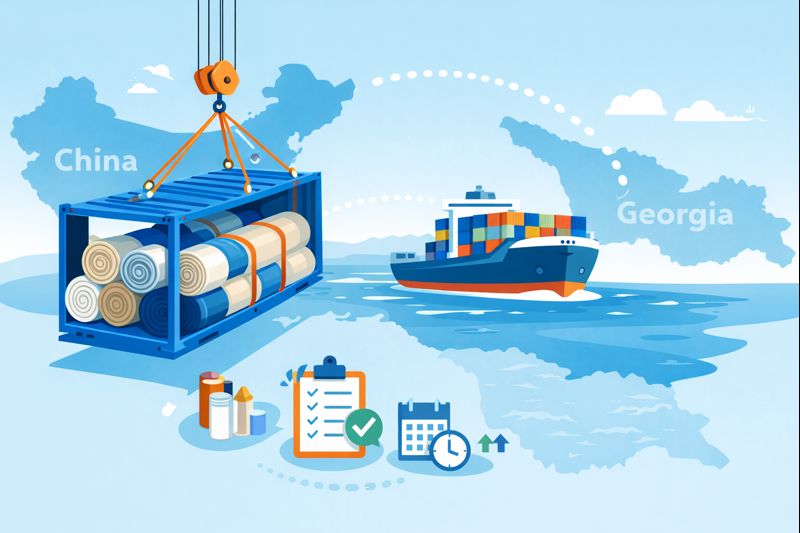
When planning Open Top FCL space availability for textiles from China to Georgia, space uncertainty and loading constraints often create costly delays. Therefore, many textile importers work with experienced partners such as Top China Freight to secure equipment early and keep supply chains moving smoothly. In this guide, you’ll find practical, execution-focused strategies to lock in space, manage timing, and protect margins.

What Makes Textile Cargo Suitable for Open Top FCL Shipping?
Textile cargo frequently exceeds standard container limits, and as a result, open top solutions become necessary.
Common Textile Cargo Types Requiring Open Top Containers
Although many fabrics ship in standard dry containers, open top FCL is often chosen for:
• Large fabric rolls exceeding door height
• Textile machinery frames and looms
• Pre-packed palletized fabrics requiring vertical loading
Consequently, open top containers allow crane loading from above, reducing handling risk and improving cargo safety.
Why Standard Containers Often Fall Short
Standard containers limit loading flexibility. Therefore, when cargo height or shape prevents smooth door loading, open top FCL becomes the most efficient option for textile exporters shipping from China.
How Does Open Top FCL Space Availability Differ From Standard FCL?
Space availability behaves differently for specialized equipment.
Limited Equipment Supply
Open top containers represent a smaller share of global equipment pools. As a result, availability fluctuates sharply during peak textile export seasons, especially ahead of major retail cycles.
Carrier Allocation Priorities
Because carriers allocate open top equipment carefully, early booking and confirmed load plans significantly increase the chance of space confirmation. Consequently, late bookings face higher rejection risks.
Open Top FCL vs Standard FCL for Textile Cargo
| Item | Open Top FCL | Standard Dry FCL |
|---|---|---|
| Suitable textile cargo | Oversized fabric rolls, tall machinery | Folded fabrics, boxed garments |
| Loading method | Crane loading from top | Forklift loading from doors |
| Space availability | Limited, requires early booking | Widely available |
| Equipment flexibility | High for non-standard shapes | Limited by door height |
| Risk of space rollover | Medium to high in peak season | Generally lower |
| Typical freight cost level | Higher due to equipment scarcity | More cost-stable |
How Can Shippers Improve Open Top FCL Space Guarantee?
Fortunately, proactive planning significantly improves outcomes.
Finalizing Cargo Dimensions Early
Accurate cargo dimensions allow carriers to approve open top usage quickly. For example:
• Exact height after palletization
• Gross weight including securing materials
• Lashing and tarpaulin requirements
Consequently, carriers gain confidence in safe stowage planning.
Aligning Booking With Equipment Positioning
In addition, aligning bookings with equipment repositioning cycles improves confirmation rates. Many shippers leverage experienced sea freight solutions to identify ports with stronger open top availability.
How Do Freight Rates and Space Availability Interact?
Price and space are closely linked, yet they should be balanced carefully.
Open Top FCL Freight Rate Structure
Open top containers typically carry a surcharge due to:
• Specialized equipment handling
• Additional lashing and covering
• Limited equipment availability
However, prioritizing slightly higher rates often secures reliable space and avoids production delays.
Avoiding False Economy Decisions
Although lower rates may look attractive, unreliable space can cause rollovers. Therefore, stable booking execution often delivers better total landed cost control.
Case Studies
Open Top Textile Shipment From Shanghai to Georgia
Route: Shanghai → Transshipment Hub → Georgia
Cargo: Fabric rolls, open top FCL
Volume: 18 oversized rolls
Transit Time: 34 days
Outcome: Space secured without rollovers
Key Actions Taken:
• Cargo dimensions confirmed three weeks before ETD
• Open top equipment reserved early
• Loading plan approved prior to terminal gate-in
As a result, the shipment moved on the first intended sailing without delays.
Open Top FCL Textile Machinery Shipment to Georgia
Route: Ningbo → Transshipment Hub → Georgia
Cargo: Textile machinery components, open top FCL
Volume: Mixed-height frames
Transit Time: 38 days
Outcome: Delivered within planned schedule
Key Actions Taken:
• Early equipment reservation
• Approved lifting and lashing plan
• Inland crane arranged before vessel arrival
As a result, the shipment avoided rollovers and inland delays despite peak-season congestion.
How Can Inland Transport Planning Support Open Top FCL Deliveries?
Once the container arrives, inland execution becomes the final risk point.
Preparing Specialized Equipment in Advance
Because open top containers often require special handling, inland transport must be arranged early. Therefore, importers should confirm:
• Availability of low-bed or reinforced chassis
• Warehouse crane or top-lift capability
• Receiving schedules aligned with vessel ETA
As a result, containers move directly from port to destination without idle time.
Reducing Terminal Dwell Time
Meanwhile, when trucking appointments and unloading resources are pre-booked, containers clear terminals faster. Consequently, supply chain disruptions remain minimal even during peak periods.

Why End-to-End Coordination Improves Space Reliability
Fragmented logistics often weaken execution.
Single Workflow From Booking to Delivery
When ocean freight, customs clearance, and inland delivery follow one coordinated plan, delays decrease noticeably. Therefore, many textile importers rely on integrated door-to-door transport solutions to maintain visibility and accountability across the shipment lifecycle.
Predictable Timelines for Textile Production Cycles
Because textile supply chains operate on tight production calendars, predictable arrivals matter more than marginal cost savings. End-to-end coordination supports better inventory planning and smoother distribution.
What Role Does Documentation Play in Space and Timing Control?
Accurate documentation supports faster processing.
Import Compliance for Textile Cargo
Textile imports require detailed invoices, packing lists, and origin declarations. Consequently, any discrepancy can delay clearance and affect delivery schedules.
Aligning Documents With Physical Cargo
When documentation matches actual cargo dimensions and composition, customs inspections proceed smoothly. This alignment reduces unexpected holds and supports predictable delivery timelines.
Conclusion
Effective Open Top FCL space availability for textiles from China to Georgia depends on early booking, accurate cargo data, and coordinated execution across the supply chain. While freight rates matter, space reliability and timing control ultimately protect production schedules and landed costs. With the right planning framework, textile importers achieve consistent, predictable results.
Request A Free Quote
Start shipping smarter with TopChinaForwarder today! 🚢✨ Request a Free Quote 📝 and get a tailored logistics plan built around your cargo and timeline.
FAQ:
Why are open top containers used for textile shipments?
Open top containers allow vertical loading for oversized fabric rolls or machinery that cannot fit through standard container doors.
How early should open top FCL space be booked?
Most shippers book three to four weeks before ETD, especially during peak textile export seasons.
Does open top shipping affect transit time?
Transit time is similar to standard FCL, but transshipment handling may add minor variability.
What documents are critical for textile imports to Georgia?
Commercial invoice, packing list, HS codes, and origin documentation are essential.
How can inland delivery delays be avoided?
Pre-book cranes, trucks, and warehouse slots before vessel arrival to ensure fast container release.