
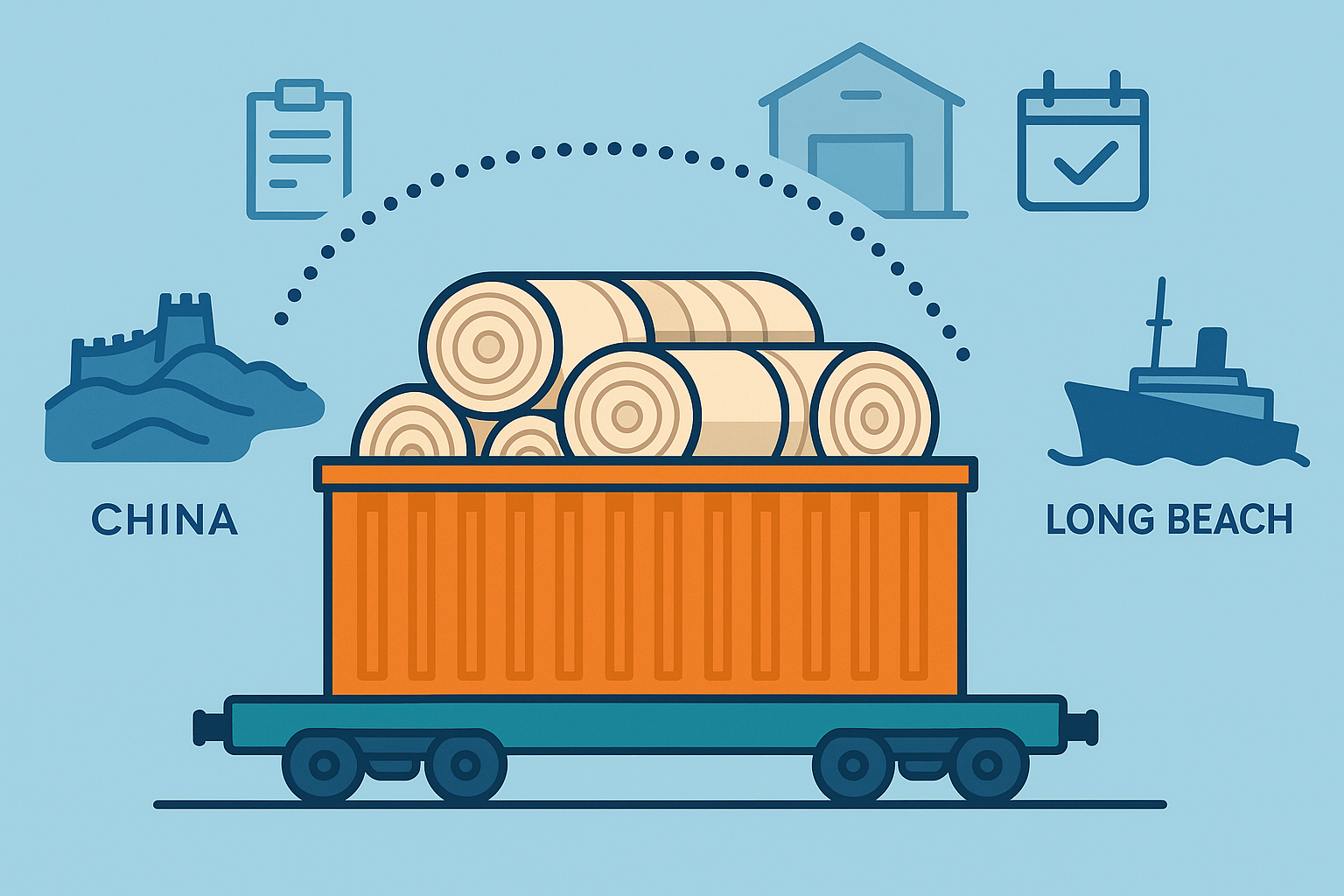
Although textile shipments often move in large volumes and require careful handling, importers still struggle with Open Top FCL detention prevention for textiles from China to Long Beach, especially when schedules shift or documentation lacks consistency. Therefore, predictable delivery depends on how well you coordinate loading, customs preparation, and last-mile arrangements, all of which can be strengthened with structured workflows and expert support from partners such as Top China Freight. This article offers actionable methods you can apply immediately to prevent detention fees and stabilize your textile supply chain.
Why Does Open Top FCL Detention Prevention Matter for Textile Shipments?
Because textile shipments often involve oversized rolls, layered packaging, and high container utilization, delays can escalate quickly once the container reaches Long Beach. Moreover, Open Top equipment requires additional handling compared with standard FCL, so any misalignment in scheduling or customs planning can trigger detention fees. When shippers coordinate documentation, drayage, and unloading capacity in advance, they protect delivery schedules and minimize avoidable surcharges.
How Can Shippers Improve Open Top Container Loading for Textile Cargo?
Efficient loading is essential, since Open Top units handle bulky textile rolls that must be secured with precision. Additionally, carriers expect compliance with safety requirements because loose rolls may shift during transit.
Recommended loading practices
- Use fabric roll securing methods such as tension straps and horizontal blocking.
- Separate oversized rolls from lighter cartons to simplify destination unloading.
- Photograph the container interior for pre-arrival planning at Long Beach.
- Mark roll sequences clearly so warehouse teams unload without searching.
These techniques support Open Top container loading strategies and help reduce unloading time, which directly lowers detention risk.
What Documentation Supports Detention Prevention for Textile Imports?
Although textile cargo rarely triggers special restrictions, U.S. customs requires precise descriptions and fabric composition codes. Therefore, importers must prepare documents that show consistency from invoice to packing list.
Typical documentation required
- Commercial invoice with fiber content and declared use
- Packing list detailing roll count, net and gross weight
- HS codes and compliance notes
- Origin certificates if requested
- Booking confirmation aligned with China to Long Beach shipping schedule planning
Accurate paperwork accelerates customs review, helping importers avoid extra days at the terminal.
How Does Transit Time Planning Reduce Open Top FCL Detention?
Transit times on China–Long Beach routes fluctuate due to weather cycles, vessel rotation adjustments, and port labor availability. Therefore, importers must forecast vessel arrival windows before booking drayage.
| Origin Port | Estimated Transit to Long Beach | Notes |
|---|---|---|
| Shanghai | 14–17 days | Stable weekly services |
| Qingdao | 16–19 days | Seasonal congestion increases variance |
| Ningbo | 14–18 days | Strong capacity but schedule shifts occur |
| Shenzhen | 13–16 days | Fastest for textile exporters in South China |
These ranges reinforce shipment timing control for textile exporters, helping avoid scheduling mismatches.
What Operational Practices Prevent Delays at Long Beach Terminals?
Lorem ipsum dolor sit amet, consea
Because Long Beach terminals handle thousands of daily truck appointments, proper planning determines whether a container exits on time.
Effective operational habits
- Pre-book drayage 3–5 days before ETA.
- Share unloading expectations with the warehouse early.
- Request terminal appointment updates daily during peak seasons.
- Confirm free time and contract terms before sailing.
Moreover, coordination strengthens textile supply chain efficiency improvement, especially when managing multiple seasonal restocking cycles.
ctetur adipiscing elit. Ut elit tellus, luctus nec ullamcorper mattis, pulvinar dapibus leo.
Case Studies
Smooth Open Top FCL Delivery for a Bulk Textile Order
Cargo: 18 tons of mixed textile rolls
Route: Ningbo → Long Beach
Mode: Open Top FCL
Transit Time: 15 days
Total Cost: Mid-range freight rate
Outcome: The shipper applied Long Beach port detention avoidance practices by confirming customs details early and booking drayage before departure. Although the terminal experienced congestion, the consignee retrieved the container within 24 hours, preventing USD 450–700 in detention fees.
Oversized Textile Roll Shipment From Shanghai to Long Beach
Cargo: 14 oversized polyester rolls + 220 cartons
Route: Shanghai → Long Beach
Mode: Open Top FCL
Transit Time: 16 days
Cost Level: Standard Open Top surcharge + ocean freight
Outcome: The shipper used fabric roll securing methods and provided full loading photos to the warehouse in advance. Therefore, unloading required only 90 minutes, and the consignee returned the container early, maintaining on-time distribution to its U.S. garment factories.

How Does Partnering With a Professional Forwarder Reduce Detention Risk?
Although importers may manage parts of the process independently, professional forwarders ensure consistency across booking, customs preparation, and delivery coordination. Moreover, a reliable logistics provider—such as those offering end-to-end textile freight planning similar to Top China Freight—helps stabilize both compliance and timing. When multimodal or alternative routing is necessary, importers may explore additional services such as sea freight or door-to-door solutions to maintain predictable delivery schedules.
How Can Visibility Tools Strengthen Detention Prevention?
Shippers who rely on outdated updates often react too late when a vessel changes course or a terminal shifts yard storage zones. Therefore, real-time visibility keeps every party aligned with the operational plan.
Useful visibility tools
- Vessel tracking dashboards
- Customs milestone notifications
- Drayage dispatch alerts
- Warehouse appointment trackers
These solutions support minimizing delays at destination terminals, protecting delivery continuity for textile importers.
Conclusion
Although detention fees are often treated as unavoidable, proactive planning can significantly reduce their impact, especially for Open Top FCL detention prevention for textiles from China to Long Beach. Moreover, when importers align documentation, loading procedures, transit forecasts, and destination operations, textile shipments move predictably through Long Beach without costly delays. Therefore, businesses seeking consistency and operational efficiency should adopt the strategies discussed here and work with experienced logistics partners to maintain long-term stability across their textile supply chains.
Request A Free Quote
Need a reliable logistics partner? Share your shipment details and we’ll provide a tailored quotation quickly and accurately.
FAQ:
What drives detention fees for Open Top FCL shipments?
Detention fees arise when containers stay longer than allowed. Delays often come from slow unloading, missing documents, or congestion during pickup. Good planning helps avoid these charges.
How can I prepare documentation to speed textile clearance?
Accurate HS codes, complete roll descriptions, and clear packing lists help customs process shipments faster. Broker coordination also minimizes the risk of manual review.
Should I secure drayage before the vessel arrives in Long Beach?
Yes, early booking prevents truck shortages during peak times. It also keeps your container moving quickly once released, reducing detention exposure.
What issues most often slow textile imports at Long Beach?
Terminal congestion, inaccurate documentation, and missed appointments frequently create delays. Aligning schedules early helps maintain smooth flow.
Is multimodal transport useful for speeding textile deliveries?
In some cases, yes. Rail–sea or air–sea combinations offer more predictable timing, especially when ocean schedules fluctuate or urgent replenishment is needed.