
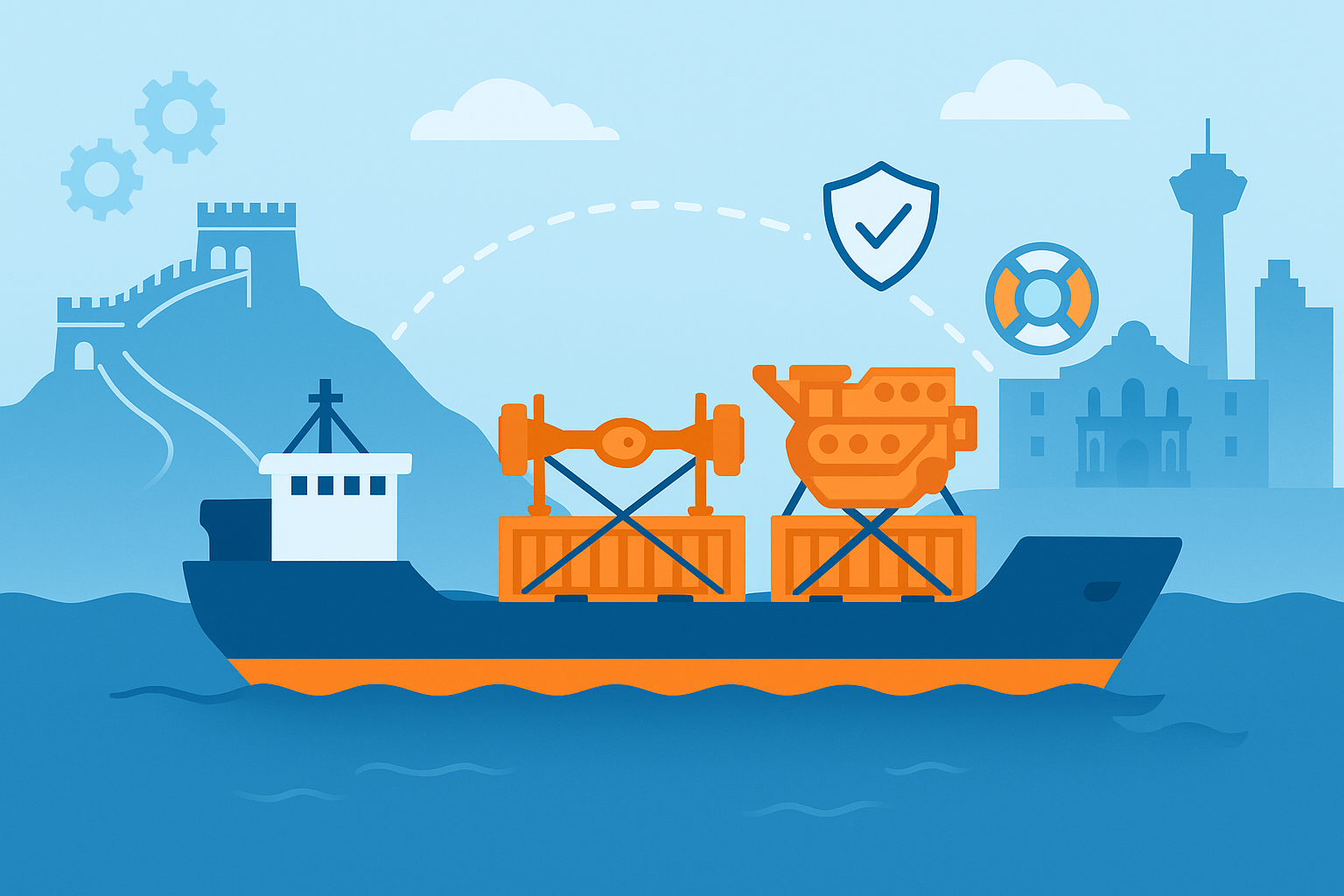
Although Flat Rack FCL insurance for auto parts from China to Texas seems straightforward, oversized or exposed cargo often faces heightened risks throughout the supply chain. Therefore, this guide outlines practical strategies to safeguard shipments from loading to final delivery, supported by insights and planning tools available through Top China Freight. Because every move matters for high-value auto components, you will find actionable steps to build a more secure, predictable logistics workflow.
What Makes Flat Rack FCL Insurance Essential for Auto Parts from China to Texas?
Because many auto parts—such as chassis, engines, cranes, or over-length frames—cannot fit inside a standard container, Flat Rack remains the preferred solution. However, the open-sided structure exposes the cargo to weather, impact, and lifting forces. Consequently, insurance becomes a core requirement rather than an optional add-on. Moreover, shippers handling high-value machinery must document every stage carefully to secure full coverage.
Key Risk Factors in Flat Rack Auto-Parts Shipping
- Weather exposure during ocean transit
- Heavy-lift loading and unloading risks
- Increased securing requirements for oversized cargo
- High susceptibility to impact damage
- Compliance obligations tied to U.S. automotive import rules
Because these risks are predictable, proper insurance and preparation help reduce avoidable loss.
How Does Cargo Preparation Improve Insurance Protection for Flat Rack FCL Shipments?
Although insurers provide broad coverage, approval frequently depends on whether the cargo was properly secured, measured, and documented at origin. Therefore, shippers invest in reinforced packing and engineering-grade lashing plans. Moreover, accurate documentation accelerates claims if an incident occurs during transit.
Preparation Measures That Strengthen Insurance Validity
- Steel-frame crating for high-weight components
- Certified lashing diagrams approved by surveyors
- Protective shrink wrap for weather-sensitive sections
- Supplier-issued material specification sheets
- Pre-loading inspection photos stored for future claims
Because these measures demonstrate due diligence, insurers perceive shipments as low-risk, which supports better claim outcomes.

How Do Routes and Transit Choices Affect Flat Rack FCL Insurance Requirements?
Although multiple sailings connect China to Texas, not all routes offer the same reliability or risk exposure. For example, auto parts often ship via Shanghai, Ningbo, or Qingdao to Houston or Galveston before inland drayage. Therefore, importers evaluate weather zones, handling frequency, and transshipment stops to understand potential hazards. Moreover, shorter routes with fewer terminal touches usually reduce exposure and may even lower premiums.
Common China–Texas Routes for Flat Rack Auto Parts
| Route | Transit Time | Advantages | Considerations |
|---|---|---|---|
| China → Houston (direct) | 24–32 days | Fewer handlings, stable schedule | Higher peak-season rates |
| China → LA/LB → Texas via rail | 25–30 days | Faster door-to-door for urgent loads | More touchpoints |
| China → Gulf Coast ports | 26–35 days | Avoids West Coast congestion | Limited weekly sailings |
Because route selection ties directly to risk, insurers often request route disclosure during underwriting.
Why Documentation Defines the Strength of Flat Rack FCL Insurance Claims
Although many importers focus on physical protection, documentation plays an equally important role. Since Flat Rack cargo involves open exposure, insurers require more detailed loading records than for standard containers. Therefore, detailed measurement sheets, photos, and survey reports are vital during both booking and claims.
Documents Supporting Claim Eligibility
- Measurement and weight certificates
- Pre-loading inspection & photo set
- Lashing plan approved by surveyor
- Commercial invoice & packing list
- Bill of lading with “Flat Rack” notation
Because complete documentation supports both compliance and insurance validation, importers benefit from standardizing these files.
Case Studies
Shanghai → Houston | Oversized Engine Blocks
Cargo Type: cast-iron engine blocks (out-of-gauge)
Container: Flat Rack FCL
Volume & Weight: 29 CBM / 11,800 kg
Route: Shanghai → Houston (direct)
Transit Time: 27 days
Total Freight + Insurance: USD 6,800
Summary
A Texas-based machinery distributor required stable delivery for heavy engine blocks. Because the cargo was exposed, reinforced crating and a certified lashing plan were used. Consequently, no damage occurred during transit, and the insurer approved the shipment at a favorable premium due to clear documentation.
Qingdao → Texas | Extended-Length Automotive Frames
Cargo Type: 7.5–9.2 m automotive structural frames
Container: Flat Rack FCL
Volume & Weight: 41 CBM / 9,450 kg
Route: Qingdao → LA/LB → Texas (rail + drayage)
Transit Time: 31 days
Total Freight + Insurance: USD 7,400
Summary
Because the frames exceeded standard container dimensions, a Flat Rack solution combined with a special lashing surveyor was used. Although the routing included multiple handling points, accurate measurement sheets and pre-loading photos ensured full insurance coverage and smooth arrival in Texas.
How Do Freight Rates and Insurance Premiums Interact for Auto Parts?
Although freight rates fluctuate weekly, insurance premiums remain relatively stable—yet they directly reflect cargo exposure, value, and handling difficulty. However, by aligning packing quality, loading standards, and route choice, shippers often achieve optimized premiums. Moreover, coordinating volumes in advance often reduces cost volatility, especially for heavy machinery bound for Texas.
Influencing Factors
- Cargo value and vulnerability
- Lashing complexity and material type
- Selected carrier and routing stability
- Seasonal demand and port congestion
- Inland drayage distance within Texas
Because these elements influence both operational and financial planning, importers evaluate them together.
How Top China Freight Supports Safe Flat Rack FCL Shipping to Texas
Although many forwarders can book Flat Rack containers, few offer end-to-end engineering support, lashing supervision, and insurance guidance. Therefore, importers often rely on Top China Freight for complex auto-part shipments. Additionally, services such as FCL/LCL solutions and customs brokerage ensure compliance and smooth entry into Texas distribution networks. Because risk control matters for oversized loads, tailored support significantly improves long-term logistics performance.
How Do Texas Inland Logistics Influence Insurance and Delivery Accuracy?
Although the ocean leg carries major physical risks, inland movement determines delivery precision. Since Texas relies heavily on Houston and Galveston for Flat Rack arrivals, inland drayage must be planned around equipment type, route safety, and unloading capabilities. Consequently, insurers consider inland risks—especially for long, tall, or over-width components—when assessing coverage.
Key Inland Considerations
- Road restrictions for oversized auto components
- Escort vehicle requirements for heavy machinery
- Weather sensitivity on long drayage routes
- Crane availability at Texas warehouses
- Appointment-based unloading to avoid demurrage
Because inland risks vary greatly by cargo type, preparation remains essential from the moment the Flat Rack leaves the port.
Conclusion
To summarize, securing Flat Rack FCL insurance for auto parts from China to Texas requires strong preparation, engineered cargo protection, accurate documentation, and optimized routing. Moreover, real-time visibility and inland planning further reduce risk for oversized automotive components. As your supply chain expands, partnering with professionals who understand Flat Rack challenges ensures safer delivery and stronger insurance outcomes. Contact our specialists to evaluate the right coverage and loading strategy for your next shipment.
Request A Free Quote
Start shipping smarter with TopChinaForwarder today! 🚢✨ Request a Free Quote 📝 and get a tailored logistics plan built around your cargo and timeline.
FAQ:
How are insurance premiums calculated for Flat Rack auto parts?
Premiums depend on cargo value, exposure level, lashing quality, and routing risk. Preparing clear documentation often reduces costs.
What documents help validate Flat Rack insurance claims?
Measurement sheets, lashing photos, surveyor approvals, invoices, and B/L notes provide strong evidence for claim evaluation.
Can oversized engine parts move safely via Flat Rack?
Yes, when supported by engineered crating, certified lashing, and tailored insurance coverage for heavy components.
What causes delays for Flat Rack cargo in China?
Equipment shortages, peak-season congestion, and incomplete documents may slow gate-in. Early booking helps avoid these issues.
How do carriers handle Flat Rack units during loading?
Special cranes and heavy-lift equipment secure the cargo. Pre-approved lashing diagrams ensure safe movement.