
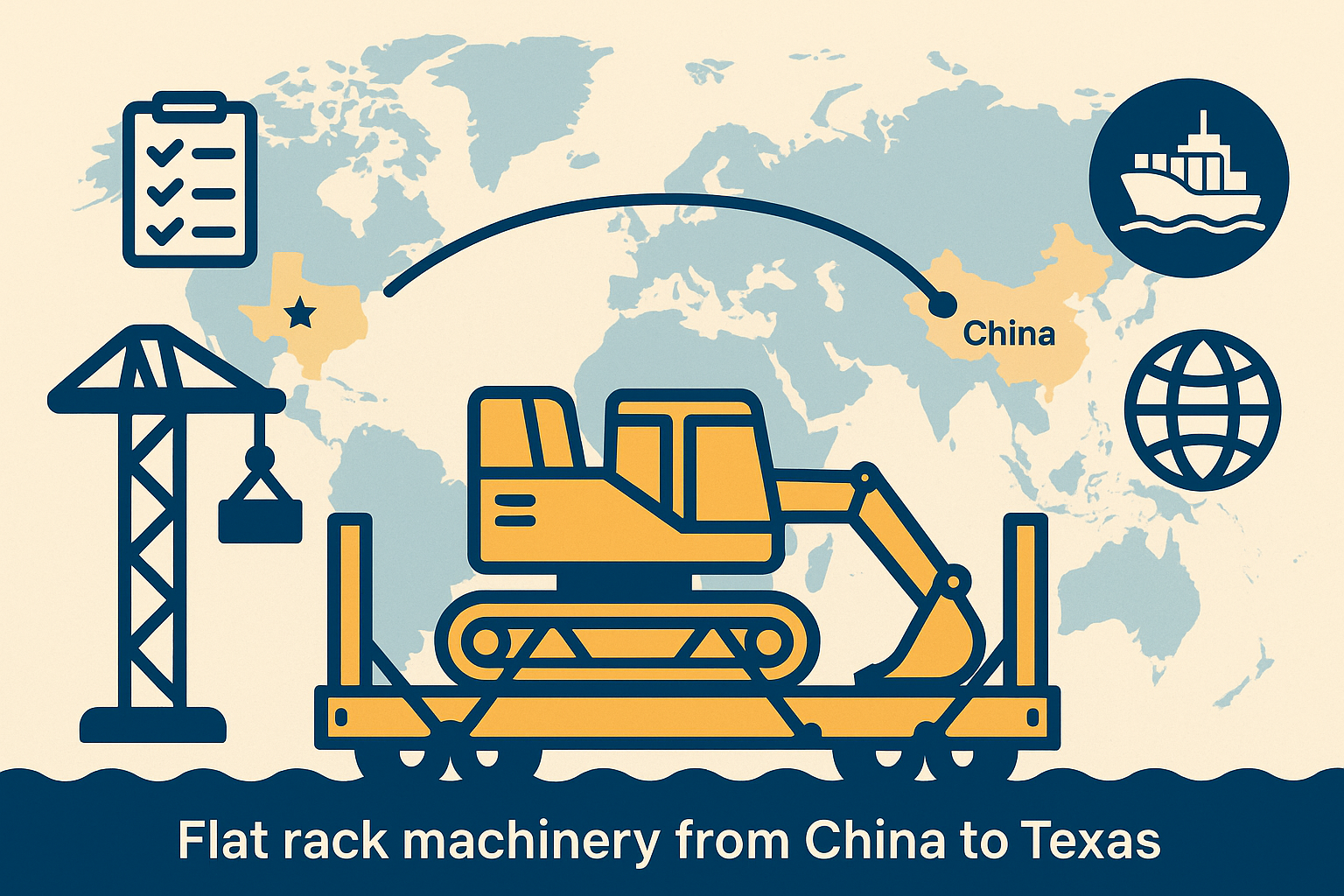
Managing Flat Rack FCL detention prevention for machinery from China to Texas requires more than avoiding extra fees; it demands proactive planning, engineered loading, and coordinated customs workflows across multiple touchpoints. Moreover, oversized machinery faces higher exposure to delays at ports, inland terminals, and inspection zones, especially during peak import seasons in the US. As this guide unfolds, you will find actionable strategies supported by practical insights from Top China Freight to help you deliver heavy equipment safely, quickly, and without detention charges.
What Makes Machinery Shipments Prone to Detention When Using Flat Racks?
Machinery shipments frequently exceed standard handling profiles, which creates slower processing times across terminals. Although flat racks allow flexibility for oversized cargo, machinery often requires crane lifts, additional documentation, and inland equipment scheduling at both origin and destination. Consequently, any misalignment in timing increases the risk of detention.
Key Detention Triggers for Machinery Shipments
- Incomplete technical drawings delaying inspection
- Late arrival of special lifting teams in Texas terminals
- Port congestion during project-cargo seasons
- Mismatched truck appointments for oversized equipment
- Unexpected customs exams for regulated machinery
Because each of these variables compounds delays, proactive planning becomes essential.
Why Early Engineering and Measurement Accuracy Prevent Detention?
Proper engineering drawings and accurate measurements help ensure that carriers accept the cargo without surprises. Additionally, they support correct stowage planning, inland trucking permits, and crane scheduling in Texas.
Measurement Essentials for Heavy Machinery
- Exact width and height after final packing
- Weight distribution across machinery components
- Overhang lengths requiring special handling
- Center-of-gravity details for lift planning
- Clearance needs for Texas road regulations
Since Texas enforces strict overweight and over-dimension rules, engineering data tied to flat rack planning reduces detention risk significantly.
How Does Engineered Loading Reduce Risk at Both Ends?
Engineered loading refers to the use of reinforced securing plans, pre-designed lashing layouts, and weight-balance calculations. Although these steps require additional preparation, they minimize loading disputes and shorten port handling times.
Benefits of Engineered Loading
- Faster crane operations at China’s ports
- Reduced likelihood of re-lashing at transshipment ports
- Shorter unloading times in Houston or Galveston
- Lower chance of safety re-checks
- Better equipment utilization for inland trucking
Because every minute saved during handling reduces detention exposure, engineered loading is one of the most effective planning tools.

How Can Route Optimization Help Avoid US Terminal Detention?
Choosing the right China–Texas route determines not only transit time but also port congestion patterns. Moreover, some carriers provide better OOG acceptance and more predictable unloading windows for flat rack machinery.
China → Texas Route Options & Detention Considerations
| Route | Transit Time (Days) | Detention Risk | Notes |
|---|---|---|---|
| Shanghai → Houston | 22–28 | Low–Medium | Strong handling for machinery |
| Ningbo → Galveston | 24–30 | Medium | Occasional crane delay windows |
| Qingdao → Houston | 26–32 | Medium–High | Peak seasons affect scheduling |
Because unloading appointments fill quickly in Texas, selecting a route with consistent OOG processing reduces the chance of equipment sitting idle.
Case Studies
Construction Machinery Delivered to Houston Without Detention
Cargo: 40FR with 32-ton excavator
Route: Ningbo → Houston
Outcome: 0 detention hours
The shipper provided accurate engineering drawings, enabling early crane scheduling and smooth customs release. Moreover, inland trucking teams secured permits two days before arrival, preventing yard congestion.
Industrial Generator Shipped to Galveston with Optimized Timing
Cargo: 20FR carrying 18-ton generator
Route: Shanghai → Galveston
Outcome: Saved 24 hours of potential detention
Because tracking alerts predicted early vessel discharge, the consignee pre-booked escort vehicles and a low-bed trailer, avoiding costly last-minute delays.

Why Customs Readiness Matters for Machinery Entering Texas?
Machinery often includes regulated components—engines, hydraulic systems, steel structures, or electronics—that fall under specific US import categories. Although customs clearance can be straightforward, delays occur when documents do not match cargo specifications.
Key Customs Documents for Machinery
| Document | Purpose | Notes |
|---|---|---|
| Commercial Invoice | Declares machinery details | Include model & serial numbers |
| Packing List | Confirms dimensions & weight | Must match engineering drawings |
| HS Code Classification | Determines admissibility | Affects duties & inspection |
| EPA/DOT Docs | Required for engines | Needed before cargo release |
| Arrival Notice | Coordinates with truckers | Must be received early |
Since machinery often triggers exams, aligning documents with tracking data minimizes detention exposure.
How Does Tracking Improve Detention Prevention for Machinery?
Tracking may seem secondary, yet it synchronizes all stakeholders—ports, carriers, customs brokers, and trucking companies. Moreover, accurate milestone updates help prevent last-minute schedule conflicts.
Real Benefits of Tracking for OOG Machinery
- Predicting discharge time to align cranes
- Reducing waiting times for oversized trucks
- Preventing missed free-time windows
- Allowing factories in Texas to prepare unloading crews
- Coordinating customs clearance with real-time ETA
Because flat rack machinery requires multiple coordinated steps, tracking becomes the backbone of detention prevention.
How Does Documentation Synchronization Lower Detention Exposure?
Documentation errors cause many machinery shipments to stall. Yet, aligning document updates with tracking milestones ensures the clearance process stays ahead of the vessel.
Sync Points That Improve Clearance
- Update HS codes when engineering changes occur
- Submit EPA/DOT documents before arrival
- Verify importer details to avoid customs holds
- Match lashing photos with packing list dimensions
- Share commercial invoice revisions with brokers immediately
Synchronizing documentation with transit progress drastically reduces detention risks tied to compliance delays.
Conclusion
In conclusion, effective Flat Rack FCL detention prevention for machinery from China to Texas requires a combination of engineered planning, synchronized documentation, reliable tracking, and pre-arranged inland equipment. Moreover, businesses that adopt proactive workflows significantly reduce operational risks, improve delivery predictability, and avoid unnecessary detention charges. To enhance your machinery shipping performance, consider partnering with a logistics team capable of coordinating every step of the oversized cargo journey.
Request A Free Quote
Start shipping smarter with TopChinaForwarder today! 🚢✨ Request a Free Quote 📝 and get a tailored logistics plan built around your cargo and timeline.
FAQ:
What machinery types benefit most from flat rack shipping?
Excavators, generators, CNC machines, drilling rigs, and steel structures that exceed standard container dimensions.
Why do flat rack shipments face higher detention risks?
OOG cargo requires cranes, permits, and specialized checks, so delays occur when any step is misaligned.
How can I speed up customs clearance for machinery in Texas?
Prepare HS codes, EPA/DOT documents, packing lists, and technical drawings before arrival to avoid customs exams.
Do I need escort vehicles for machinery deliveries?
Escort vehicles are required when machinery exceeds Texas road limits; booking them early prevents schedule conflicts.
How does tracking reduce detention risk?
Tracking aligns crane booking, trucking schedules, and customs timing, preventing missed free-time windows.