
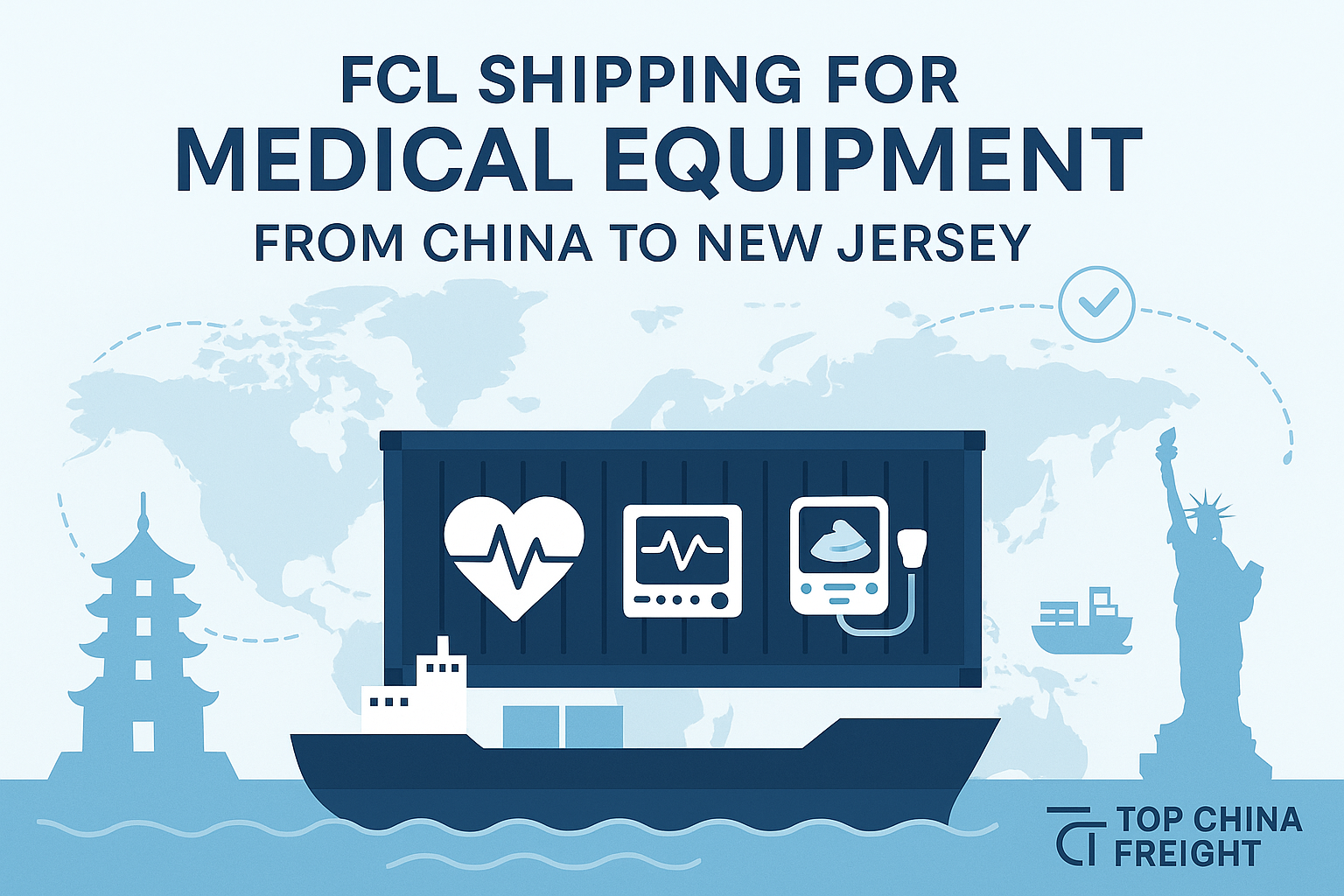
Although FCL shipping for medical equipment from China to New Jersey requires strict regulatory control and delicate cargo protection, companies can still achieve predictable transit times and safe delivery when they follow structured planning. Moreover, organizations using trusted partners such as Top China Freight gain better route visibility and stronger compliance support across the entire healthcare supply chain. Therefore, this guide offers actionable strategies to help shippers secure medical devices, reduce risks, and streamline FDA-regulated import processes.
What Makes FCL Shipping for Medical Equipment to New Jersey Unique?
Medical devices demand higher handling standards than most general cargo. Furthermore, equipment such as MRI coils, sterilization units, infusion systems, and sensitive diagnostic tools require vibration protection, moisture control, and regulatory documentation aligned with U.S. healthcare rules.
Key challenges include:
- Maintaining stable container environments
- Preventing shock and corrosion during long-haul ocean transit
- Meeting FDA, CBP, and HS classification requirements
- Aligning delivery schedules with hospital installation teams
- Ensuring insurance coverage for high-value cargo
Because the stakes are high, shippers often rely on structured FCL movements to minimize handling risks while maintaining predictable lead times.
How Should Shippers Prepare FCL Containers for Sensitive Medical Equipment?
Proper container preparation protects fragile equipment while reducing insurance claims. Additionally, using shock-resistant packing solutions for medical equipment helps stabilize expensive devices.
Essential Preparation Steps
- Vibration control: Use molded foam, internal braces, and pallet cushioning.
- Humidity management: Add desiccants and apply moisture-barrier wrapping.
- Temperature considerations: For temperature-sensitive devices, choose reefer FCL or insulated packaging.
- Structural reinforcement: Install wooden frames or metal brackets for oversized equipment.
- Regulatory compliance: Prepare manuals, product certificates, and test reports.
Because medical cargo rejects improvisation, every packing detail must follow engineering-level standards.
Why Does Documentation Affect Medical Equipment FCL Shipping to New Jersey?
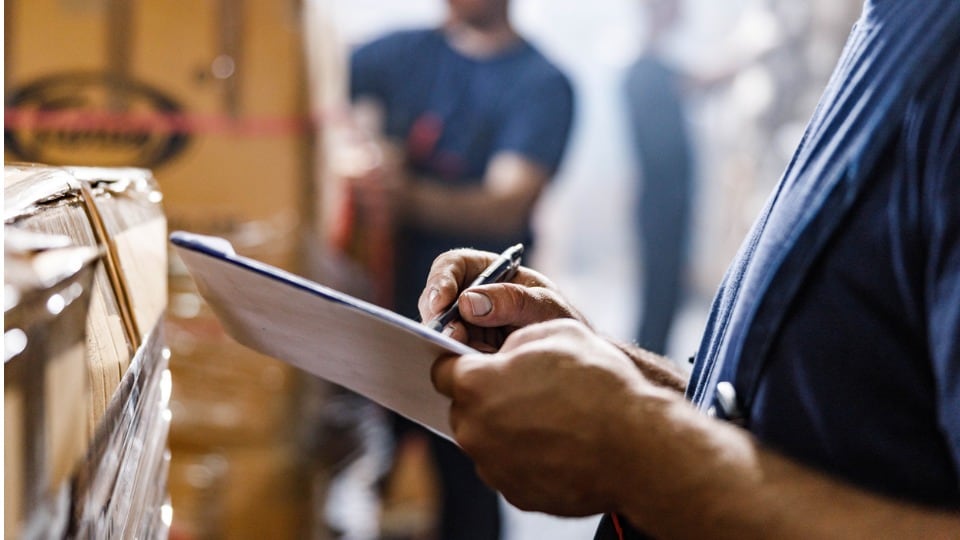
Documentation accuracy directly affects customs clearance speed. Additionally, medical shipments often undergo stricter screening at New Jersey ports such as Newark (EWR) and Elizabeth.
Required Medical Compliance Documents
- Commercial invoice with HS code classification for medical instruments
- Packing list describing equipment fragility
- Certificate of origin
- Product safety and sterilization documents
- Importer of Record (IOR) details
- FDA 510(k) or applicable regulatory filings
Shippers who complete these documents early avoid storage fees and prevent inspection delays.
What Transit Time Should Shippers Expect from China to New Jersey?
Although schedules may shift with weather and port congestion, FCL medical equipment shipments usually follow predictable windows. Moreover, stable planning reduces downstream installation delays for hospitals and clinics.
Estimated Transit Time & Cost Reference Table
| Origin Port (China) | Transit Time to New Jersey | Typical FCL Cost Range (40HQ) |
|---|---|---|
| Shanghai | 30–36 days | USD 5,800–7,200 |
| Shenzhen/Yantian | 32–38 days | USD 5,900–7,400 |
| Ningbo | 33–40 days | USD 6,000–7,600 |
Note: Ranges vary based on seasonality, freight rates, and medical cargo insurance add-ons.
How Can Shippers Reduce Risk for High-Value Medical Devices?
edical devices worth USD 300,000–2,000,000 demand highly controlled handling. Therefore, risk mitigation must start before loading.
Recommended Risk-Control Strategies
- Choose marine insurance tailored to medical equipment risk management
- Use shock monitors and tilt detectors
- Request sealed and reinforced FCL containers
- Implement photography documentation at each loading stage
- Select carriers with stable U.S. East Coast schedules
Additionally, shippers can reduce risk by using end-to-end delivery for hospital equipment logistics, especially when installation timing is critical.
Case Studies
Shipping a Hospital Sterilization System to New Jersey
Cargo Type: 1 × 40HQ FCL, 1,800 kg sterilization equipment
Route: Shanghai → New Jersey (EWR)
Transit Time: 34 days
Cost: USD 6,300 including insurance
Challenges: Moisture exposure, customs classification, tight installation schedule
Outcome: Through controlled packaging and early FDA documentation, equipment arrived intact and reached the hospital 72 hours before installation.
MRI Diagnostic Component Shipment to a Medical Center
Cargo Type: High-value MRI coil packs (USD 1.2M total value)
Route: Shenzhen → New Jersey
Transit Time: 36 days
Risk Factors: Vibration sensitivity, moisture, customs inspection risk
Outcome: After using humidity-barrier packaging and reinforced wooden supports, the shipment passed inspection without delay and was delivered on schedule.
How Does Partnering with a Specialist Improve Shipping Outcomes?
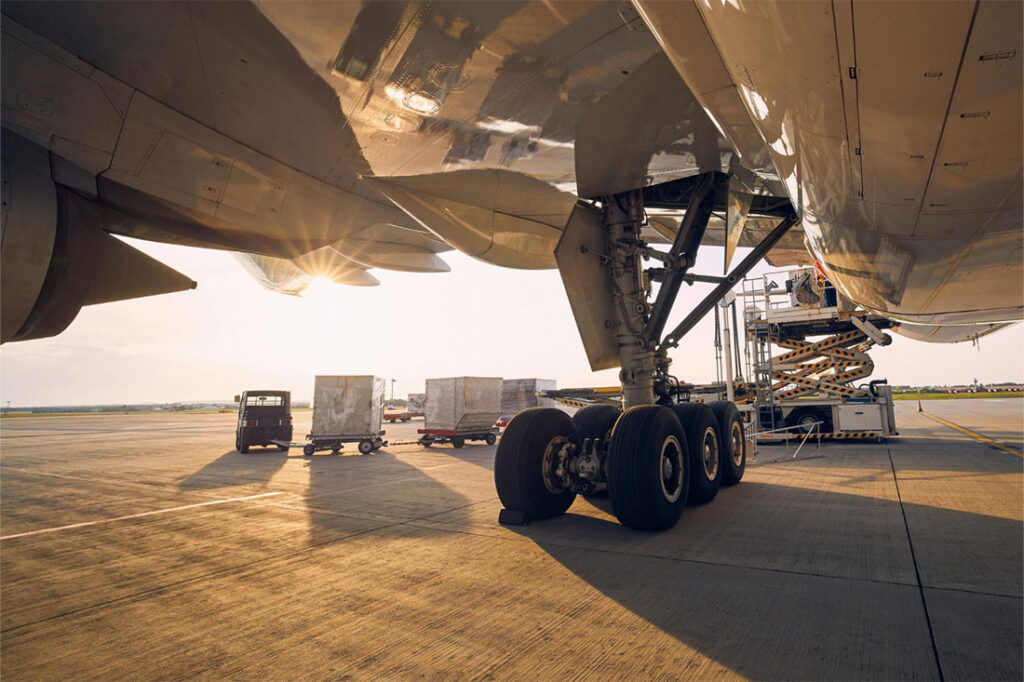
Medical shipments benefit significantly from specialist freight forwarders. For example, Top China Freight supports healthcare supply chains with compliance guidance, packing standards, and controlled FCL scheduling. Additionally, shippers can leverage multimodal expertise via sea freight solutions or integrate time-critical components through air freight when deadlines are urgent.
What Are the Insurance Options for Medical Equipment Shipped by FCL?
Because medical devices carry high financial value, insurance decisions must consider replacement cost, downtime risk, and repair lead times.
Common Insurance Types
- All-risk marine insurance for full-value equipment
- Named-peril insurance for moisture or vibration exposure
- Door-to-door policies covering multimodal transitions
- Delay and consequential-loss extensions
Moreover, securing insurance at the booking stage significantly reduces dispute risks.
Conclusion
In summary, FCL shipping for medical equipment from China to New Jersey becomes far more predictable when shippers combine compliant documentation, engineered packaging, proactive scheduling, and stable carrier selection. Additionally, using expert logistics partners ensures better transit visibility and consistent hospital installation timelines. Therefore, companies aiming to safeguard high-value medical devices should coordinate early and request tailored shipping solutions for their specific equipment.
Request A Free Quote
Need a reliable logistics partner? Share your shipment details and we’ll provide a tailored quotation quickly and accurately.
FAQ:
What affects FCL shipping costs for medical equipment?
Costs depend on container type, packing requirements, insurance, and port handling. Additionally, regulatory checks and installation deadlines may influence the total shipping budget.
How can I speed up medical equipment customs clearance?
You can accelerate clearance by preparing FDA documents early, using accurate HS codes, and working with experienced brokers who coordinate reviews before vessel arrival.
What insurance should I choose for high-value equipment?
All-risk marine insurance is preferred because it covers most handling and transit risks. However, you can add moisture or vibration clauses depending on device sensitivity.
How early should I book FCL space for medical devices?
Booking 3–5 weeks ahead is recommended, especially during peak procurement cycles or port congestion periods.
Are there restrictions on shipping diagnostic equipment?
Some diagnostic systems may require additional FDA approvals or radiation compliance checks depending on device type.