
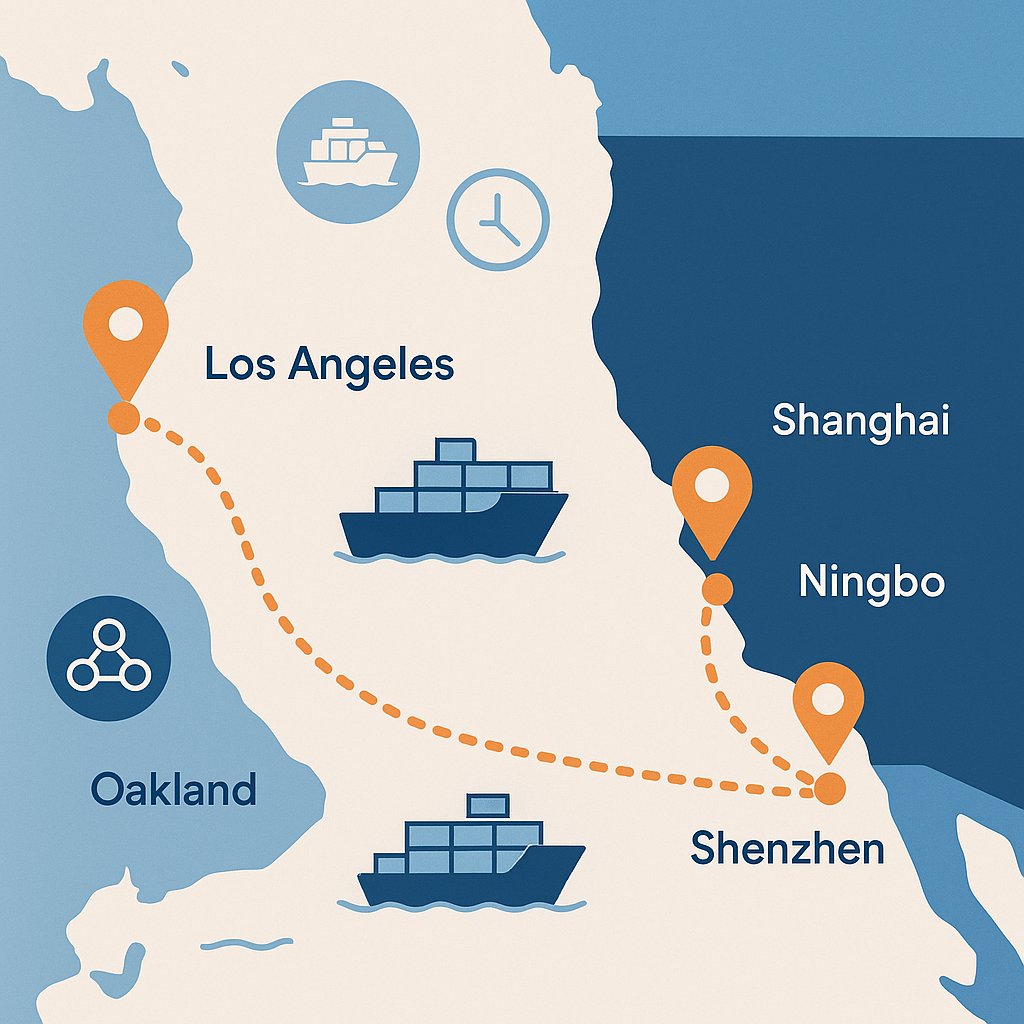
Because shipping volumes between China and the U.S. West Coast continue to rise, selecting the best route for FCL shipping from China to California becomes essential for maintaining stable supply-chain performance. Since transit reliability, freight rates, and customs processing all vary by port pairing, importers must compare routes with both cost and operational efficiency in mind. Therefore, this guide—supported by insights from Top China Freight—breaks down strategic routing options that strengthen delivery consistency and reduce unexpected delays.
What Defines the Best Route for FCL Shipping from China to California?
Although distance appears straightforward, the “best” route depends on several operational variables. For example, vessel reliability, port congestion levels, rail connections, and drayage availability all affect transit outcomes. Moreover, California hosts multiple major gateways—Los Angeles, Long Beach, Oakland—each with distinct advantages. Therefore, importers evaluate routes holistically rather than choosing based on geography alone.
Key Factors That Shape Route Quality
- Carrier schedule stability
- Port congestion trends
- Inland distribution requirements
- Seasonal demand cycles
- Freight-rate fluctuations
Because these factors shift throughout the year, successful importers revisit routing strategy regularly.
How Do Major China Ports Influence Route Selection?
China’s primary export hubs—Shanghai, Ningbo, Shenzhen, Qingdao, Xiamen—offer unique advantages. For instance, Shanghai provides the widest carrier selection and most direct services to Los Angeles and Long Beach. Meanwhile, Ningbo often features shorter dwell times and competitive freight rates. Additionally, South China ports excel in handling electronics, apparel, and high-volume retail cargo.
Therefore, matching your cargo origin with the correct export port significantly improves schedule reliability.
Comparative Overview
| China Port | Strength | Best Use Case |
|---|---|---|
| Shanghai | Maximum direct sailings | High-volume FCL cycles |
| Ningbo | Reliable cut-off windows | Retail and mixed cargo |
| Shenzhen | Fast loading, strong trucking | Electronics shipments |
| Qingdao | Northern supply-chain focus | Machinery and auto parts |
Because each origin port interacts differently with West Coast routes, strategic alignment reduces transit variability.
Why Are Los Angeles and Long Beach the Primary Destinations?
Although California offers several ports, Los Angeles (LA) and Long Beach (LB) account for over 40% of U.S. containerized imports. Their massive vessel-handling capacity, strong rail corridors, and dense distribution networks make them the core gateways for China–California FCL trade. Moreover, carriers prioritize LA/LB with the highest frequency of direct sailings from major Chinese ports.
Because arrival speed often defines supply-chain predictability, importers shipping high-volume or time-sensitive goods typically favor LA/LB routes.
Advantages of LA/LB Routes
- Frequent direct services (quickest transit times)
- Largest drayage and warehousing networks in the U.S.
- Strong intermodal rail connections nationwide
- Higher schedule flexibility during peak seasons
What Role Does Oakland Play in California-Bound FCL Shipping?
Although Oakland receives fewer direct China services than LA/LB, it excels in inland distribution to Northern California. Additionally, congestion tends to be lower, and specialized facilities handle machinery, perishables, and project cargo more efficiently. Therefore, Oakland supports shippers targeting Sacramento, San Jose, Fresno, and regional manufacturing hubs.
Because not all California supply chains rely on Southern gateways, Oakland provides a strategic alternative for importers balancing cost and transit pressure.
Case Studies
Electronics Shipment from Shenzhen to Long Beach
Cargo Type: Consumer electronics, 40HQ
Route: Shenzhen → Long Beach (direct express loop)
Challenge: Tight replenishment cycle for a major California retailer
Solution:
The importer adopted a fast-transit service and pre-booked drayage two weeks in advance. Additionally, cross-dock processing near the LB terminal accelerated distribution. As a result, the shipment cut transit time by 3.5 days compared to standard service.
Apparel Shipment from Ningbo to Oakland
Cargo Type: Mixed apparel cartons, 20GP
Route: Ningbo → Oakland (direct)
Challenge: Northern California distribution to Sacramento, Fresno, San Jose
Solution:
By routing through Oakland, the importer avoided LA/LB congestion and reduced inland trucking distance. Customs pre-clearance ensured same-day cargo availability, saving both time and drayage cost.
Why Does Customs Compliance Influence Route Performance?
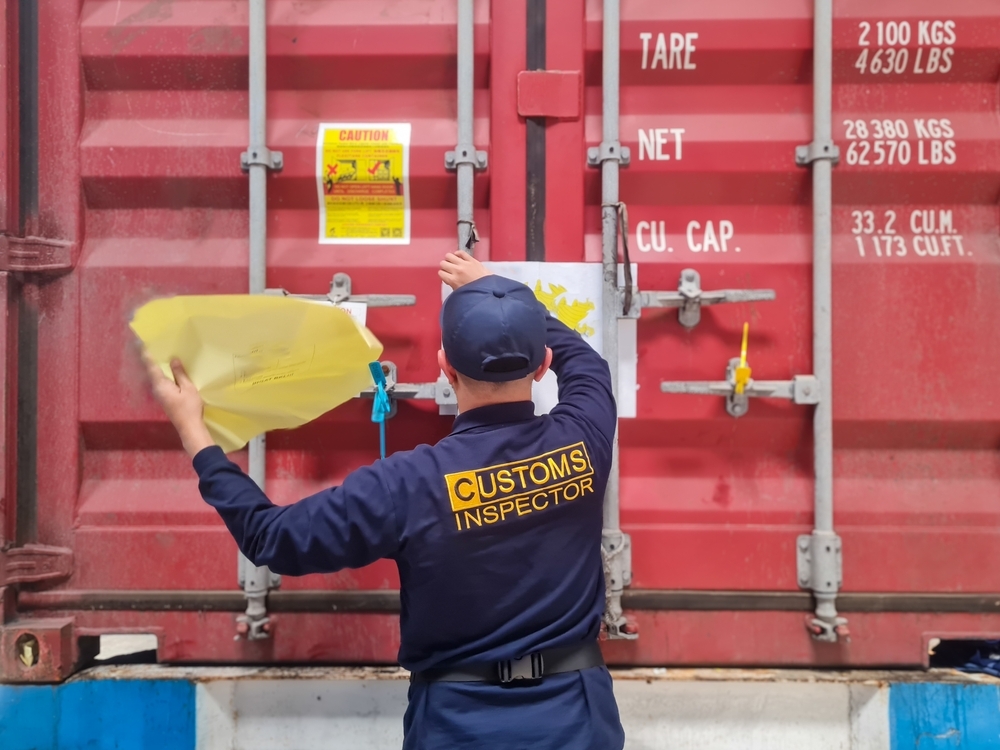
Even with the best route, poor compliance causes delays at the terminal. Since California-bound shipments undergo strict U.S. Customs and Border Protection (CBP) checks, importers prepare documents early and verify HS codes, valuation details, and partner-government-agency requirements. Additionally, ISF (Importer Security Filing) accuracy directly affects risk scores, influencing inspection likelihood.
Essential Customs Documents
| Document | Why It Matters |
|---|---|
| Commercial Invoice | Confirms declared value & product details |
| Packing List | Supports cargo verification |
| ISF Filing | Reduces inspection risk |
| Bill of Lading | Required for cargo release |
| Customs Bond | Ensures financial security |
Therefore, proactive document management eliminates clearance delays that undermine even the fastest FCL routes.
How Do Freight Forwarders Enhance Route Selection for China–California FCL Shipping?
Freight forwarders—such as Top China Freight—evaluate vessel schedules, carrier reliability scores, congestion forecasts, and inland capacity before recommending routes. Moreover, integrated services like customs brokerage, FCL optimization, and multimodal routing help importers manage end-to-end delivery. Links to services such as sea freight and FCL/LCL provide deeper planning support for California-bound shipments.
Because forwarders hold market-wide visibility, they help businesses choose routes that align with seasonality, cargo sensitivity, and cost stability.
How Can Importers Optimize Inland Distribution After Cargo Reaches California?
Although choosing the best route for FCL shipping from China to California is critical, inland distribution determines final delivery speed. Therefore, importers evaluate drayage capacity, warehouse placement, and rail connectivity before booking FCL space. Because California hosts the largest logistics ecosystem in the U.S., strategic inland planning prevents congestion-related delays.
Inland Optimization Tactics
- Pre-book drayage appointments before vessel departure
- Use cross-dock facilities near LA/LB for rapid sorting
- Select rail ramps aligned with nationwide distribution
- Reserve warehouse capacity during peak demand months
Because California retailers operate tightly synchronized supply chains, predictable inland flow becomes as important as ocean routing.
Conclusion
Choosing the best route for FCL shipping from China to California requires balancing transit time, port performance, freight rates, and inland distribution capabilities. Because market conditions shift frequently, importers gain a strategic advantage by evaluating multiple routes, preparing documents early, and collaborating with experienced forwarders. Ultimately, optimized route selection strengthens supply-chain resilience and ensures predictable California delivery cycles.
Request A Free Quote
Start shipping smarter with TopChinaForwarder today! 🚢✨ Request a Free Quote 📝 and get a tailored logistics plan built around your cargo and timeline.
FAQ:
What factors define the best China–California FCL route?
Carrier reliability, port congestion, transit time, and inland distribution requirements influence route quality.
How early should I book FCL space?
During peak seasons, book 2–3 weeks in advance to secure space and avoid rollovers.
Are LA and LB always the best choices?
They are ideal for most cargo, but Oakland suits Northern California distribution.
How can I speed up inland delivery?
Pre-book drayage, use cross-dock hubs, and align warehouse capacity early.
Should I consider alternative West Coast ports?
Only during severe congestion or when seeking additional carrier space.