
- By rudy
- November 27, 2025
- Freight knowledge, Services, Shipping
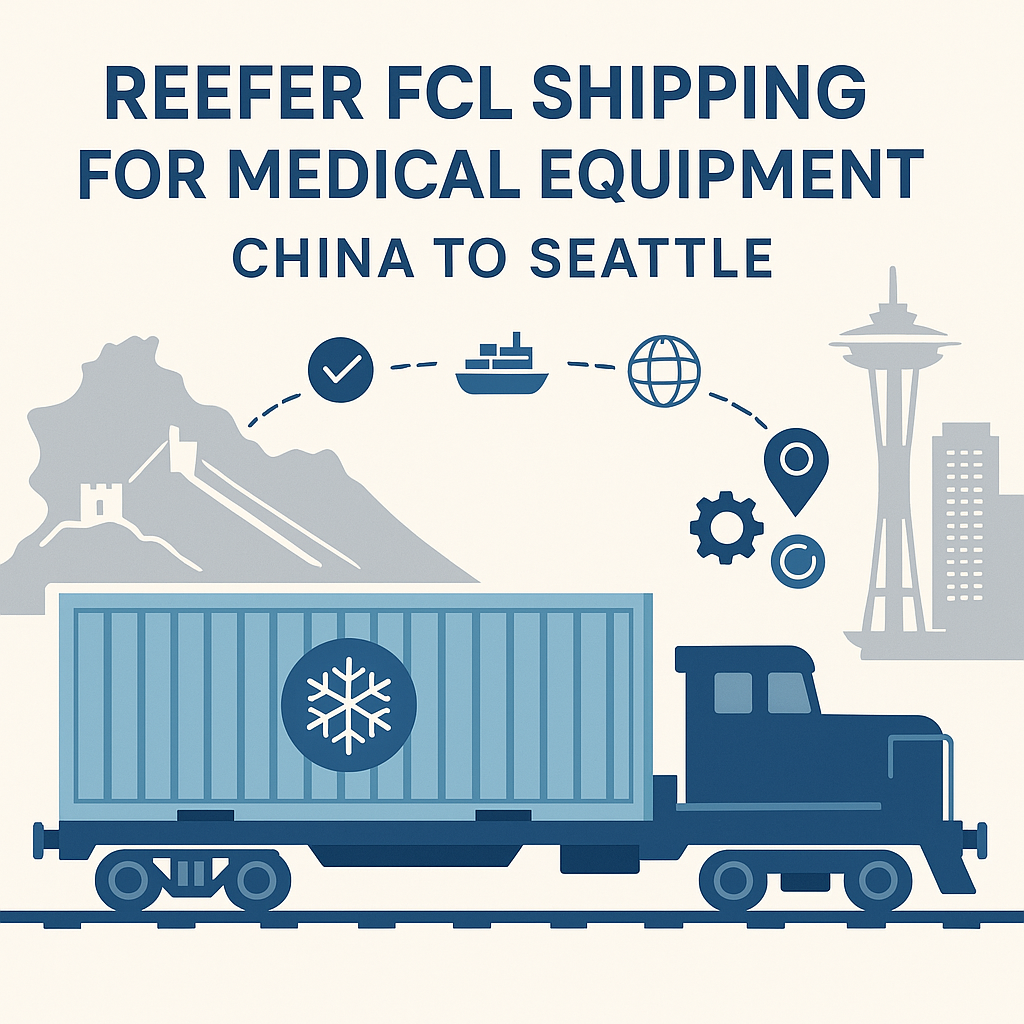
Although the reefer FCL freight rate for medical equipment from China to Seattle is often difficult to anticipate, importers still need absolute stability, temperature accuracy, and predictable port handling. Therefore, this guide explains the full cost structure, compliance steps, transit considerations, and cold-chain solutions required for medical-grade transport—while also offering reliable pathways through our Top China Freight cold-chain network. Moreover, you will find practical examples, cost ranges, documents, and real shipping cases you can apply immediately.

What Defines the Reefer FCL Freight Rate for Medical Equipment from China to Seattle?
Because medical equipment is highly temperature-sensitive, reefer FCL pricing depends on multiple factors, including temperature range, container specification, sailing schedule, port congestion, and compliance requirements. Additionally, energy consumption during transit raises costs, as reefer units require continuous power from origin loading to Seattle terminal discharge. As a result, importers must review not just base ocean freight but also handling costs, plug-in fees, and pre-trip inspections.
Why Do Medical Devices Require Strict Cold-Chain Reefer Handling?
Medical equipment—such as diagnostic optics, biosensors, and temperature-controlled devices—may lose calibration if exposed to heat fluctuations. Consequently, reefer FCL containers are selected to ensure controlled-temperature container solutions. Besides, many devices fall under FDA-regulated medical cargo transport, which requires correct packaging, labeling, and pre-shipment documentation. With the correct cold-chain FCL transport China to USA setup, risks are minimized, and compliance remains smooth.
How Much Does Reefer FCL Shipping from China to Seattle Usually Cost?

Although pricing fluctuates weekly, the reefer FCL freight rate for medical equipment from China to Seattle normally ranges based on route, carrier, and season. Furthermore, energy surcharges and premium reefer slots influence pricing. Below is a reference range that avoids quoting fixed rates:
| Cost Component | Typical Range (USD) | Notes |
|---|---|---|
| Base Reefer FCL Ocean Freight | $4,200–$6,100 | Depends on carrier + sailing frequency |
| Plug-In & Monitoring Fees | $120–$280 | Seattle terminal storage varies |
| China Origin Handling | $230–$410 | Includes pre-trip inspection |
| Seattle Destination Charges | $350–$620 | Terminal, handling, data fees |
| Trucking to WA Final Address | $320–$580 | Depends on reefer chassis availability |
This table assists buyers in building realistic budgets and allows procurement teams to prepare internal cost approvals more effectively.
How Long Does Reefer FCL Shipping from China to Seattle Take?
Transit time varies by loading port. However, delays often arise from reefer slot shortages or U.S. customs inspections. Additionally, weather conditions across the Pacific may shift schedules. Here is a realistic transit-time overview:
| China Port | Sailing Frequency | Transit Time to Seattle |
|---|---|---|
| Shanghai | 2–3 sailings/week | 13–16 days |
| Shenzhen | 1–2 sailings/week | 15–18 days |
| Qingdao | Weekly | 16–20 days |
| Ningbo | 2 sailings/week | 14–17 days |
Because refrigerated ocean freight for sensitive goods requires extra port care, planning buffers of 3–5 days is advisable.
What Documentation Is Required for FDA-Regulated Medical Equipment Imports?
Clear documentation remains essential for a seamless cold-chain flow. Moreover, U.S. Customs and FDA may increase inspections if information is incomplete. Below is a streamlined checklist:
| Document | Purpose |
|---|---|
| Commercial Invoice | Confirms HS code, device description |
| Packing List | Details packaging and pallet configuration |
| Bill of Lading | Confirms reefer FCL shipment details |
| FDA Device Compliance Declaration | Required for regulated medical items |
| Temperature Control Statement | Shows required temperature range |
| Arrival Notice | Provided before Seattle terminal release |
Because compliance is crucial, many importers rely on professional customs brokers. You may directly integrate support via our customs brokerage service if you need regulated documentation handling.
Real Case Cards
Shanghai → Seattle | 40′ Reefer FCL | Diagnostic Imaging Equipment
- Cargo Type: High-value diagnostic imaging modules
- Volume: 40′ Reefer FCL
- Temperature: 15°C stable
- Total Cost: Approx. $6,450 including handling
- Transit Time: 15 days
- Result: Temperature maintained within ±0.3°C, and delivery arrived at a Seattle hospital distribution center without recalibration issues.
Key Insight: Avoiding transshipment prevented temperature deviation.
Shenzhen → Seattle | 20′ Reefer FCL | Medical Laboratory Sensors
- Cargo Type: Biotech lab sensors
- Volume: 20′ Reefer
- Temperature: 8°C
- Total Cost: Approx. $4,950 including plug-in fees
- Transit Time: 17 days
- Result: FDA inspection completed within 24 hours due to accurate documentation.
Key Insight: Including a Temperature Control Statement expedited FDA clearance.
How Top China Freight Supports Your Cold-Chain Reefer FCL Shipping
Although many freight forwarders provide standard reefer service, few specialize in medical-grade temperature requirements. Therefore, Top China Freight integrates origin pre-trip inspection, controlled-temperature container solutions, reefer monitoring, and Seattle destination coordination. Additionally, our sea freight and FCL & LCL teams support detailed planning for high-value shipments requiring extra care.
What Risks Should Medical Device Importers Avoid During Reefer FCL Shipping?
Although reefer shipping is secure, risks include temperature spikes, prolonged dwell time, incorrect set-point programming, and missing documentation. However, when monitoring systems and compliant documentation are prepared in advance, these risks can be minimized. Additionally, securing space early during peak seasons reduces cost fluctuations.
Conclusion
In summary, the reefer FCL freight rate for medical equipment from China to Seattle depends on temperature needs, cargo sensitivity, compliance documents, and carrier schedules. Although costs fluctuate, well-planned cold-chain strategies ensure reliability and regulatory success. To secure stable pricing, precise handling, and faster clearance, you may request route planning or professional cold-chain coordination at any time.
Request A Free Quote
Need a reliable logistics partner? Share your shipment details and we’ll provide a tailored quotation quickly and accurately.
FAQ:
How early should I book a reefer FCL from China to Seattle?
Booking 2–3 weeks ahead is recommended, since reefer slots fill quickly and early booking helps stabilize pricing during peak medical equipment demand.
Does FDA always inspect medical equipment shipments?
Not always, but FDA may select shipments randomly. Accurate product descriptions and compliance statements reduce delays.
What temperature ranges can reefer containers maintain?
Most reefer units maintain -30°C to +30°C. Medical devices usually require 2°C–20°C, which modern units support reliably.
How do plug-in fees work at Seattle port?
Reefer units require external power. Ports charge per day for electricity, monitoring, and labor, depending on dwell time.
How long does customs clearance take in Seattle?
Clearance usually takes 1–3 days, depending on documentation accuracy and whether FDA requests inspection.