
- By rudy
- November 27, 2025
- Freight knowledge, Shipping
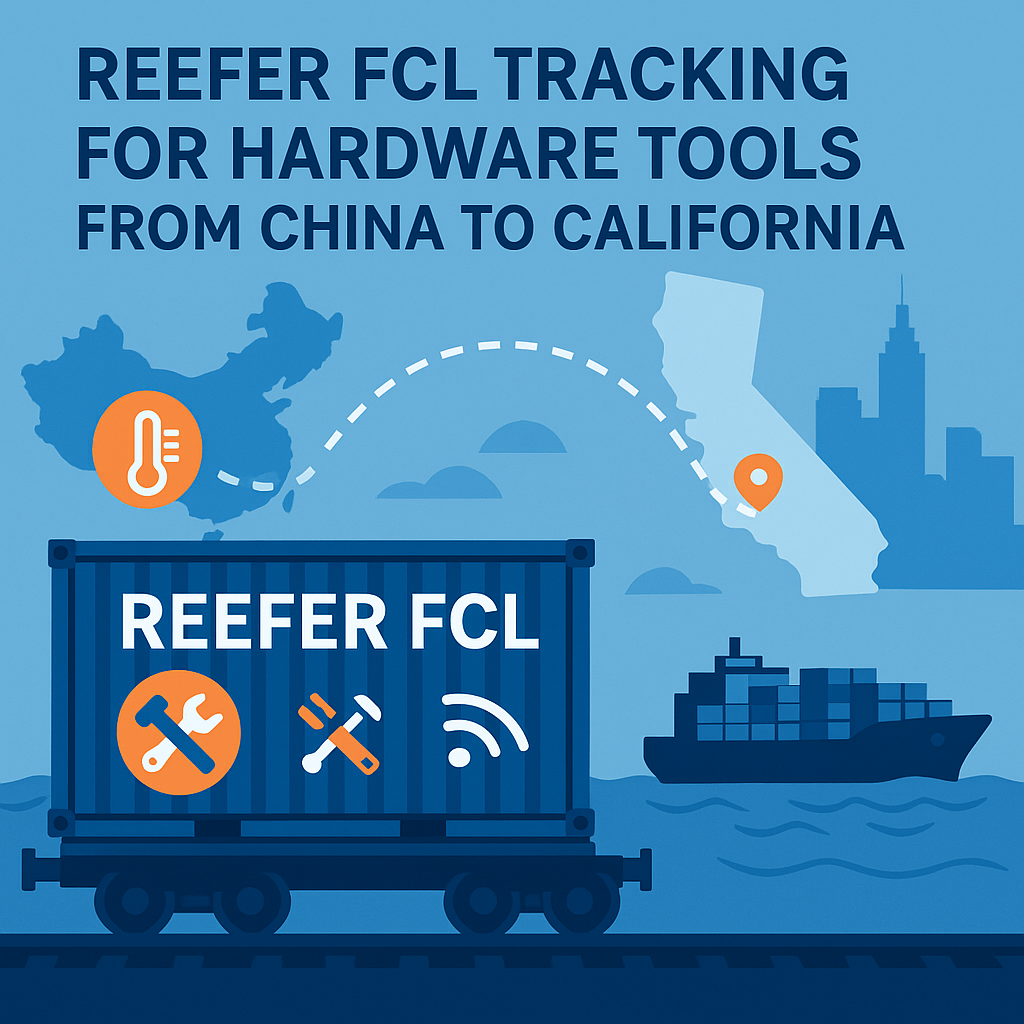
Although reefer containers are traditionally used for perishables, Reefer FCL tracking for hardware tools from China to California has become increasingly common for temperature-sensitive tools and high-value components. Since cargo integrity and visibility are critical for importers, enhanced tracking systems now allow real-time monitoring and predictable delivery schedules. Moreover, with platforms like the Top China Freight homepage supporting visibility and compliance, shippers gain better control over timelines, routing, and temperature stability.
Why Do Hardware Tools Require Reefer FCL Tracking?
Although most hardware tools are non-perishable, many categories—including precision tools, electronics-based power tools, rubber-sealed products, and corrosion-sensitive components—benefit from controlled conditions. Because temperature fluctuation can cause micro-corrosion or material expansion, importers often choose reefers for quality protection.
Additionally, because California’s inland climate varies significantly, stable reefer temperatures reduce risk during the last-mile journey.
What Is Reefer FCL Tracking and How Does It Work?
Reefer FCL tracking combines container GPS, temperature monitoring, and sensor-based visibility so importers can follow their cargo from China to California. Although the system varies among carriers, core components remain consistent.
Real-Time Reefer Container Tracking
Sensors transmit location data to a central platform. Therefore, importers can view route deviations, port delays, and estimated arrival times.
Temperature Monitoring and Alerts
Because hardware tools may contain metals, chemicals, or adhesives, tracking alerts notify shippers when temperatures approach risk thresholds.
End-to-End Reefer Shipment Updates
Updates include loading progress, port arrival, customs exam notices, and drayage appointment confirmations.
How Does the China-to-California Reefer Route Operate?
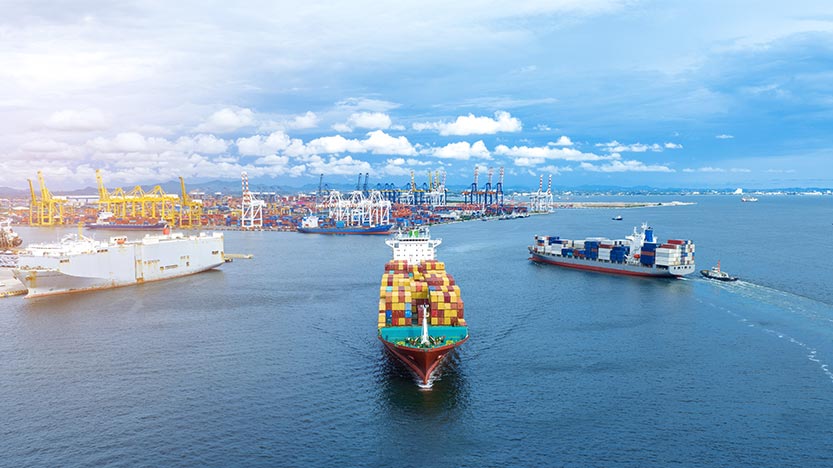
The China–California lane is one of the most predictable Pacific routes. Consequently, tracking visibility helps importers maintain supply chain efficiency and meet delivery schedules.
Common Origin Ports
- Shanghai
- Ningbo
- Qingdao
- Shenzhen
Arrival Ports in California
- Los Angeles (LA)
- Long Beach (LB)
- Oakland
Because these ports have advanced reefer infrastructure, importers benefit from stable timelines and predictable chassis availability.
What Documents Are Needed for Reefer FCL Shipments to California?
Reefers for Hardware Tools: Documentation Checklist
| Document Type | Purpose | Notes |
|---|---|---|
| Commercial Invoice | Declares cargo value | Should reflect hardware specs |
| Packing List | Lists tool categories | Include weight & temperature notes |
| Bill of Lading | Confirms shipment contract | Needed for release & tracking setup |
| ISF Filing | Pre-arrival requirement | Helps avoid customs delay |
| MSDS / Safety Data | For chemical-containing tools | Only required for certain items |
| Importer Security Data | Compliance screening | Ensures risk-free clearance |
With accurate documents, importers avoid holds that may disrupt tracking visibility.
What Are the Key Benefits of Reefer FCL Tracking for Hardware Tools?
Reefer tracking improves safety, compliance, transparency, and operational planning.
Key benefits include:
- Real-time route visibility
- Temperature excursion prevention
- Faster customs clearance preparation
- Reduced damage risk for high-value tools
- Enhanced ETA prediction
- Better inventory and warehouse planning
Since supply chains rely heavily on accurate ETAs, visibility supports downstream distribution and retail operations.
Real Case Studies of Reefer FCL Tracking Success
Power Tool Shipment (Ningbo → Los Angeles)
- Cargo Type: Electric power tools
- Volume: 1×40HQ Reefer
- Process: Sensor monitoring + customs pre-clearance
- Transit Time: 16 days
- Cost: Approx. $4,500
- Result: Stable temperature maintained; no tracking gaps; tools delivered directly to inland warehouse.
Automotive Hardware Tools (Shanghai → Oakland)
- Cargo Type: Automotive repair tools
- Volume: Full 40HQ Reefer
- Process: Real-time GPS + drayage coordination
- Transit Time: 18 days
- Cost: Approx. $4,700
- Result: Zero temperature deviation; quick terminal pickup through pre-scheduled chassis.
Should You Use a Professional Forwarder for Reefer FCL Tracking?
Although importers can handle basic steps independently, professional coordination improves visibility, reduces transit risk, and ensures clear communication with carriers. Because reefer tracking requires monitoring both temperature and route data, forwarders integrate digital tools into the workflow.
Since Top China Freight offers end-to-end reefer monitoring and supply chain visibility solutions, importers benefit from reliable tracking, customs support, and stable inland delivery options.
Additionally, door-to-door services such as FCL/LCL forwarding and customs brokerage help maintain compliance throughout the process.
What Are Typical Transit Times and Cost Ranges from China to California?
China-to-California Reefer FCL Transit & Cost (Reference Range)
| Origin Port | Destination Port | Transit Time | Cost Range (USD) |
|---|---|---|---|
| Shanghai | Los Angeles | 14–17 days | $4,200–$5,100 |
| Ningbo | Long Beach | 15–19 days | $4,300–$5,200 |
| Qingdao | Oakland | 17–22 days | $4,500–$5,300 |
Although costs vary weekly based on freight rates and logistics trends, tracking remains consistent across major ports.
Conclusion
Effective Reefer FCL tracking for hardware tools from China to California requires a blend of temperature monitoring, route visibility, accurate documentation, and predictable clearance procedures. Moreover, stable tracking ensures product integrity and supports inventory scheduling across California distribution hubs. Consequently, importers who rely on professional visibility tools gain consistent delivery reliability and optimized logistics performance.
Request A Free Quote
Need a reliable logistics partner? Share your shipment details and we’ll provide a tailored quotation quickly and accurately.
FAQ:
How accurate is reefer FCL tracking during ocean transit?
Tracking is highly accurate because GPS and onboard sensors provide continuous updates across the Pacific.
Do hardware tools require constant temperature monitoring?
Some do. Tools containing rubber, electronics, or coatings benefit from controlled temperatures.
What happens if temperature deviations occur?
Teams receive alerts and can intervene immediately to prevent quality loss.
Can reefer tracking reduce cargo damage risks?
Absolutely. Temperature and humidity stability reduce corrosion and impact-sensitive issues.
Do carriers provide temperature reports after delivery?
Most carriers issue digital records for quality verification.