
- By rudy
- November 26, 2025
- Freight knowledge
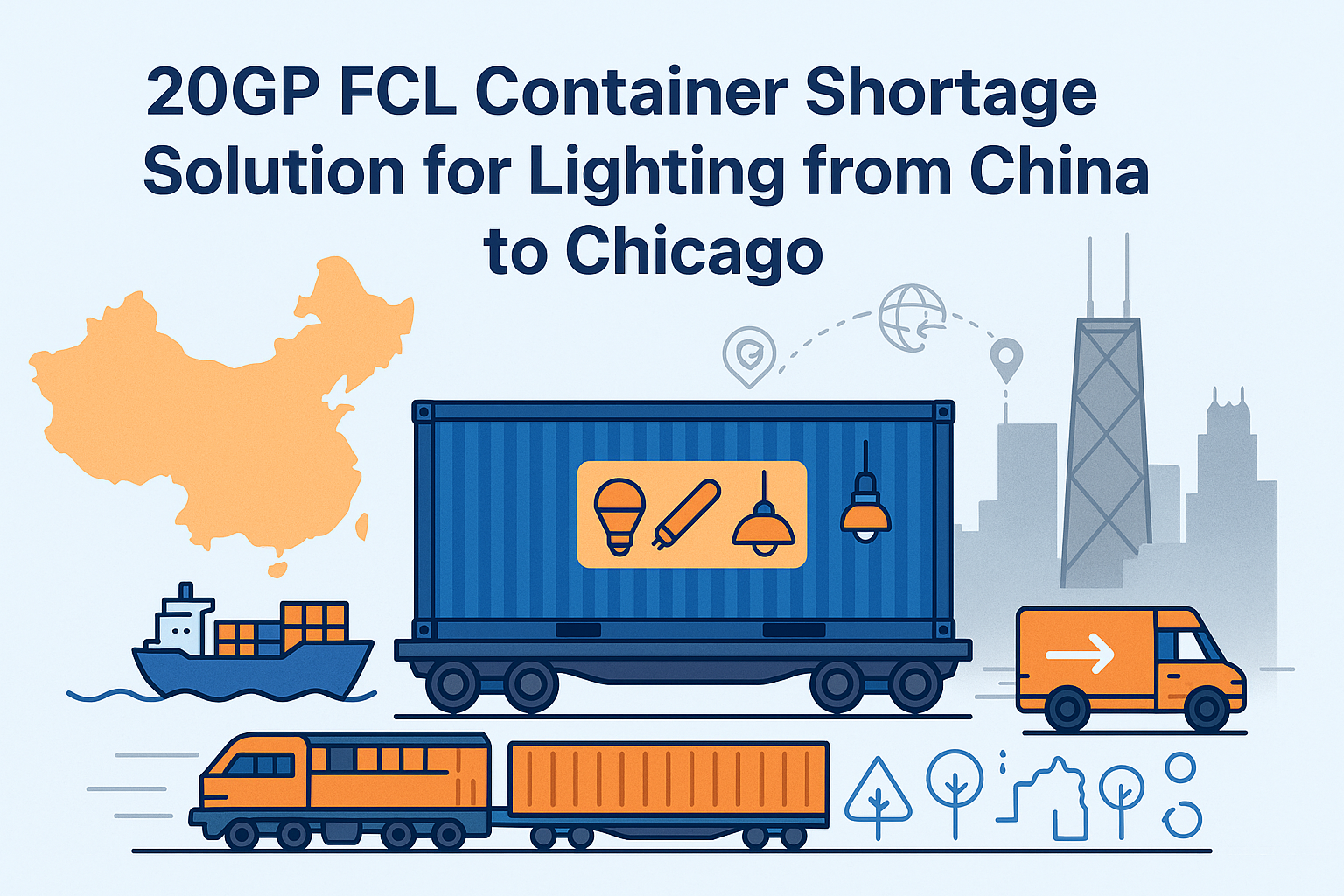
Although demand for lighting products continues to increase, securing a 20GP FCL container shortage solution for lighting from China to Chicago remains challenging for many importers. Therefore, this guide delivers practical, shortage-proof methods that help stabilize freight planning, reduce delays, and keep your supply chain predictable. Moreover, you can explore additional support resources through the Top China Freight homepage.

Why Does the 20GP Container Shortage Disrupt Lighting Shipments to Chicago?
Lighting shipments require careful loading, reliable freight rates, and predictable delivery schedules. However, when 20GP equipment becomes limited at major Chinese ports, lighting importers face extended waiting times, unstable pricing, and additional handling risks. Moreover, container imbalance—caused by rapid outbound demand from China—reduces 20GP availability faster than 40HQ equipment.
Because lighting fixtures vary in size and fragility, importers often prefer 20GP units to avoid over-compression. Consequently, shortages hit this product category harder. Additionally, inland congestion between West Coast ports and Chicago rail ramps complicates equipment repositioning, which further strains supply.
What Makes Lighting Cargo More Sensitive to Container Shortages?
Lighting cargo contains fragile components such as LED chips, metal frames, and glass covers. Therefore, importers usually select 20GP containers to maintain load stability. However, shortages force companies to consider alternatives, and each option requires different packaging, stacking, and routing strategies.
Furthermore, lighting is rarely treated as high-priority cargo by carriers. Although demand is stable, carriers tend to allocate equipment to higher-yield commodities such as electronics or machinery. Therefore, lighting shipments must rely on advanced booking and flexible routing to secure equipment.
What Are the Most Practical Alternatives When 20GP Containers Are Unavailable?
Even though shortages disrupt planning, importers can use several reliable and cost-effective alternatives. These options help maintain transit flow and protect inventory continuity.
1. Switch to 40HQ Containers When Volume Allows
Because 40HQ units hold more space and experience lower demand pressure, they remain more available during shortages. Additionally, the cost difference per CBM becomes reasonable during peak seasons.
2. Use LCL to Avoid Equipment Delays
When urgent departures are necessary, LCL shipping provides weekly schedules and flexible consolidation windows. Additionally, LCL reduces the impact of origin-port congestion and gives lighting importers predictable movement.
Learn more about consolidation options through our FCL & LCL services.
3. Consider Multi-Port Loading Strategies
Container availability varies significantly among ports such as Ningbo, Qingdao, and Tianjin. Therefore, shifting the origin port can cut equipment waiting times by 3–7 days.
4. Combine Rail Freight to the Midwest With Local Trucking
Rail freight reduces reliance on vessel space and enables faster delivery toward Chicago. Moreover, rail routes remain more stable during ocean equipment shortages.
Explore options on our rail freight service page.
5. Apply Early Booking Forecasting (EBF)
Submitting forecasts and booking 2–3 weeks ahead dramatically improves access to available 20GP units. Additionally, early booking reduces the risk of last-minute freight rate surges.
Which Shipping Method Offers the Most Stability During a Container Shortage?
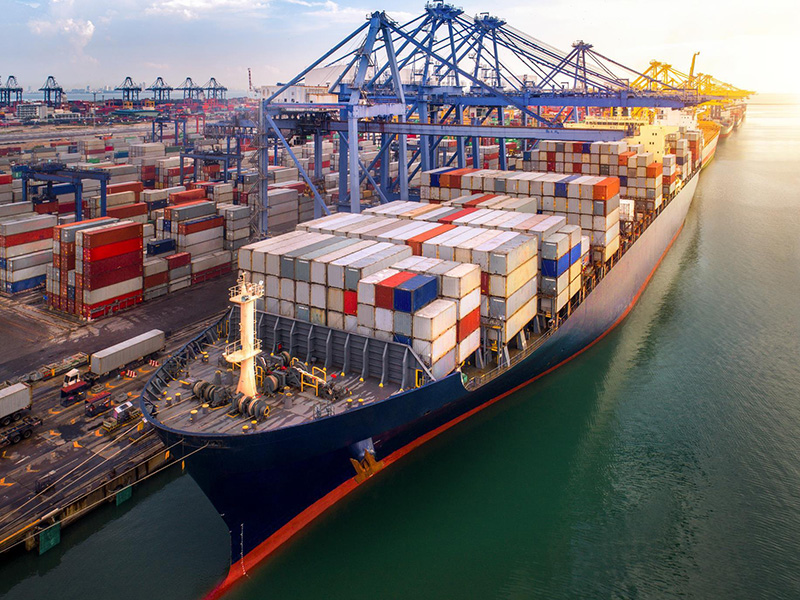
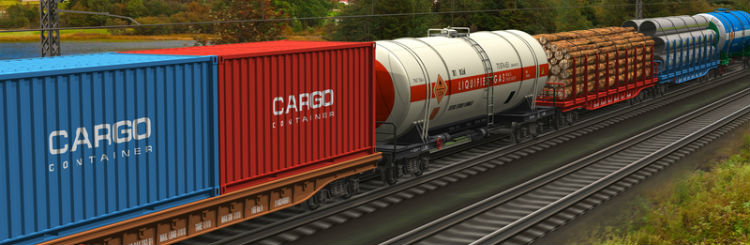
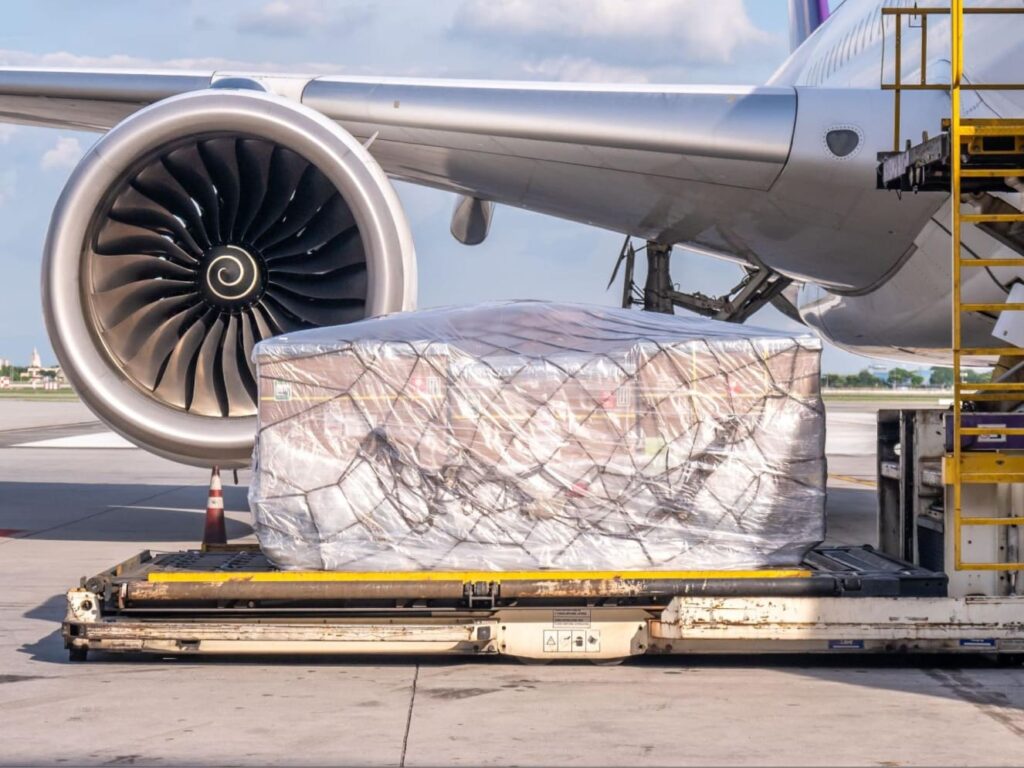
Stability varies depending on the product type, supply chain structure, and urgency. Although ocean freight remains the standard method, lighting importers often combine multiple modes to avoid delays.
Shipping Method Comparison
| Method | Cost Level | Transit Time | Key Advantages | Main Limitations |
|---|---|---|---|---|
| Ocean FCL (20GP/40HQ) | Low–Medium | 25–32 days | Economical, scalable | Limited container availability |
| LCL Consolidation | Medium | 28–35 days | Weekly departures, flexible | Higher CBM cost |
| Rail + Truck | Medium–High | 18–25 days | Faster, reduces port delays | Limited capacity |
| Air Freight | High | 3–7 days | Fastest | Expensive for bulky items |
For ocean-based solutions, you may compare options on our sea freight service page.
How Should Lighting Cargo Be Packaged During Equipment Shortages?
Packaging influences freight efficiency, product integrity, and container utilization. Therefore, optimizing packaging becomes essential when space is limited.
Use Reinforced Cartons for Fragile Units
Reinforced cartons maintain structural strength, allowing better stacking without compromising product protection.
Apply Customized Pallet Layouts
Lighting fixtures vary in shape; therefore, pallet customization reduces void space and improves loading efficiency.
Standardize Carton Labeling
Clear labels reduce customs inspection time, improve warehouse handling, and support on-time delivery schedules.
How Can Documentation Improve the Shipping Flow to Chicago?
Although container shortages create supply delays, documentation errors can cause even longer disruptions. Therefore, a clear compliance checklist ensures smooth customs processing.
Documentation Checklist for Lighting Cargo
| Document Type | Purpose | Notes |
|---|---|---|
| Commercial Invoice | Valuation | Accurate HS codes required |
| Packing List | Verification | Include dimensions and weights |
| Bill of Lading | Shipment Record | Confirm FCL or LCL type |
| UL or FCC Certificates | Lighting Safety | Required for many lighting items |
| Arrival Notice | Final Clearance | Provided by the carrier |
If you need help with compliance, visit our customs brokerage page.
Real-World Case Studies: How Importers Solved Their Container Shortage Problems
Case Study 1: LED Panels – Shenzhen to Chicago (30 CBM)
Challenge: No available 20GP units during a peak week.
Solution: Customer used a split strategy: 40HQ + LCL combination.
Result: Delivered in 29 days; reduced cost by 12% due to optimized loading.
Case Study 2: Commercial Lighting – Ningbo to Chicago (18 CBM)
Challenge: Persistent container shortage at Ningbo.
Solution: Reloaded via Qingdao and used rail freight to the Midwest.
Result: Delivered in 21 days; eliminated 5-day port waiting time.
Conclusion
In conclusion, securing a 20GP FCL container shortage solution for lighting from China to Chicago requires flexible routing, proactive booking, and smart packaging. Although shortages can disrupt your supply chain, the right strategies maintain stable freight rates, predictable transit times, and reliable stocking levels. Therefore, importers seeking long-term stability should explore hybrid FCL-LCL solutions and request customized plans tailored to upcoming demand.
Request A Free Quote
Need a reliable logistics partner? Share your shipment details and we’ll provide a tailored quotation quickly and accurately.
FAQ:
Why do 20GP shortages happen so frequently?
Equipment repositioning cycles, port congestion, and surging export demand reduce 20GP availability across major Chinese ports.
How can I minimize delays during shortages?
Use early bookings, multi-port routing, and hybrid FCL-LCL strategies to keep shipments moving.
What certifications do lighting products need?
UL, FCC, or equivalent product safety certificates are required for many lighting items entering the U.S.
Are 40HQ containers safe for lighting?
Yes. With proper packaging and pallet layout, lighting products remain stable and protected in 40HQ equipment.
How can I track my shipment?
Most carriers offer online tracking, and forwarders provide milestone updates for added visibility.