
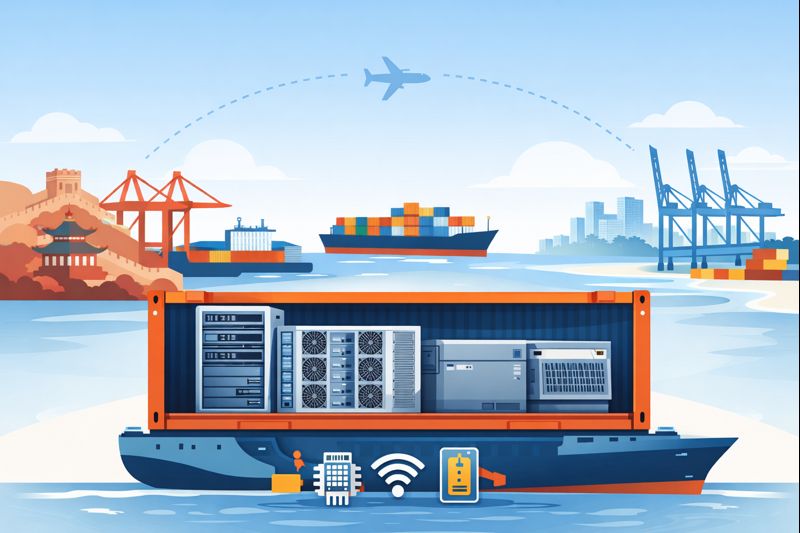
When managing Open Top FCL space availability for electronics from China to Long Beach, importers often face uncertainty around vessel allocation and booking lead time. However, with early planning and the right carrier strategy, stable space can still be secured even during tight market cycles. Therefore, this guide outlines how electronics shippers can assess availability, reduce space risk, and plan shipments efficiently, starting with support from Top China Freight.
Why does Open Top FCL space availability matter for electronics shipments?
Electronics shipments frequently involve sensitive, high-value, or oversized equipment. As a result, access to Open Top FCL space directly affects delivery schedules and inventory planning.
Why electronics often require Open Top FCL space
Large electronic cabinets, testing systems, battery units, and power modules may exceed standard container height or require top loading. Consequently, Open Top containers provide the clearance and handling flexibility that electronics cargo demands.
How limited equipment affects booking success
Because Open Top containers represent a smaller portion of carrier fleets, space availability fluctuates more than standard FCL. Therefore, electronics shippers must monitor allocation closely rather than relying on last-minute bookings.
How is Open Top FCL space allocated on China–US West Coast routes?
Understanding how carriers allocate Open Top space helps importers plan booking timelines realistically.
Carrier allocation logic explained
Open Top FCL space is typically assigned based on:
- Historical volume commitments
- Booking lead time
- Cargo profile and handling requirements
- Port crane and terminal capability
As a result, repeat shippers with predictable volumes often receive priority allocation.

What booking strategies improve Open Top FCL space success?
Space challenges can be managed with structured booking strategies. Consequently, proactive planning consistently outperforms reactive booking.
Proven booking practices for electronics cargo
- Submit booking requests 3–4 weeks ahead
- Provide accurate cargo dimensions early
- Avoid last-week ETD changes
- Align shipments with carrier allocation cycles
For exporters combining different container types, coordinating shipments through FCL & LCL shipping solutions improves overall space flexibility.
What is the current Open Top FCL space availability to Long Beach?
Although space conditions change weekly, general availability patterns remain consistent across most China ports.
Typical space availability by origin port
| China Port | Space Availability | Booking Lead Time |
|---|---|---|
| Shanghai | Medium–High | 14–18 days |
| Ningbo | Medium | 16–22 days |
| Qingdao | Medium | 18–25 days |
| Shenzhen (Yantian) | Low–Medium | 20–28 days |
Availability tightens significantly during peak electronics export seasons and before major U.S. holidays.
Case Studies
Shanghai to Long Beach
A real example highlights how space planning works in practice.
Case Card 1: Oversized electronics control units
- Origin: Shanghai, China
- Destination: Long Beach, USA
- Cargo: Electronic control cabinets
- Height: 3.9 meters
- Container type: Open Top FCL
- Booking lead time: 21 days
- Outcome: Space secured on first requested sailing
Early dimension confirmation and flexible routing ensured successful allocation despite moderate congestion.
Ningbo to Long Beach
A second case illustrates how forecasting and flexibility improve outcomes.
Case Card 2: Industrial electronic power systems
- Origin: Ningbo, China
- Destination: Long Beach, USA
- Cargo: Power control systems
- Weight: 21 tons
- Container type: Open Top FCL
- Booking lead time: 26 days
- Outcome: Space confirmed despite peak season congestion
Because the importer shared a four-week forecast and accepted a slightly earlier ETD, the shipment avoided rollover entirely.
How do customs and compliance requirements influence space availability?
Although Open Top FCL space availability often appears to be a carrier issue, customs readiness strongly affects whether space stays confirmed through departure. Therefore, documentation accuracy and timing play a decisive role for electronics shipments.
U.S. customs considerations for electronics cargo
Electronics entering Long Beach must meet U.S. Customs and Border Protection requirements, including precise HS classification, declared value, and country-of-origin marking. In addition, certain electronics may require FCC or safety-related filings.
When documents arrive late or mismatch cargo details, carriers may release allocated space to other shippers. Consequently, early coordination with a professional customs brokerage service keeps confirmed space from being reallocated.
Why long-term carrier relationships improve Open Top space access
Transactional bookings rarely secure consistent space. Instead, long-term relationships deliver predictability.
Strategic advantages of stable logistics partnerships
- Earlier visibility into space allocation
- Priority during equipment shortages
- Faster issue resolution when congestion occurs
- Improved coordination across ports and terminals
Through structured planning and proactive coordination by Top China Freight, electronics importers gain access to Open Top space even during constrained cycles.
What role does supply chain forecasting play in space availability?
Short-term booking often fails during tight markets. In contrast, forecasting stabilizes access to limited Open Top capacity.
Forecast-driven space planning benefits
- Priority access to carrier allocation
- Better equipment positioning at origin ports
- Reduced peak season competition
- Improved delivery schedule reliability
Electronics importers who share rolling forecasts often secure space more consistently than those booking shipment by shipment.
Conclusion
Managing Open Top FCL space availability for electronics from China to Long Beach requires more than monitoring weekly schedules. By combining early booking, customs readiness, routing flexibility, and inland coordination, importers can protect space and delivery timelines. With the right planning approach, Open Top FCL becomes a reliable option rather than a bottleneck for electronics supply chains.
Request A Free Quote
Start shipping smarter with TopChinaForwarder today! 🚢✨ Request a Free Quote 📝 and get a tailored logistics plan built around your cargo and timeline.
FAQ:
Why is Open Top FCL space harder to secure than standard FCL?
Open Top containers are limited in number and require special handling, which reduces overall availability.
How early should electronics shippers book Open Top space?
Most successful bookings occur 3–4 weeks before the planned departure date.
Does peak season always mean no Open Top space?
No, space still exists, but early planning and flexible ETDs become essential.
No, space still exists, but early planning and flexible ETDs become essential.
Carriers favor accurate forecasts, repeat volumes, and cargo with clear handling requirements.
What happens if confirmed space rolls over?
Rollovers delay departure and may add storage or inland costs, which early planning helps avoid.