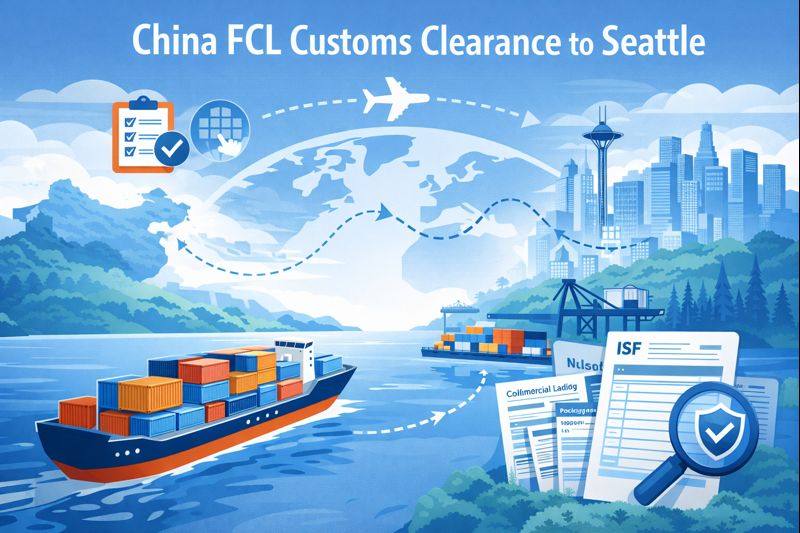
When full container shipments arrive on the U.S. West Coast, China FCL customs clearance to Seattle often determines whether cargo moves smoothly or stalls at the terminal. Because Seattle enforces strict compliance standards, even small document errors can trigger inspections and delays. Therefore, many importers rely on experienced partners such as Top China Freight to prepare customs files early and align clearance with vessel schedules.
What Does China FCL Customs Clearance to Seattle Involve?
China FCL customs clearance to Seattle covers every compliance step from vessel arrival to cargo release. Unlike LCL shipments, FCL cargo places responsibility squarely on the importer of record.
Key elements include:
Advance data filing before departure
Accurate cargo classification and valuation
Coordination with terminal and customs broker
As a result, clearance works best when planned alongside the shipping schedule rather than after arrival.
How Does the FCL Customs Clearance Process Work in Seattle?
Although each shipment differs, the clearance flow generally follows a fixed sequence.
Typical clearance steps
ISF filing before vessel departure
Manifest submission by the carrier
Arrival notice and customs entry filing
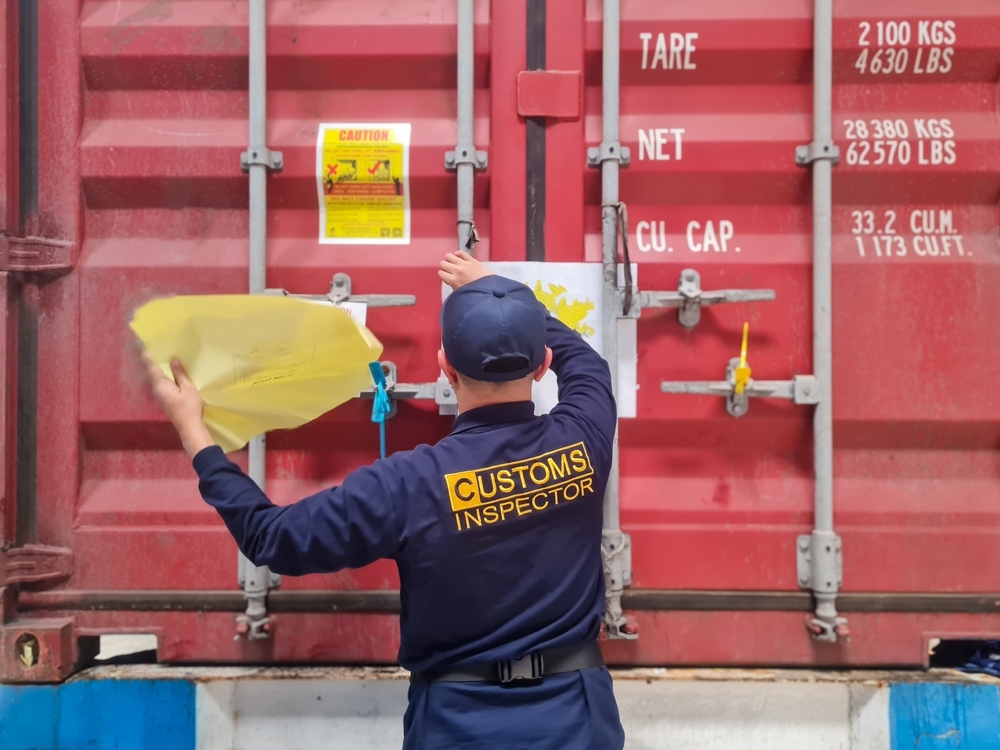
Risk assessment and potential inspection
Cargo release and terminal pickup
Because Seattle is a high-volume gateway, early filing significantly improves clearance speed.
How Do Customs Costs Affect the Total Landed Cost?
Although customs fees form a smaller share of total logistics cost, delays quickly multiply expenses.
Typical customs-related costs include:
Broker service fees
Duties and taxes
Exam and storage charges
When coordinated with professional customs brokerage services, these costs stay predictable and manageable.
What Documents Are Required for FCL Customs Clearance?
Documentation accuracy remains the most important factor in China FCL customs clearance to Seattle. Missing or inconsistent paperwork often leads to exams.
Required Document
Purpose
Commercial invoice
Declares cargo value
Packing list
Confirms quantity and weight
Bill of lading
Links cargo to importer
ISF filing
U.S. security compliance
Importer bond
Financial guarantee
Therefore, document alignment across suppliers, forwarders, and brokers prevents unnecessary delays.
Case Studies
Machinery Components from Shanghai to Seattle
Origin: Shanghai, China Destination: Seattle, Washington Cargo: Industrial machinery parts Container Type: 40GP FCL Clearance Time: 2 days Outcome: Released without inspection
Because documents aligned with ISF and entry filings, the shipment cleared immediately upon arrival.
Machinery Components from Shanghai to Seattle
Origin: Shanghai, China Destination: Seattle, Washington Cargo: Industrial machinery parts Container Type: 40GP FCL Clearance Time: 2 days Outcome: Released without inspection
Because documents aligned with ISF and entry filings, the shipment cleared immediately upon arrival.
How Can Importers Reduce Clearance Delays in Seattle?
Although inspections cannot be fully avoided, preparation lowers their likelihood. Therefore, importers should standardize compliance checks before every sailing.
Practical delay-reduction actions
Area
Action
Impact
Data accuracy
Reconcile invoice, packing list, and ISF
High
Timing
File ISF 48–72 hours before ETD
High
Valuation
Use consistent transaction values
Medium
Packaging
Declare wood packing compliance
Medium
As a result, Seattle CBP risk scores remain lower, and release happens faster.
Can Door-to-Door Planning Improve Customs Outcomes?
Yes. When clearance integrates with inland delivery, accountability improves. Instead of juggling multiple vendors, a single plan coordinates vessel arrival, customs entry, and final delivery.
By aligning clearance with inland moves through door-to-door services, importers reduce handoffs and resolve exceptions faster—especially during peak congestion.
Why Does Clearance Visibility Matter for Supply Chains?
Visibility allows teams to act early. When importers track milestones—from ISF acceptance to release—they adjust delivery schedules and inventory plans proactively.
Over time, consistent visibility across China FCL customs clearance to Seattle supports better forecasting, steadier delivery schedules, and fewer last-minute costs.
Conclusion
China FCL customs clearance to Seattle succeeds when documentation, timing, and coordination align before arrival. By filing ISF early, maintaining data consistency, and planning bonded or door-to-door options, importers shorten release times and control costs. Ultimately, disciplined preparation turns clearance from a risk point into a predictable step in the supply chain.
Request A Free Quote
Start shipping smarter with TopChinaForwarder today! 🚢✨ Request a Free Quote 📝 and get a tailored logistics plan built around your cargo and timeline.