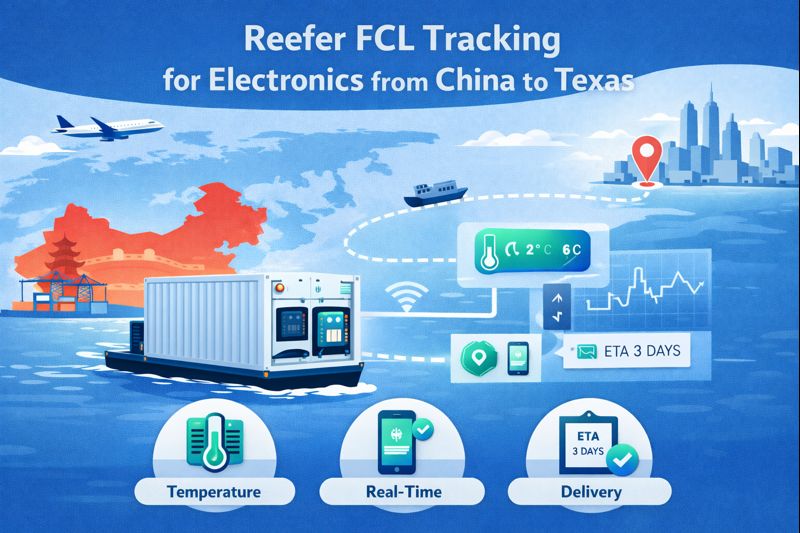
When shippers rely on Reefer FCL tracking for electronics from China to Texas, visibility becomes just as critical as temperature control. However, without clear milestone updates and real-time monitoring, even well-packed electronics face delivery risks. Therefore, this guide explains how reefer tracking works in practice, how to interpret key signals, and how importers maintain end-to-end visibility with support from Top China Freight.
What makes reefer FCL tracking essential for electronics cargo?
Electronics shipped in reefer containers often require stable temperatures to prevent condensation, humidity damage, or component degradation. As a result, tracking goes beyond location updates and includes temperature, power status, and alarm notifications.
Moreover, electronics shipments usually carry high value and strict delivery windows. Consequently, importers depend on tracking data to coordinate customs clearance, inland trucking, and warehouse receiving schedules. Without this visibility, small delays can quickly escalate into costly disruptions.
How does reefer FCL tracking differ from standard FCL tracking?
Standard FCL tracking mainly shows vessel location and estimated arrival times. In contrast, reefer FCL tracking adds multiple data layers that protect sensitive cargo.
Tracking Element
Standard FCL
Reefer FCL
Location updates
Yes
Yes
Temperature monitoring
No
Yes
Power supply alerts
No
Yes
Alarm notifications
No
Yes
Because of these added data points, reefer FCL tracking for electronics from China to Texas offers significantly higher control throughout the supply chain.
Should electronics importers integrate tracking with door-to-door services?
Integrating tracking with end-to-end delivery simplifies operations. Instead of monitoring separate legs, importers view one continuous timeline from factory to final destination.
When shippers combine reefer tracking with door-to-door transport, inland trucking milestones appear alongside ocean data. Therefore, supply chain teams gain full visibility across borders.
What tracking milestones matter most on China–Texas routes?
Tracking milestones structure the shipment journey into manageable checkpoints. Each milestone confirms progress and highlights potential issues early.
Origin and loading confirmation
Tracking begins once the reefer container is gated in at the origin port. At this stage, shippers verify that temperature settings match cargo requirements and that power supply activates correctly.
Ocean transit updates
During the sea leg, tracking systems provide vessel position, reefer status, and temperature logs. Therefore, importers can confirm that electronics remain within acceptable ranges throughout the voyage.
Arrival and discharge monitoring
Once the vessel approaches Texas ports such as Houston, arrival notices and discharge confirmations become critical. As a result, customs and inland delivery teams prepare in advance.
Case Studies
Consumer electronics shipment to Houston
Origin: Shanghai, China Destination: Houston, Texas Cargo: Consumer electronics modules Container: Reefer FCL Transit Time: 34 days
Throughout transit, temperature logs remained stable. Consequently, the importer coordinated customs clearance before arrival and avoided terminal delays.
Industrial electronics to Dallas via Houston
Origin: Ningbo, China Destination: Houston → Dallas, Texas Cargo: Industrial control electronics Container: Reefer FCL Transit Time: 37 days
Real-time tracking alerts helped the importer adjust inland trucking schedules. Therefore, delivery aligned smoothly with warehouse availability.
How long does reefer FCL electronics shipping to Texas take?
Transit time shapes tracking expectations. While exact schedules vary, realistic ranges help importers align monitoring with delivery planning.
Route Pattern
Transit Time Range
Tracking Reliability
Direct Asia–US Gulf
30–35 days
High
Transshipment via West Coast
35–40 days
Medium
Peak season sailings
38–45 days
Variable
Because electronics shipments are time-sensitive, reliable tracking often outweighs marginally faster routes.
How does customs clearance affect reefer tracking timelines?
Customs clearance introduces a critical checkpoint. While reefer tracking continues at port, clearance delays can extend container dwell time. Therefore, importers align tracking alerts with document readiness.
By coordinating early with customs brokerage services, electronics shipments clear faster. As a result, temperature-controlled cargo spends less time waiting at terminals.
What future trends will shape reefer tracking for electronics?
Looking ahead, reefer tracking continues to evolve with IoT sensors and predictive analytics. These tools will forecast temperature deviations and ETA shifts before they occur. Therefore, electronics supply chains will rely more on data-driven decisions.
As logistics trends advance, shippers who adopt smarter tracking platforms will maintain stronger control over sensitive electronics shipments.
Conclusion
Effective Reefer FCL tracking for electronics from China to Texas goes far beyond location updates. It combines temperature monitoring, milestone alerts, and coordinated responses to protect high-value cargo. When tracking integrates with customs and inland delivery planning, electronics shipments arrive safely and on schedule. For importers seeking reliability, visibility remains the strongest advantage.ec ullamcorper mattis, pulvinar dapibus leo.
Request A Free Quote
Start shipping smarter with TopChinaForwarder today! 🚢✨ Request a Free Quote 📝 and get a tailored logistics plan built around your cargo and timeline.