
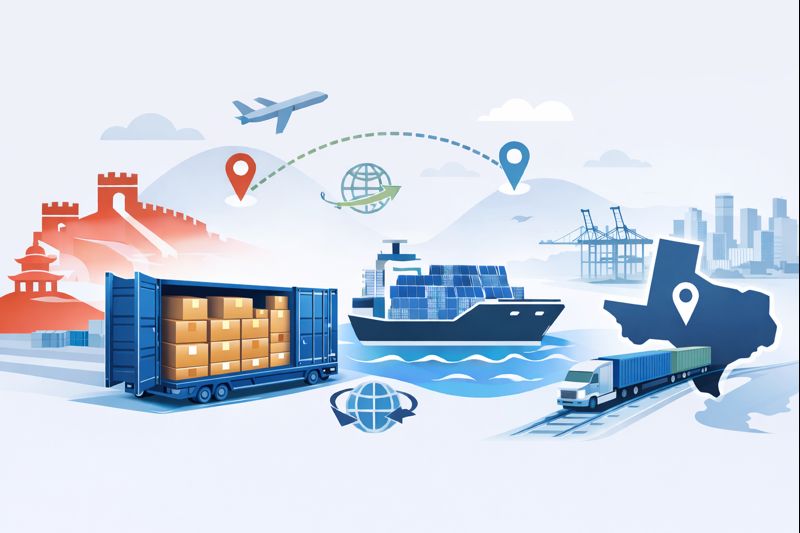
When importers scale bulk apparel or fabric orders, FCL shipping for textiles from China to Texas becomes the most reliable way to protect margins and delivery schedules. However, because Texas is inland and demand fluctuates by season, transit time, port choice, and inland routing often complicate planning. Therefore, this guide explains how to design a stable FCL strategy from origin to Texas distribution points, starting with coordinated execution through Top China Freight.

Why is FCL shipping preferred for textile cargo?
Although textiles can move via LCL or air freight, full container load shipping offers clear advantages for volume-driven supply chains.
How textile characteristics favor FCL
Textiles usually ship in large quantities with uniform packaging, which allows containers to be loaded efficiently. As a result, FCL reduces handling frequency, lowers damage risk, and protects goods from cross-cargo contamination.
When FCL outperforms LCL for textiles
Once shipment volume exceeds roughly 15–18 CBM, FCL often becomes more cost-effective. Moreover, FCL improves schedule reliability because containers move directly from origin to destination without consolidation delays.

What textile products are commonly shipped by FCL to Texas?
Texas imports a wide range of textile products that benefit from containerized transport.
Typical textile cargo categories
Common FCL textile shipments include:
- Finished garments and apparel
- Fabric rolls and raw textiles
- Home textiles such as bedding and curtains
- Industrial and technical fabrics
Because these goods often support retail or manufacturing timelines, predictable transit is critical.
Container size selection for textile cargo
Shippers typically choose 40GP or 40HQ containers for textiles due to lightweight density and high volume. Selecting the right container size optimizes unit cost per carton and simplifies inland handling.
How does customs clearance impact textile FCL shipments?
Customs processing plays a decisive role in delivery readiness.
Common clearance requirements for textiles
Textile imports require accurate HS codes, fiber composition details, and country-of-origin labeling. Errors often trigger inspections, which delay inland release.
Reducing clearance-related delays
Advance filings and consistent documentation shorten clearance time. Many importers streamline this step by aligning transport planning with professional customs brokerage support.
How do route choices affect FCL shipping to Texas?
Although Texas has strong logistics infrastructure, route selection still shapes total transit time.
West Coast gateways versus Gulf Coast ports
West Coast ports offer shorter ocean transit from China, yet inland rail or trucking adds distance to Texas. In contrast, Gulf Coast ports such as Houston provide direct access, even though ocean transit is longer.
| Gateway Option | Ocean Transit | Inland Distance to Texas | Best Use Case |
|---|---|---|---|
| US West Coast | Shorter | Longer | Time-sensitive imports |
| US Gulf Coast | Longer | Shorter | Stable cost and delivery |
| US East Coast | Longest | Variable | Network flexibility |
Therefore, the “best” route depends on inventory strategy rather than sailing time alone.
Case Studies
Apparel shipment to Texas distribution center
Shipment details
Origin: Ningbo, China
Destination: Dallas, Texas
Cargo: Finished apparel
Container: 1 × 40HQ FCL
Route strategy
The importer routed via a West Coast port and moved containers inland by rail, prioritizing speed for seasonal retail demand.
Outcome
The shipment arrived door to door in 33 days, supporting timely store replenishment.
Fabric shipment to Houston
Shipment details
Origin: Shanghai, China
Destination: Houston, Texas
Cargo: Woven fabric rolls
Container: 1 × 40GP FCL
Route strategy
The importer selected a Gulf Coast gateway to minimize inland distance and avoid West Coast congestion during peak season.
Outcome
Despite a longer ocean leg, the shipment arrived door to door in 38 days with stable cost and predictable delivery.
How can textile importers control costs without slowing delivery?
Because margins in textiles are tight, cost control must work alongside reliable transit—not against it.
Practical ways to lower total landed cost
First, choosing the right gateway reduces inland mileage and fuel surcharges. Next, optimizing carton dimensions improves container utilization, lowering unit cost per piece. Finally, stable sailing schedules help avoid demurrage and urgent inland trucking.
Why predictability often beats the lowest rate
Although cheaper freight rates look attractive, unpredictable arrivals increase storage and labor costs. Therefore, many importers favor consistent FCL services that protect delivery schedules and inventory planning.
Why inland delivery planning matters for Texas destinations
Texas distribution centers sit far from coastal ports, making inland planning essential.
Rail and trucking options after port discharge
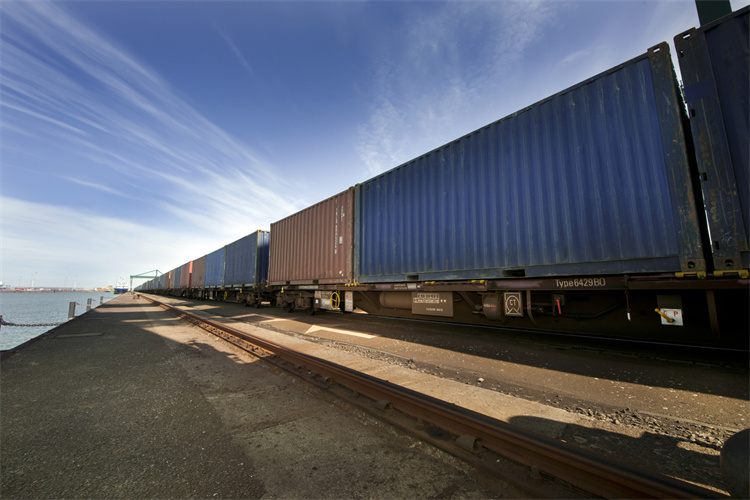
Rail offers cost efficiency for long inland moves, while trucking provides flexibility for final delivery. Therefore, inland mode should align with warehouse location and unloading capability.
This coordination becomes more reliable when paired with integrated sea freight planning that synchronizes ocean arrival with inland capacity.
Should peak season change FCL shipping strategy to Texas?
Peak season has a measurable impact on textile flows from China to the U.S.
How peak demand affects textile containers
During peak months, vessel space tightens and port congestion rises. As a result, containers may wait longer for rail slots or terminal release, extending door-to-door transit.
Adjustments that keep supply chains moving
Experienced importers book earlier, diversify gateway ports, and spread shipments across multiple sailings. Consequently, they reduce dependence on any single route and protect retail timelines.
Conclusion
Effective FCL shipping for textiles from China to Texas depends on more than booking a container. When route selection, customs preparation, inland delivery, and seasonal planning align, transit becomes predictable and costs remain under control. With informed decisions and coordinated execution, textile importers gain consistency, flexibility, and confidence across their supply chains.
Request A Free Quote
Start shipping smarter with TopChinaForwarder today! 🚢✨ Request a Free Quote 📝 and get a tailored logistics plan built around your cargo and timeline.
FAQ:
When is FCL better than LCL for textiles?
FCL is usually better once volume exceeds 15–18 CBM or when schedule reliability matters.
FCL is usually better once volume exceeds 15–18 CBM or when schedule reliability matters.
Houston works well for cost stability, while West Coast routes suit time-sensitive cargo.
How long does FCL shipping to Texas usually take?
Most shipments arrive within 30–45 days door to door.
Is rail or trucking better for inland delivery in Texas?
Rail suits long distances, while trucking offers final-mile flexibility.
Can door-to-door services reduce risk?
Yes, integrated services simplify coordination and improve schedule control.