
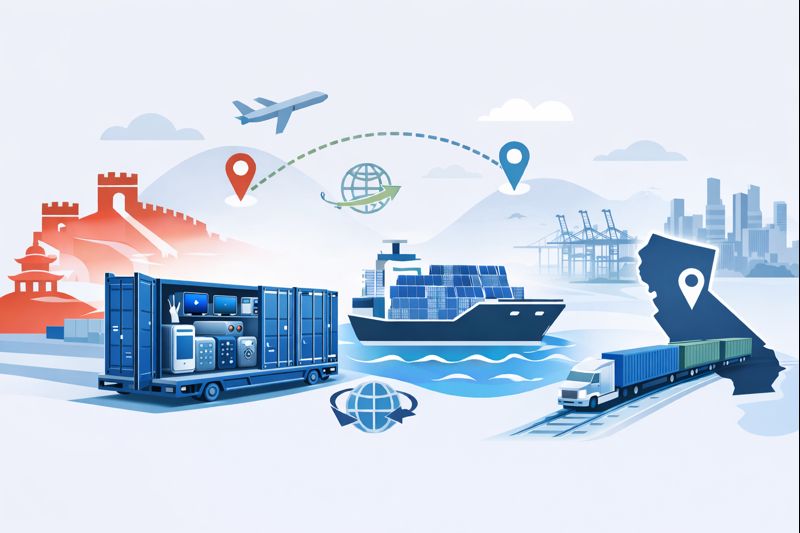
When importers plan large-volume shipments, the 40HQ FCL transit time for electronics from China to California often determines inventory turns and launch dates. However, because electronics are time-sensitive and congestion-prone, transit time varies widely by port, season, and inland routing. Therefore, this guide breaks down realistic timelines and optimization tactics—starting with coordinated planning via Top China Freight.
What is the typical 40HQ FCL transit time to California?
Although carriers publish sailing schedules, real transit time includes multiple stages beyond the ocean leg.
Port-to-port averages you should expect
From major Chinese ports to California gateways, port-to-port transit typically falls within these ranges:
| Route | Ocean Transit (Days) |
|---|---|
| Shanghai / Ningbo → Los Angeles / Long Beach | 12–16 |
| Shenzhen / Yantian → Los Angeles / Long Beach | 13–18 |
| Shanghai → Oakland | 13–17 |
Because vessel bunching and weather affect arrivals, importers should plan with buffers rather than minimums.
Why door-to-door timelines differ from ocean time
Once a 40HQ arrives, terminal handling, customs, and inland delivery extend total transit. Consequently, door-to-door timelines usually range from 25 to 40 days depending on clearance speed and inland distance.
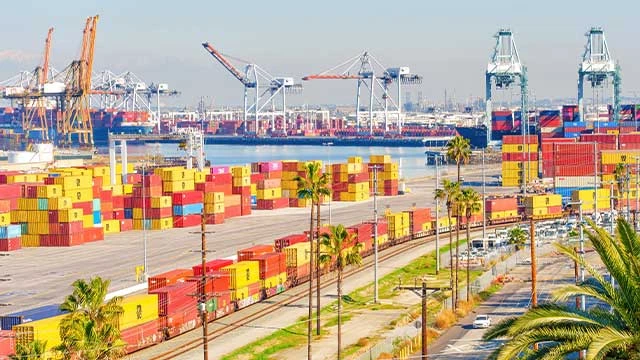
How much does customs clearance influence total transit time?
Although clearance happens after arrival, it often dictates delivery readiness.
Common clearance timelines for electronics
With accurate documentation, electronics often clear within 1–3 business days. However, inspections or valuation checks can extend this window.
Preventing clearance delays
Advance filings and consistent HS classification minimize holds. Many importers streamline this step by coordinating documentation alongside ocean bookings through professional customs brokerage.
Why do California ports matter for electronics transit time?
California offers multiple gateways, yet each behaves differently for electronics FCL.
Los Angeles and Long Beach: speed with volatility
LA/Long Beach provides the fastest sailings and most frequent services. However, congestion spikes can add days to terminal dwell, especially during peak seasons. Therefore, these ports favor time-critical electronics when inland plans are secured early.
Oakland and alternative gateways: balance and predictability
Oakland often delivers steadier terminal flow for certain carriers. While sailing frequency is lower, predictable clearance can offset slightly longer ocean time.
How does origin port choice in China affect timing?
Selecting the right Chinese port improves schedule reliability as much as choosing the U.S. gateway.
Major export ports for electronics
Shanghai, Ningbo, Shenzhen, and Yantian lead electronics exports due to dense carrier coverage. As a result, these ports offer better schedule recovery when vessels slip.
Factory proximity and pre-carriage impact
When factories sit closer to origin ports, exporters reduce pre-carriage delays. Therefore, aligning factory pickup with reliable ports shortens total transit even if ocean time stays constant.
Case Studies
Consumer electronics to Southern California
Shipment details
Origin: Shenzhen, China
Destination: Los Angeles, California
Cargo: Consumer electronics
Container: 1 × 40HQ FCL
Timeline
Ocean transit: 15 days
Port handling & clearance: 4 days
Inland delivery: 3 days
Outcome
Total door-to-door time reached 22 days, enabling early retail distribution ahead of schedule.
Industrial electronics shipment to Northern California
Shipment details
Origin: Shanghai, China
Destination: Oakland, California
Cargo: Industrial electronic components
Container: 1 × 40HQ FCL
Timeline
Ocean transit: 16 days
Port handling & clearance: 3 days
Inland delivery: 4 days
Outcome
Total door-to-door transit reached 23 days, providing a stable inbound flow for manufacturing operations.
How can importers reduce delays in 40HQ electronics shipments?
Although transit time involves many external factors, proactive control still makes a measurable difference.
Actions that shorten end-to-end timelines
First, booking with carriers that maintain stable California service strings improves arrival consistency. Next, confirming terminal appointments and inland transport before vessel arrival reduces post-discharge idle time. Finally, aligning documentation early prevents clearance-related holds.
Why coordination matters more than speed alone
While faster sailings look attractive, poorly coordinated inland moves often erase those gains. Therefore, integrated planning across ocean, port, and inland legs consistently delivers better results than chasing minimum ocean days.
How can importers plan around transit time uncertainty?
Uncertainty cannot be eliminated, yet it can be managed.
Building buffers into delivery schedules
Rather than compressing timelines, experienced importers add buffer days to absorb minor disruptions. Consequently, operations remain stable even when vessels slip.
Aligning transit planning with supply chain goals
When transit time planning supports inventory strategy, electronics supply chains become more resilient. Coordinating bookings with FCL & LCL services further improves predictability across volumes.
How do logistics trends affect California-bound transit time?
Transit performance evolves with infrastructure and market shifts.
Trends shaping China–California electronics flows
California ports continue investing in automation, while carriers adjust sailing frequency to manage congestion. Meanwhile, digital visibility tools improve tracking accuracy, helping importers react faster to delays.
Staying adaptable in a changing environment
Importers who review transit performance quarterly and adjust routing strategies stay ahead of disruptions. In turn, adaptability protects launch schedules and retail commitments.
Conclusion
Lorem ipsum dolor sit amet, consectetur adipiscing elit. Ut elit tellus, luctus nec ullamcorper mattis, pulvinar dapibus leo.
Request A Free Quote
Start shipping smarter with TopChinaForwarder today! 🚢✨ Request a Free Quote 📝 and get a tailored logistics plan built around your cargo and timeline.
FAQ:
What is the average door-to-door transit time to California?
Most 40HQ electronics shipments arrive within 25–40 days depending on port and inland distance.
Which California port is fastest for electronics?
Los Angeles and Long Beach are usually fastest, but congestion can affect consistency.
How much does customs clearance impact transit time?
Clearance typically takes 1–3 days when documents are accurate.
Is rail or trucking faster after port arrival?
Trucking is faster for nearby destinations, while rail suits longer inland moves.
How can visibility tools help manage delays?
Real-time tracking allows faster responses to schedule changes and bottlenecks.