
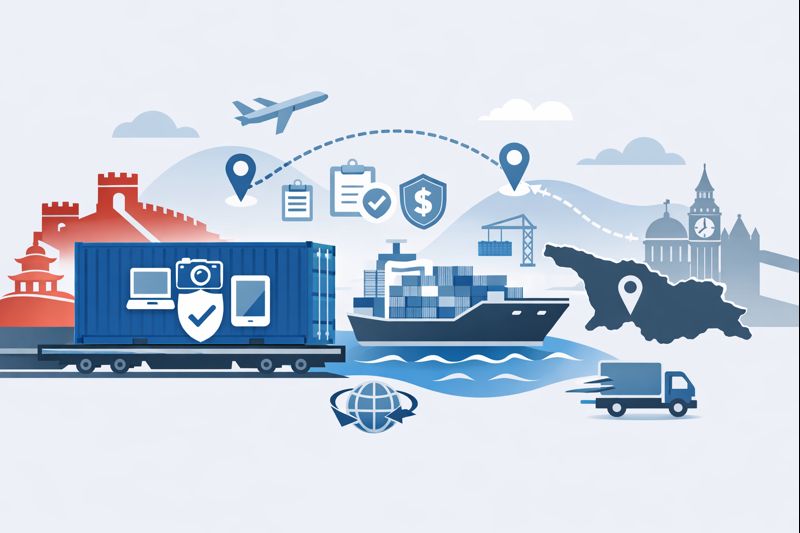
When exporters move high-value electronics overseas, 20GP FCL insurance for electronics from China to Georgia quickly becomes a decisive factor rather than an optional add-on. However, because electronics are fragile, theft-sensitive, and time-critical, many shippers underestimate where risks truly occur along the route. Therefore, this guide breaks down how to structure insurance, control exposure, and keep your supply chain predictable, starting from the factory gate and ending at final delivery.
To begin with, working with an experienced forwarder like Top China Freight helps align insurance decisions with real-world transport conditions instead of theoretical coverage alone.

What risks do electronics face in 20GP FCL shipping?
Although full container load shipping limits cargo handling, electronics still face multiple hidden risks during international transport. For example, long ocean transits, port congestion, and inland transfers increase exposure even inside sealed containers.
Why electronics cargo is uniquely vulnerable
Electronics shipments typically combine high value with low tolerance for damage. As a result, even minor incidents can lead to large financial losses. Common risk factors include:
- Moisture damage caused by condensation inside containers
- Shock or vibration during loading and inland drayage
- Theft and pilferage at transshipment ports
- Delays leading to missed delivery schedules or penalties
Because of these factors, relying on carrier liability alone rarely offers sufficient protection.
How containerized shipping changes risk distribution
While 20GP FCL shipping reduces cross-handling compared to LCL, risk does not disappear. Instead, it shifts toward longer dwell times at ports and fewer inspection opportunities. Consequently, insurance must be structured to cover extended storage, transshipment, and inland legs rather than only the ocean segment.
How does 20GP FCL insurance for electronics from China to Georgia work?
Most exporters choose between three primary coverage levels:
| Coverage Type | Scope of Protection | Suitable for Electronics |
|---|---|---|
| Basic (FPA) | Major accidents only | Not recommended |
| With Average (WA) | Partial damage under limited conditions | Limited use |
| All Risks | Broad protection including theft and handling damage | Strongly recommended |
Because electronics often suffer non-catastrophic damage, all-risk coverage usually provides the most reliable safeguard.
Why declared value and packing details matter
Insurance coverage is directly linked to declared cargo value and packing specifications. Therefore, under-declaring value or using non-compliant packaging can reduce compensation or invalidate claims. Clear documentation, accurate invoices, and professional packing reports significantly improve claim outcomes.

Why customs compliance affects insurance validity
Although many shippers separate insurance from customs, these two elements are tightly connected. If customs documentation contains errors, insurers may reject claims even when physical damage is proven.
Key documents insurers review during claims
Typically, insurers examine the following:
- Commercial invoice and packing list
- Bill of lading
- Customs declaration records
- Survey or damage inspection reports
Therefore, alignment between logistics and customs processes is essential. Using integrated services such as professional customs brokerage reduces the risk of documentation conflicts.
Common compliance mistakes that increase claim risk
For example, inconsistent cargo descriptions, undervaluation, or incorrect Incoterms can complicate liability determination. As a result, even valid claims may face delays or partial settlements.
What does insurance typically cost for a 20GP electronics container?
Although insurance premiums represent a small percentage of total logistics cost, they deliver disproportionate value when incidents occur.
How insurance premiums are calculated
Generally, premiums range from 0.1% to 0.3% of the insured cargo value. However, final pricing depends on:
- Cargo type and fragility
- Declared value and HS classification
- Route congestion and seasonal risk
- Claims history and packaging method
Because of this, electronics shipped during peak seasons may incur slightly higher rates.
Cost comparison: insured vs uninsured risk exposure
| Scenario | Estimated Loss Exposure | Financial Impact |
|---|---|---|
| Insured shipment | Limited to deductible | Predictable |
| Uninsured shipment | Full cargo value | High volatility |
In other words, insurance converts unpredictable loss into a controlled operating expense.
Case Studies
Consumer electronics shipment to Georgia
Shipment details
Origin: Shenzhen, China
Destination: Georgia
Cargo: Consumer electronics
Container: 1 × 20GP FCL
Cargo value: USD 180,000
Logistics setup
The shipper selected all-risk insurance covering door-to-port transit. Moisture control packing and shock monitoring were applied before loading.
Outcome
During transit, condensation damage affected part of the cargo. Because insurance documentation was complete, the claim was processed within 28 days, recovering over 90% of the loss value.
Industrial electronics shipment to Georgia
Shipment details
Origin: Ningbo, China
Destination: Georgia
Cargo: Industrial control electronics
Container: 1 × 20GP FCL
Cargo value: USD 260,000
Logistics setup
The exporter selected all-risk insurance with inland extension and used moisture-proof palletized packing. Insurance was coordinated alongside customs clearance and inland delivery.
Outcome
A port delay led to extended storage exposure. Minor water damage was identified upon arrival. Because inland risk was included, the claim was approved, covering repair and inspection costs within 35 days.
pulvinar dapibus leo.
Can insurance cover delays and supply chain disruption?
Although insurance primarily covers physical loss or damage, certain extensions address time-related risks.
When delay-related coverage applies
Some policies include limited coverage for delay caused by insured events, such as port accidents or container damage. However, pure schedule slippage from congestion usually falls outside standard terms.
As a result, insurance should complement, not replace, smart schedule planning and buffer strategies.
Managing delays through logistics planning
Electronics importers often reduce disruption by combining insurance with flexible routing and contingency planning. In many cases, diversified carrier selection and early booking reduce exposure more effectively than insurance alone.
How does insurance interact with freight mode decisions?
Although this guide focuses on ocean shipping, insurance planning must reflect broader mode choices.
Comparing insurance considerations across modes
| Transport Mode | Risk Profile | Insurance Focus |
|---|---|---|
| Ocean FCL | Moisture, delay, theft | All-risk, extended storage |
| Air freight | Handling shock, value density | High-value coverage |
| Rail freight | Border delay, vibration | Multimodal extensions |
Therefore, shippers using multimodal solutions must ensure policy continuity across all legs, including inland transport.
For urgent or high-value electronics, combining ocean freight with selective air freight options may reduce total risk despite higher transport cost.
How can electronics exporters optimize insurance claims success?
While claims are undesirable, preparation determines outcomes.
Documentation practices that speed up claims
Successful claims often depend on rapid evidence submission. Key best practices include:
- Immediate damage notification
- Third-party survey reports
- Clear photo and video records
- Consistent cargo descriptions
As a result, claims processed within the first 72 hours tend to settle faster.
Working with experienced logistics partners
Coordinating insurance through an integrated logistics provider simplifies communication between insurers, carriers, and customs. At Top China Freight, insurance planning is aligned with container handling and documentation workflows to reduce claim friction without adding complexity.
Conclusion
In global electronics trade, 20GP FCL insurance for electronics from China to Georgia is not simply a compliance step but a strategic safeguard against unpredictable loss. When coverage aligns with cargo value, customs accuracy, and route realities, insurance transforms risk into manageable cost. By integrating insurance with logistics planning, exporters gain stability, visibility, and confidence across their supply chains.
Request A Free Quote
Start shipping smarter with TopChinaForwarder today! 🚢✨ Request a Free Quote 📝 and get a tailored logistics plan built around your cargo and timeline.
FAQ:
How is insurance value calculated for electronics shipments?
Insurance usually covers cargo value plus freight and a margin, based on commercial invoices and packing lists.
Does insurance cover theft at ports?
Most all-risk policies cover theft, provided seals, packing, and documentation meet policy requirements.
Can I insure only part of my electronics cargo?
Partial insurance is possible, but under-insuring increases uncovered loss exposure during claims.
How long does an electronics insurance claim take?
Well-documented claims often settle within 20–40 days, depending on damage verification speed.
Are lithium batteries automatically covered?
Coverage depends on proper declaration and compliance with transport regulations.