
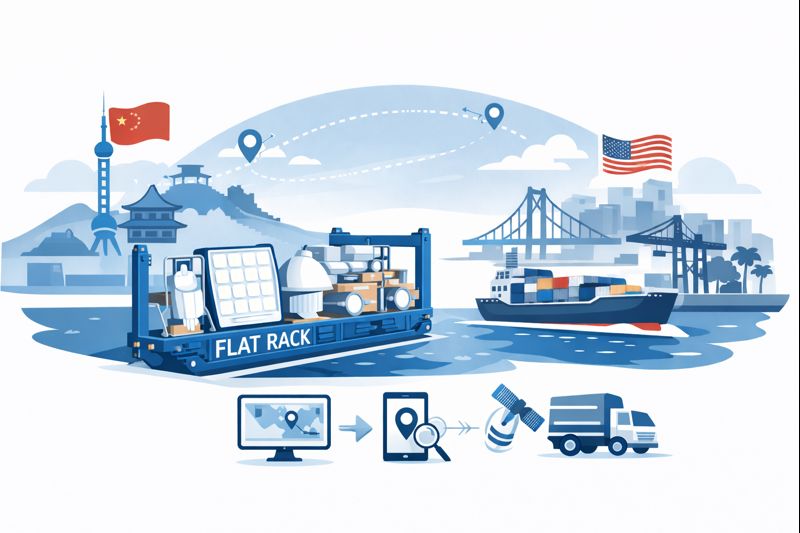
When shipping oversized fixtures, Flat Rack FCL tracking for lighting from China to USA becomes essential for schedule control and risk reduction. However, flat rack cargo moves through more handling points than standard containers, which makes visibility harder to maintain. Therefore, this guide explains how tracking works in practice, what data you can expect at each stage, and how experienced partners like Top China Freight keep shipments transparent from origin to destination.

What Makes Flat Rack FCL Tracking Different from Standard Containers?
Flat rack shipments follow a different operational path, and that difference directly affects tracking accuracy.
Structural Differences That Affect Visibility
Unlike closed containers, flat racks carry cargo exposed on the sides or top. As a result, lighting equipment often requires special lashing, crane handling, and berth positioning. Consequently, status updates rely more on terminal events than automated container scans.
Additional Handling Points in the Supply Chain
Because flat racks cannot always move through standard container stacks, terminals often reposition them multiple times. Therefore, each repositioning creates a new tracking milestone that importers should monitor closely.

How Does Flat Rack FCL Tracking Work from China to the USA?
Although the tracking principle remains similar, the data sources differ slightly for flat rack cargo.
Booking and Pre-Loading Status
At the booking stage, tracking begins with vessel allocation and cut-off confirmation. Once cargo passes lashing inspection, the container status changes to “received at terminal,” which signals that the flat rack is ready for export loading.
Ocean Transit Visibility
During ocean transit, updates typically include vessel departure, transshipment (if any), and estimated arrival. While GPS tracking for flat rack containers from China is sometimes available, most updates still come from carrier systems and AIS vessel data.
How Accurate Is Real-Time Tracking for Flat Rack Lighting Cargo?
Tracking accuracy depends on technology and coordination.
Carrier Systems vs. Forwarder Visibility
Carrier portals provide standardized updates, yet they may lag during port congestion. In contrast, forwarders often supplement system data with terminal confirmations and manual status checks, which improves accuracy for time-sensitive lighting shipments.
By integrating flat rack movements with professional sea freight management, importers gain clearer visibility beyond automated feeds.
What Tracking Milestones Matter Most for Lighting Shipments?
Not all updates carry equal operational value, especially for oversized lighting.
High-Impact Tracking Events
| Tracking Milestone | Why It Matters |
|---|---|
| Loaded on vessel | Confirms cargo cleared lashing checks |
| Vessel departure | Locks the sailing schedule |
| Arrival at U.S. port | Triggers customs preparation |
| Terminal availability | Determines inland pickup timing |
Because lighting projects often align with installation schedules, these milestones help importers coordinate labor and warehousing.
Case Studies
Architectural Lighting Shipment to California
Route: Foshan → Los Angeles
Cargo: Oversized architectural lighting frames
Container: Flat Rack FCL
Tracking Method: Carrier + forwarder milestone tracking
Transit Time: 19 days
Because tracking alerts highlighted early vessel arrival, inland trucking was scheduled in advance, avoiding three days of terminal storage.
Commercial Lighting Equipment Export
Route: Ningbo → Oakland
Cargo: Industrial lighting structures
Container: Flat Rack FCL
Tracking Method: End-to-end tracking with terminal updates
Transit Time: 21 days
By monitoring flat rack container status updates for lighting exports, the importer adjusted warehouse staffing ahead of delivery.

What Tracking Milestones Matter Most for Lighting Shipments?
Not all updates carry equal operational value, especially for oversized lighting.
High-Impact Tracking Events
| Tracking Milestone | Why It Matters |
|---|---|
| Loaded on vessel | Confirms cargo cleared lashing checks |
| Vessel departure | Locks the sailing schedule |
| Arrival at U.S. port | Triggers customs preparation |
| Terminal availability | Determines inland pickup timing |
Because lighting projects often align with installation schedules, these milestones help importers coordinate labor and warehousing.
How Does Customs Status Integrate with Tracking Updates?
Tracking and customs processes overlap more than many importers realize.
Synchronizing Arrival and Clearance
Once a flat rack container arrives, customs status becomes the next critical data point. By aligning tracking updates with professional customs brokerage services, clearance documents can be submitted before vessel arrival.
Avoiding Inspection-Related Surprises
If customs selects the shipment for inspection, updated tracking alerts help importers adjust delivery plans without losing visibility.
What Role Does Door-to-Door Tracking Play for Flat Rack Lighting?
Port-to-port tracking covers only part of the journey.
Extending Visibility Beyond the Port
Door-to-door tracking continues after terminal release, covering inland trucking milestones. This visibility becomes especially valuable for oversized lighting that requires special permits or escorts.
Through integrated door-to-door logistics, importers receive consolidated updates instead of fragmented notifications.
Conclusion
In summary, Flat Rack FCL tracking for lighting from China to USA ensures visibility across complex handling stages that standard containers rarely face. By combining carrier data, terminal updates, and proactive communication, importers gain stronger control over delivery schedules and risk exposure. With structured tracking strategies in place, oversized lighting shipments move more predictably from origin to final destination.
Request A Free Quote
Start shipping smarter with TopChinaForwarder today! 🚢✨ Request a Free Quote 📝 and get a tailored logistics plan built around your cargo and timeline.
FAQ:
Is flat rack tracking less accurate than standard container tracking?
It can be, due to extra handling, but forwarder-supported tracking improves accuracy significantly.
How often should I check tracking updates?
Daily monitoring is recommended, especially near departure and arrival milestones.
Can tracking help avoid demurrage charges?
Yes. Early alerts allow timely customs clearance and trucking arrangements.
Are tracking updates real time?
Most updates are near real time, though some terminal events post with short delays.
What is the biggest tracking risk for flat rack cargo?
Misreading milestone status, which can lead to premature or delayed scheduling.