
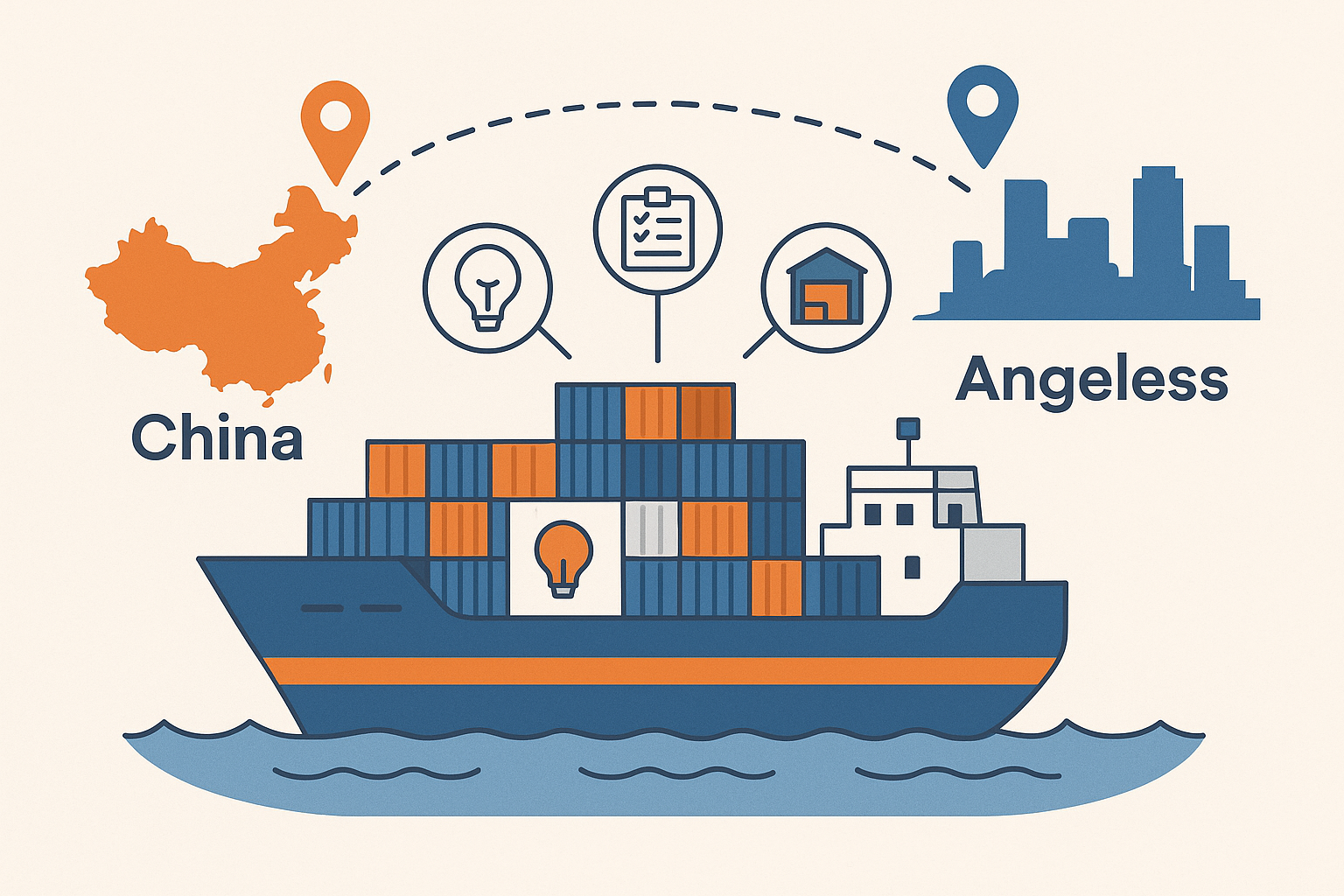
Although 40HQ FCL space availability for lighting from China to Los Angeles fluctuates throughout the year, shippers can still secure stable capacity when they understand market cycles and plan early. Therefore, businesses importing lighting products can greatly reduce delays by following structured booking strategies and leveraging reliable partners such as Top China Freight. Additionally, early forecasting improves freight rates, protects delivery schedules, and prevents supply chain disruption.

How Does Lighting Cargo Influence 40HQ FCL Space Availability?
Lighting products behave differently from other consumer goods because they are fragile, bulky, and packaging-intensive. Therefore, understanding how these characteristics affect capacity helps importers plan better.
Fragile Packaging Creates Volume Pressure
Lighting items require reinforced packaging and double-wall cartons. Consequently, a 40HQ container often reaches volume limits before hitting weight limits.
Seasonal Demand Compresses Booking Windows
Because lighting demand spikes before Christmas and renovation seasons, space tightens quickly. Importers often book three to four weeks earlier to secure predictable space.
Supply Chain Dependencies Increase Lead Time
Lighting factories frequently consolidate components from multiple sub-suppliers. As a result, minor upstream delays can disrupt a confirmed loading date unless the importer buffers time into the production plan.

What Market Factors Affect FCL Lighting Space From China to Los Angeles?
Market disruptions can limit space or reduce predictability. However, understanding these triggers allows shippers to adjust proactively.
Port Congestion Cycles
Los Angeles and Long Beach ports often experience congestion during peak retail seasons. Moreover, chassis shortages and labor slowdowns can push transit times beyond expected schedules.
Freight Rate Volatility
Although rates change weekly, stable planning still protects overall cost. Additionally, lighting importers that forecast volume for 3–6 months generally obtain better contract terms.
Carrier Schedule Reliability
Blank sailings and skipped ports reduce departure options. However, diversified routing via Yantian, Ningbo, and Shanghai increases flexibility and protects deadlines.
Why Does Production Planning Matter for Lighting Shipments?
Production and packaging timelines directly impact whether space can be secured.
Component Consolidation Requires Synchronization
Because lighting sets contain bulbs, drivers, casings, and mounting parts, manufacturers must synchronize all components. Therefore, small upstream delays can affect the container readiness date.
QC & Drop Test Requirements Add Lead Time
Lighting export standards often involve extra testing. Consequently, importers must reserve time for corrections to avoid pushing back the booking window.
Typical Shipping Time & Space Risk for Lighting Cargo
| Route Option | Est. Transit Time (Days) | Space Risk Level | Notes |
|---|---|---|---|
| Direct China → Los Angeles | 12–16 days | High (peak seasons) | Fastest option, limited flexibility |
| South China via Ningbo | 16–22 days | Medium | Better space stability for large-volume lighting |
| East China via Shanghai | 14–20 days | Medium–High | Popular route; congestion affects predictability |
How Do Freight Rates Influence FCL Space for Lighting Cargo?
Although freight rates cannot be fully controlled, they strongly influence booking behavior.
Rate Spikes Cause Early Overbooking
When carriers announce GRI or PSS, shippers rush to book space early. Consequently, lighting cargo—which is usually high volume—consumes 40HQ availability faster than general merchandise.
Stable Contract Rates Offer Predictability
Importers moving regular lighting shipments each month often negotiate quarterly contracts. Moreover, combining multiple SKUs into predictable volumes strengthens rate stability.
How Does Customs Compliance Affect Space Availability?
Customs preparation influences how smoothly cargo moves from factory to port.
Missing Documents Cause Loading Delays
Although factories prepare commercial invoices and packing lists, errors can force re-issuance. Moreover, compliance with U.S. product safety requirements must be completed before container cutoff.
Lighting Products Require Additional Certifications
UL, ETL, CE, or energy-efficiency labels may be required depending on the product. Therefore, importers should secure compliance early to avoid missing vessel schedules.
Essential Export Documents for Lighting Cargo
| Document Type | Purpose | Risk if Missing |
|---|---|---|
| Commercial Invoice | Customs declaration | Shipment delay |
| Packing List | Verifies quantities | Repacking or QC hold |
| HS Code Documentation | Ensures correct duty | Customs discrepancy |
| Product Certificates (UL/ETL) | Safety compliance | Possible rejection |

Case Studies
South China Factory → Los Angeles Warehouse
Cargo Type: LED ceiling lights, aluminum fixtures
Volume: 1 × 40HQ
Loading Port: Shenzhen
Transit Time: 15 days
Cost Range: Market-based FCL rate
Outcome: Early production alignment allowed the importer to book space 28 days in advance, preventing delays during a holiday surge. Moreover, flexible routing protected the buyer’s delivery schedule for a major retail launch.
Ningbo Supplier → Los Angeles Distributor
Cargo Type: Decorative lighting sets
Volume: 2 × 40HQ
Loading Port: Ningbo
Transit Time: 18–20 days
Cost Range: Seasonal freight range
Outcome: The buyer standardized packaging dimensions, increasing load efficiency by 14%. As a result, they required fewer containers and avoided tight space constraints during the late-year peak season. Additionally, the distributor improved its supply chain forecasting for recurring shipments.
How Can Top China Freight Support Lighting Importers?
As a global freight partner, Top China Freight offers structured solutions tailored for lighting importers.
Protected Space & Flexible Routing
During peak seasons, the team analyzes multiple ports, carriers, and sailing options to secure stable capacity.
Integrated Export Handling
From factory pickup to customs documentation, Top China Freight ensures lighting shipments move smoothly through every step.
End-to-End Visibility
Digital tracking and milestone updates help buyers control lead times and reduce schedule risk.
Learn more about optimizing your flow through our FCL & LCL services.
How Do Digital Tools Improve Lighting Shipment Visibility?
Digital visibility enhances space forecasting and strengthens cooperation with suppliers.
Container Tracking Systems
Real-time tracking improves planning accuracy. Moreover, buyers can adjust warehousing or trucking arrangements if the vessel schedule shifts.
Supply Chain Dashboards
Dashboards provide alerts on production status, documentation readiness, and vessel ETAs. Additionally, combining these insights reduces misalignment between factory output and shipping schedules.
Data-Driven Carrier Selection
Analyzing on-time performance and space reliability helps importers choose carriers with the best predictability for lighting shipments.
Conclusion
Managing 40HQ FCL space availability for lighting from China to Los Angeles requires forecasting, flexible routing, stable packaging methods, and strong supply chain communication. Moreover, proactive scheduling protects delivery timelines and reduces seasonal risks. Importers seeking predictable capacity can work with expert forwarders to secure space, improve cost efficiency, and maintain steady lighting inventory for the U.S. market.
Request A Free Quote
Need a reliable logistics partner? Share your shipment details and we’ll provide a tailored quotation quickly and accurately.
FAQ:
How early should I book a 40HQ FCL for lighting cargo?
Booking 3–5 weeks in advance is recommended because demand spikes seasonally and lighting products consume high container volume.
What documents are required for lighting imports to the U.S.?
You need invoices, packing lists, HS codes, and applicable safety certificates such as UL or ETL depending on the lighting category.
How do freight rate changes affect lighting shipments?
Rate increases can cause early booking surges, so forecasting several weeks ahead helps maintain schedule reliability.
What causes customs delays for lighting goods?
Missing certificates, incorrect HS codes, or incomplete paperwork commonly extend customs processing times.
Should I choose floor loading or palletizing for lighting shipments?
Floor loading maximizes space, while palletizing improves receiving efficiency. The choice depends on product type and warehouse rules.