
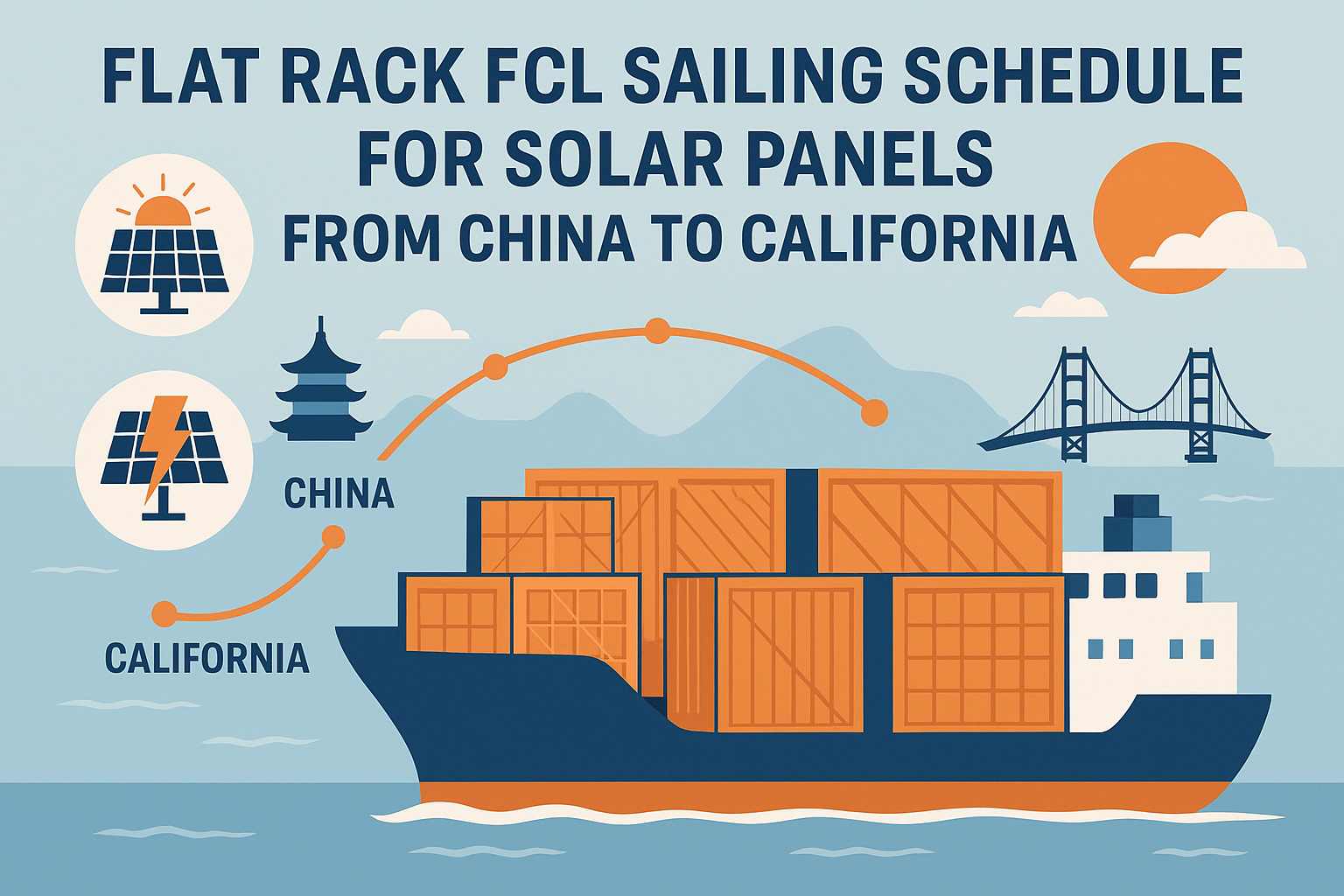
Although demand for renewable energy equipment grows rapidly, the Flat Rack FCL sailing schedule for solar panels from China to California often challenges exporters due to fragile cargo, tight project timelines, and fluctuating carrier capacity. Therefore, project managers increasingly rely on predictable routing, accurate documentation, and partners such as Top China Freight to secure stable shipping windows. Moreover, with the right planning framework, solar panel shipments can avoid delays and move smoothly through production, loading, and US customs clearance.
What Makes Flat Rack FCL Sailing Schedules for Solar Panels so Complex?
Because solar panels are fragile, wide, and often packed in oversized crates, flat rack shipping requires precise coordination. Moreover, carriers modify schedules frequently due to space allocation and port congestion. As a result, exporters must track route variations closely to secure predictable departures from Shanghai, Ningbo, or Qingdao to California ports such as Los Angeles and Oakland.
Additionally, solar project developers usually follow strict installation timelines. Therefore, any missed vessel cut-off can disrupt project budgets and the availability of installation crews at the destination.
Why Do Solar Panels Require Flat Rack Equipment Instead of Standard Containers?
Although standard FCL containers work for most boxed goods, solar modules—especially utility-grade panels—often exceed standard dimensions once palletized. Moreover, large crates need more open-sided access during loading and unloading, which makes flat racks a safer option for oversized renewable-energy cargo.
Flat racks also allow:
- Safer forklift access for wide pallets
- Better weight distribution
- Custom lashing tailored to fragile photovoltaic modules
- Reduced compression risk from container walls
Because solar panels require special handling, flat racks remain the preferred mode for large-scale renewable shipments from China to the US.
How Should Exporters Plan Sailing Schedules for Solar Panels?
Although carriers publish weekly schedules, solar panel exporters cannot rely solely on timetables because vessel delays occur frequently. Therefore, schedule planning should begin at least 2–3 weeks before factory readiness.
Key Planning Steps
- Confirm production readiness with the solar manufacturer
- Pre-book flat rack space due to limited equipment availability
- Align inland trucking with carrier cut-off times
- Pre-submit OOG approval requests
- Validate crate dimensions and ensure compliance with port handling limits
Because many solar shipments depart from East China, exporters benefit from early booking and proactive coordination with a forwarder experienced in flat rack planning.
What Documentation Supports Smooth Solar Panel Export to California?
Although solar shipments are not dangerous goods, they require structured documentation to ensure fast customs clearance and avoid reinspection. Additionally, mistakes in paperwork often force delays or rebooking.
Documentation Checklist
| Document | Purpose | Notes |
|---|---|---|
| Commercial Invoice | Confirms value & classification | Include solar technology details |
| Packing List | Shows crate sizes & count | Helps terminal plan equipment |
| HS Code Compliance | Ensures correct duty classification | Solar panels use 8541-series codes |
| OOG Diagram | Confirms flat rack loading plan | Mandatory for fragile cargo |
| Certificate of Origin | Verifies China origin | Useful for trade programs |
Because US customs checks solar imports carefully, accurate HS codes and packing details significantly reduce clearance time.
Case Studies
Utility Solar Panels From Shanghai to Los Angeles
Cargo: 720 pieces of utility-grade solar panels
Route: Shanghai → Los Angeles
Mode: Flat Rack FCL
Cost Range: USD 4,800–7,200
Transit Time: 15–18 days
Summary:
Although factory output changed suddenly, the exporter used early booking to secure flat rack equipment. Moreover, precise OOG approval and reinforced lashing minimized port delays. As a result, the cargo departed on the planned vessel and reached California ahead of the construction schedule.
Oversized Solar Panel Crates From Ningbo to Oakland
Cargo: 3.2m wide photovoltaic crate modules
Route: Ningbo → Oakland
Mode: Flat Rack FCL
Cost Range: USD 5,400–8,000
Transit Time: 16–20 days
Summary:
Because crate width exceeded normal limits, the exporter worked with Top China Freight to redesign the lashing frame and submit OOG approval early. Furthermore, early truck dispatch prevented gate delays. Consequently, the shipment moved smoothly without rebooking or detention charges.
What Sailing Routes Are Most Reliable for Solar Panels From China to California?
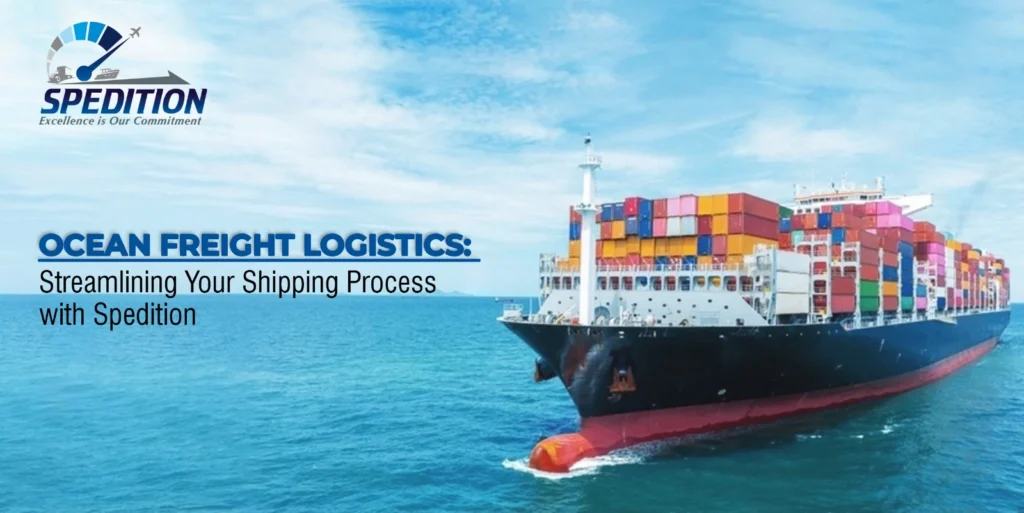
Although multiple carriers operate across the Pacific, some sailing routes provide more consistency due to vessel frequency and port-of-call stability. Moreover, California ports support renewable energy imports with dedicated handling zones.
Estimated Transit Times
| Origin Port | Destination (California) | Transit Time | Notes |
|---|---|---|---|
| Shanghai | Los Angeles | 14–18 days | Fastest and most reliable |
| Ningbo | Oakland | 16–20 days | Ideal for heavy solar crates |
| Qingdao | Los Angeles | 17–21 days | Occasional transshipment |
Because transit times vary with weather and port congestion, exporters should add a one-week buffer for project-critical shipments.
Should Exporters Use Multimodal Routes for Solar Panel Projects?
Although most solar cargo travels by sea, multimodal options can support project deadlines. For example, some Californian solar developers request partial shipments through express services for urgent components like connectors or inverters.
Exporters may consider:
- Sea + Rail via West Coast inland hubs
- Sea + Truck for final-mile delivery
- Express shipment via express service for spare components
- Air freight via air freight for urgent samples or project-critical parts
Because multimodal planning increases flexibility, exporters reduce the risk of project downtime caused by unpredictable delays.
What Are the Most Effective Risk-Control Measures for Flat Rack Solar Shipments?
Although solar panels are fragile, risks can be reduced significantly with structured planning. Therefore, exporters should follow a preventive checklist.
Solar Panel Risk-Control Checklist
| Risk | Prevention Method |
|---|---|
| Panel breakage | Use shock-absorbing padding & reinforced crates |
| Schedule delays | Book flat rack space 2–3 weeks early |
| Customs holds | Prepare accurate HS code and COO documents |
| Port congestion | Choose alternative ports (e.g., Oakland) |
| Weather exposure | Wrap panels with waterproof coverings |
Because solar modules are sensitive to vibration, exporters must ensure every crate is secured tightly.
Conclusion
The Flat Rack FCL sailing schedule for solar panels from China to California requires strict timing control, accurate documentation, and careful handling for fragile photovoltaic equipment. Moreover, exporters who adopt proactive planning and OOG coordination benefit from fewer delays, lower costs, and smooth customs release. If your solar project needs predictable and safe transport, consult our team for customized solutions tailored to renewable-energy cargo.
Request A Free Quote
Start shipping smarter with TopChinaForwarder today! 🚢✨ Request a Free Quote 📝 and get a tailored logistics plan built around your cargo and timeline.
FAQ:
How early should I book flat rack space for solar panels?
Booking 2–3 weeks early ensures equipment availability, smoother approvals, and more reliable sailing schedules.
Why do carriers sometimes reject oversized solar crates?
Incorrect dimensions, non-compliant lashing plans, or excessive weight can cause carriers to deny approval.
What affects solar shipment transit time to California?
Weather, port congestion, vessel rotation changes, and inland trucking delays can all influence transit time.
How can I protect solar panels during loading?
Use reinforced crates, shock-absorbing materials, waterproof wrapping, and calibrated lashing techniques.
What happens if my cargo misses the vessel cut-off?
Cargo must wait for the next available vessel, which may impact project timelines and freight costs.