
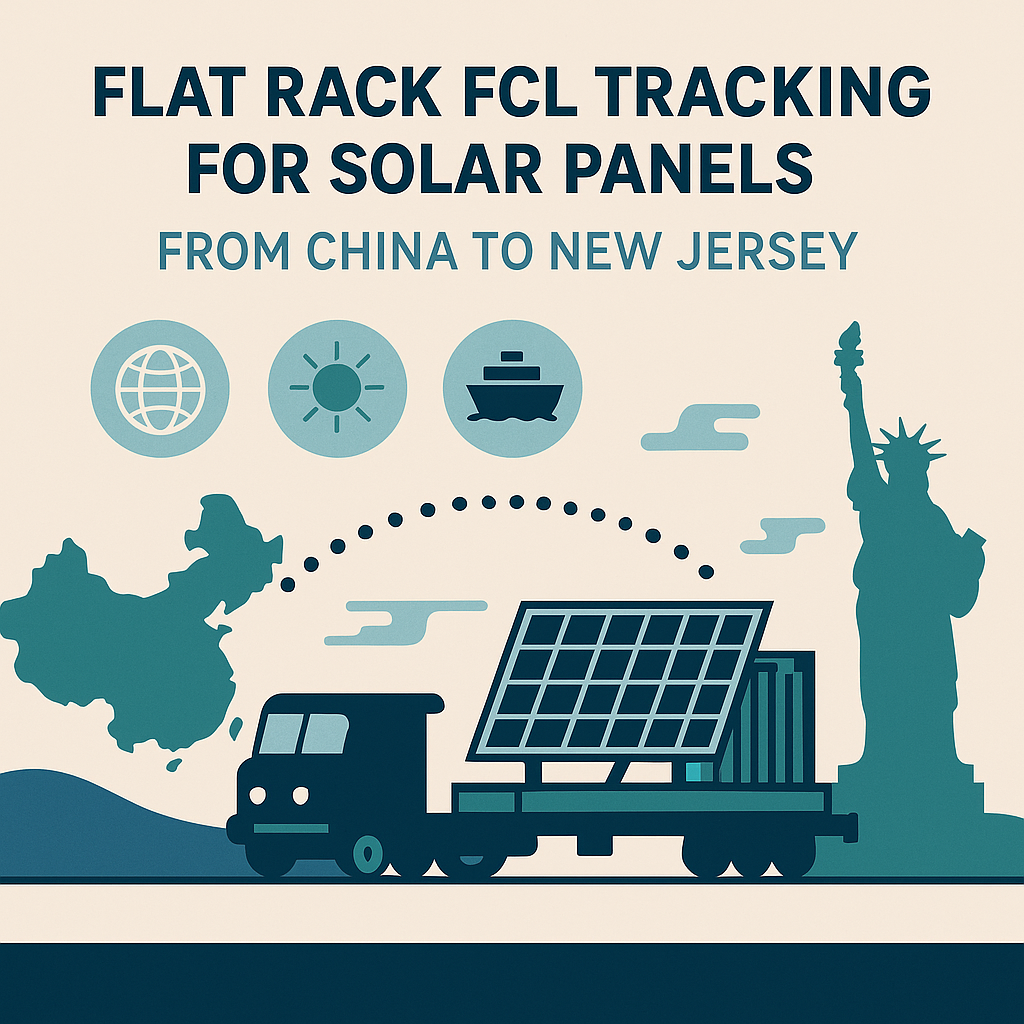
Although many importers depend on Flat Rack FCL tracking for solar panels from China to New Jersey, they often struggle to manage oversized dimensions, lashing requirements, port handling variations, and unpredictable freight schedules. However, with expert guidance from partners like Top China Freight, shippers can gain real-time visibility, stronger risk control, and more predictable delivery for fragile photovoltaic equipment. Therefore, this guide provides practical, actionable methods to streamline flat rack operations, reduce delays, and ensure safer OOG solar panel transport.
What Makes Flat Rack FCL Tracking Critical for Solar Panels Shipping to New Jersey?
Solar panels are large, fragile, and highly sensitive to impact and bending, and they frequently exceed the internal dimensions of standard containers. Therefore, importers rely on flat rack FCL tracking systems to monitor progress across every milestone—from factory pickup to port discharge in New Jersey.
Moreover, solar panels scheduled for U.S. power projects require accurate timelines because installation teams and contractors set deadlines based on cargo availability. Any delay creates cost overruns, contract penalties, and labor inefficiencies.
Additionally, flat rack shipments face unique risk factors such as exposure to weather, external impact, and lashing pressure, making tracking not just helpful but operationally essential.
How Does Flat Rack FCL Work for Oversized Solar Panels?
Solar panels often qualify as out-of-gauge (OOG) cargo because of their width and height when stacked. Although flat rack equipment offers open sides and flexible loading dimensions, it requires careful planning and engineering calculations.
Key workflow stages include:
- Supplier prepares reinforced packaging
- Cargo is lifted and secured onto flat rack platforms
- Heavy-duty lashing and bracing are installed
- Carrier validates OOG measurements for vessel acceptance
- Flat rack is loaded on deck or near-deck positions
- Ocean transit begins toward New York/New Jersey terminals
Additionally, carriers require precise drawings and measurement reports before accepting solar panel loads, making coordination a crucial element of the process.
Why Do Solar Panels Need Enhanced Protection During Flat Rack Transport?
Although flat racks provide the dimensional flexibility required for solar panels, they expose the cargo to weather, salt air, and vibration. Therefore, enhanced packing and lashing strategies protect fragile photovoltaic surfaces.
Solar panel vulnerabilities include:
- Micro-cracking from vibration
- Frame distortion due to uneven weight loads
- Moisture exposure during ocean transit
- Impact damage during terminal handling
- UV exposure for long-deck storage periods
Furthermore, because solar panels represent high-value renewable-energy equipment, even small defects can reduce output efficiency. Consequently, importers must integrate preventive measures throughout the supply chain, based on international best-practice guidelines.
What Are the Key Compliance Requirements for Shipping Solar Panels to the United States?
Solar panels fall under both commercial import rules and renewable-energy classification frameworks, requiring accurate documentation and customs alignment.
Essential compliance elements include:
- HS code alignment for photovoltaic modules
- Certificate of Origin
- Product specification sheets
- Packing list and commercial invoice accuracy
- Anti-dumping/anti-subsidy declaration (if required)
- Safety testing certificates (IEC standards)
Moreover, mistakes in documentation often trigger customs exams at New York/New Jersey ports, causing delays and additional handling fees.
To minimize compliance issues, importers often consult a professional
customs-brokerage team
to prepare all documents correctly and avoid costly re-inspections.
Case Studies
Oversized Solar Panels From Shanghai to New Jersey
- Cargo: High-efficiency monocrystalline panels (OOG width)
- Mode: Flat Rack FCL
- Route: Shanghai → New York/New Jersey
- Transit Time: 32 days door-to-door
- Challenge: Deck-stow exposure to severe mid-Atlantic winds
- Outcome: Heavy-duty lashing prevented frame bending; proactive tracking allowed installers to adjust project timelines by two days
- Result: Zero cargo loss, project remained on schedule
Utility-Scale Solar Modules Shipped via Flat Rack
- Cargo: 25 tons of 2-meter large-format modules
- Mode: Flat Rack FCL + inland trucking
- Route: Ningbo → Port Newark → New Jersey final delivery
- Transit Time: 34 days
- Challenge: Customs inspection triggered due to incomplete product spec sheet
- Solution: Working with Top China Freight’s documentation team reduced clearance time
- Result: Avoided terminal storage fees and maintained delivery commitments
What Shipping Modes Compete With Flat Rack FCL for Solar Panels?
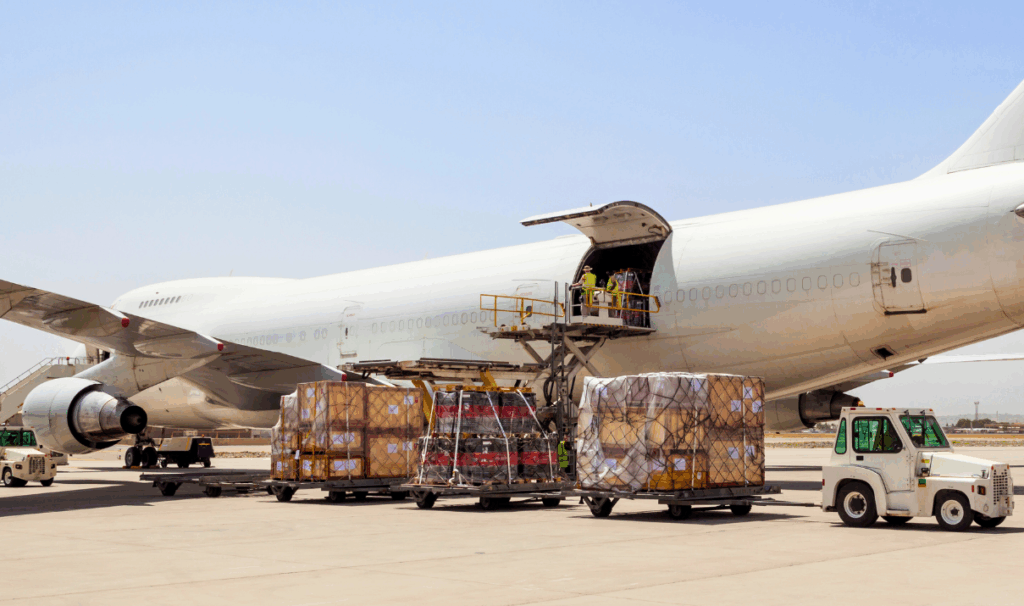
Although flat rack FCL is the primary mode for oversized photovoltaic equipment, importers sometimes consider alternatives.
Shipping Mode Comparison Table
| Shipping Mode | Cost Level | Speed | Suitability for Solar Panels |
|---|---|---|---|
| Flat Rack FCL | Medium–High | Moderate | Best for oversized fragile panels |
| Breakbulk Shipping | High | Slow | Suitable for very large project cargo |
| Air Freight | Very High | Fast | Rarely used; only for urgent small modules |
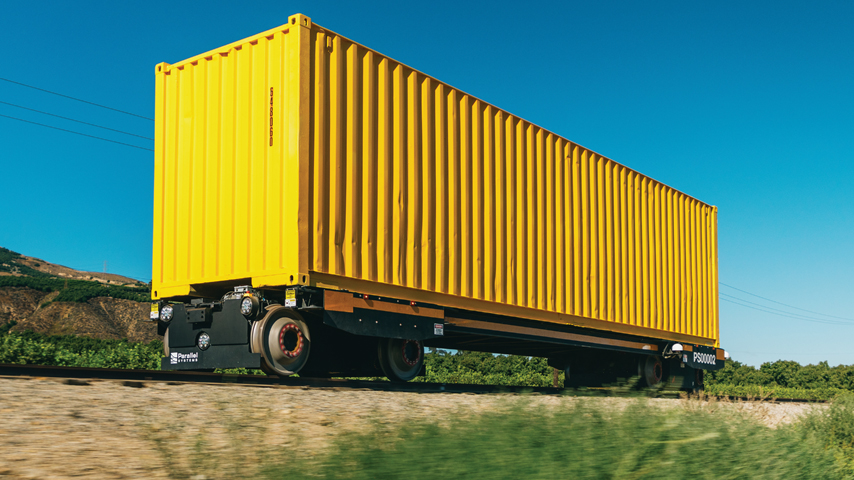
| Standard FCL | Medium | Moderate | Only for pallets that fit inside container |
Moreover, hybrid strategies—such as combining flat rack for large modules with standard FCL for accessories—improve cost efficiency.
Why Should Importers Use Professional Forwarders for Flat Rack Tracking?
Although carriers provide basic milestone updates, forwarders offer deeper visibility, stronger coordination, and customized logistics strategies tailored for fragile solar equipment.
Forwarder advantages include:
- Real-time flat rack visibility with alert notifications
- Engineering consultation for OOG drawings
- Professional lashing supervision
- Customs documentation preparation
- Port handling coordination at NY/NJ terminals
- Delivery routing for oversized loads
Additionally, Top China Freight supports renewable-energy supply chains by combining tracking technology with hands-on operational expertise.
What Are the Key Steps in the Flat Rack FCL Export Workflow for Solar Panels?
Although each project varies, flat rack operations follow a structured, predictable workflow. Understanding these steps helps importers maintain control over their tracking expectations.
Flat Rack FCL Workflow Table
| Step | Description | Importance |
|---|---|---|
| Cargo Survey | Confirms dimensions & fragility | Very High |
| Engineering Approval | Carrier validates OOG drawings | Very High |
| Lashing & Securing | Prevents shifting and micro-cracks | Critical |
| On-Deck Loading | Placement based on vessel structure | High |
| Ocean Transit | Real-time milestone tracking | High |
| Port Discharge | Crane handling at NJ terminals | High |
| Customs Clearance | Ensures timely release | Very High |
| Final Delivery | Routed to project site or warehouse | High |
Moreover, preparing cargo early ensures smoother workflow execution and accurate tracking logs.
Conclusion
In summary, managing Flat Rack FCL tracking for solar panels from China to New Jersey requires advanced planning, accurate milestone visibility, professional lashing, and strict compliance preparation. Moreover, optimizing documentation, handling procedures, and delivery schedules helps importers reduce risk and improve performance throughout the supply chain. Therefore, businesses shipping photovoltaic equipment should rely on experienced logistics partners to ensure safe, predictable, and cost-effective flat rack operations.
Request A Free Quote
Start shipping smarter with TopChinaForwarder today! 🚢✨ Request a Free Quote 📝 and get a tailored logistics plan built around your cargo and timeline.
FAQ:
What makes flat rack FCL suitable for solar panel shipments?
Flat racks support oversized dimensions and allow safer loading for large photovoltaic modules.
How long does shipping from China to New Jersey take?
Most routes take 30–35 days depending on carrier schedule and port conditions.
Do solar panels need special customs documents?
Importers must prepare accurate HS codes, product specs, and compliance certificates.
What causes delays in flat rack shipping?
Common causes include customs holds, equipment shortages, weather conditions, and poor documentation.
How do I reduce port fees at New Jersey terminals?
Submit documents early, pre-book drayage, and monitor vessel ETA closely.