
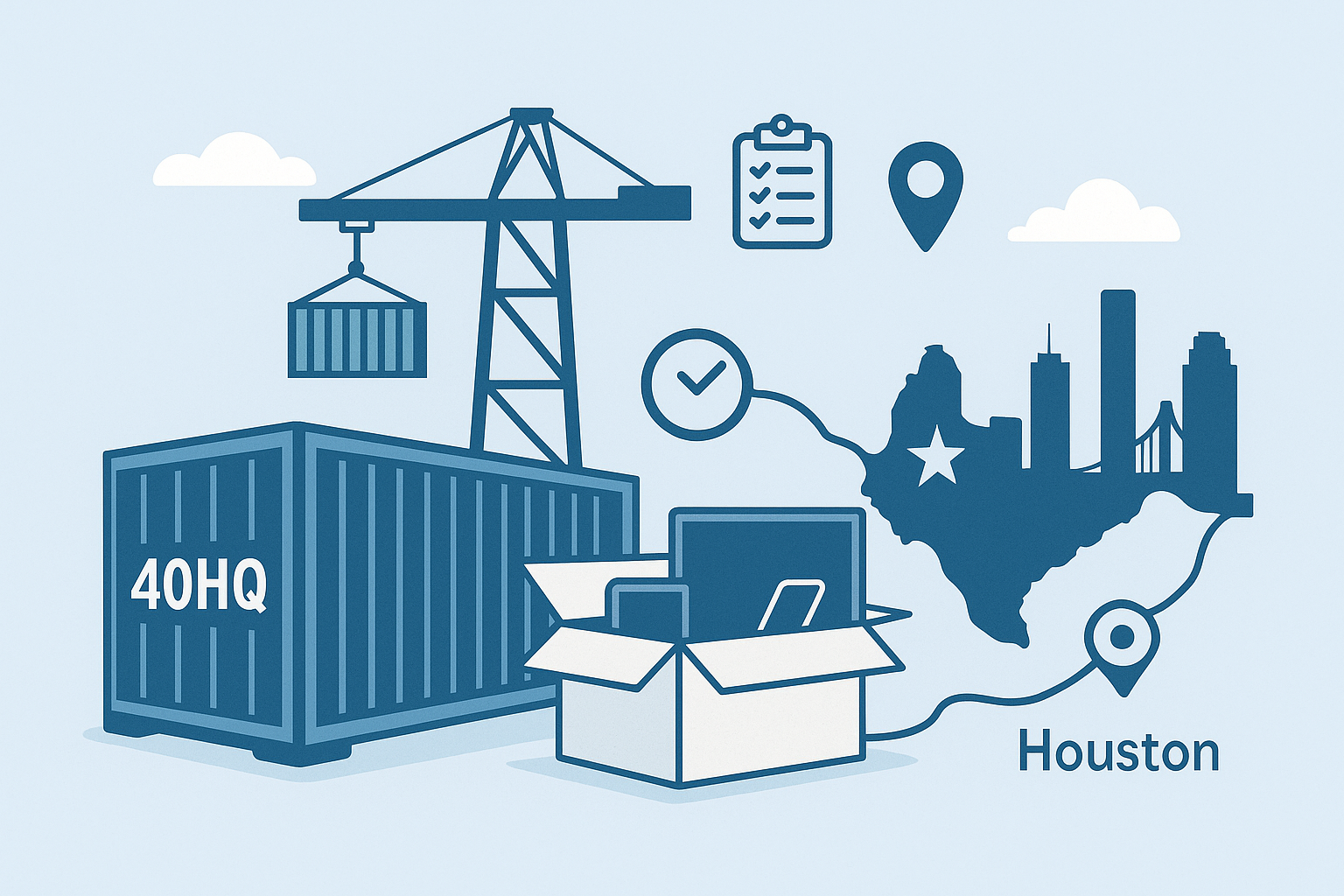
Managing 40HQ FCL demurrage prevention for electronics from China to Houston has become a top priority for importers as congestion, strict free-time rules, and complex documentation can quickly inflate costs. Therefore, businesses shipping high-value electronics need a clear strategy that reduces delays while improving end-to-end control, and resources like the Top China Freight homepage can provide a foundational understanding. Moreover, this guide offers practical methods that help importers stabilize transit time, avoid unnecessary fees, and enhance supply-chain visibility.

What Makes Demurrage a Major Risk for 40HQ Electronics Shipments?
Demurrage becomes a serious threat because electronics cargo frequently contains high-value, time-sensitive items with strict delivery windows. Moreover, Houston’s busy terminals often experience seasonal congestion, which can reduce available free time. Consequently, shippers must plan around potential delays caused by customs exams, incomplete documentation, and slow inland coordination.
Additionally, electronics often require secure handling and fast retrieval, so any misalignment between carriers, customs brokers, or trucking partners may increase dwell time. Since demurrage accumulates daily, even small process mistakes can escalate into avoidable charges.
Why Electronics from China to Houston Face Higher Demurrage Exposure?
Although all importers are sensitive to delays, electronics supply chains experience unique challenges. First, Houston receives substantial Asia-U.S. electronics volume, making it vulnerable to terminal bottlenecks. Second, customs compliance for electronics can require additional inspections or certifications, especially when dealing with lithium batteries or high-tech components.
Furthermore, many electronics importers rely on tight delivery schedules to support retailers and distributors. Therefore, any deviation—such as missing documents, slow release notices, or inaccurate packing lists—creates a chain reaction that causes demurrage. Consequently, proactive planning remains essential.
How Much Free Time Do Importers Typically Receive at Houston Port?
Typically, Houston terminals offer 4–7 days of free time depending on the carrier and contract terms. However, electronics importers often require faster container movement due to inland delivery commitments.
Below is a general reference table (non-rate-specific) to help importers evaluate free time expectations.
Typical Free Time at Houston Port
| Carrier Type | Standard Free Time (Days) | Notes |
|---|---|---|
| Major global carriers | 4–5 days | Shorter windows during peak seasons |
| Premium service contracts | 6–7 days | May include extended dwell flexibility |
| Special electronics programs | 5–7 days | Designed to lower congestion risk |
Since free time can vary, importers should negotiate terms in advance and adjust supply-chain schedules accordingly.
What Documentation Errors Most Often Trigger Demurrage for Electronics?
Documentation issues remain the leading cause of avoidable demurrage. Most electronics shipments rely on precise labeling, detailed packing lists, and accurate Harmonized System (HS) codes, and any discrepancy can prompt customs holds or exams.
Common Documentation Risks
- Incorrect gross/net weight entries
- Missing model numbers or serial IDs
- Mismatched quantities across invoices and packing lists
- Incomplete battery declarations
- Late ISF filing penalties
Moreover, incomplete documentation often slows terminal release, thereby increasing the risk of demurrage. Because of this, importers should rely on structured FCL documentation checklists for U.S. electronics imports, which improve compliance and reduce uncertainty.
How Transit Time from China to Houston Impacts Demurrage Prevention?
Transit times can vary from 22–35 days depending on origin ports, carrier selection, and U.S. West Coast congestion. Since electronics importers frequently synchronize shipments with production cycles, any unexpected deviation may disrupt warehouse planning.
Reference Transit Times from Key China Origins
| China Origin | Estimated Transit Time | Notes |
|---|---|---|
| Shenzhen | 24–29 days | Stable option for electronics exporters |
| Shanghai | 26–32 days | Longer routes during peak seasons |
| Ningbo | 25–31 days | Competitive sailing frequency |
Because transit time variation affects downstream scheduling, importers must adjust their warehouse staffing, trucking coordination, and customs workflows to prevent delays.
Case Studies
40HQ Electronics Cargo from Shenzhen to Houston
Origin: Shenzhen
Destination: Houston
Cargo Type: Consumer electronics + power accessories
Container: 40HQ FCL
Freight Method: Direct ocean service
Cost Reference: Mid-range seasonal China–U.S. East routing
Transit Time: 26 days
Key Success Factor: Pre-arrival document check + early drayage booking
The importer avoided demurrage entirely because all documentation was validated before departure and drayage was secured three days before vessel arrival. Additionally, warehouse labor was scheduled ahead of time to ensure immediate unloading.
Mixed Electronics Components via Ningbo to Houston
Origin: Ningbo
Destination: Houston
Cargo Type: High-value circuit modules + small appliances
Container: 40HQ FCL
Freight Method: Premium routing
Cost Reference: Upper-mid range for peak season
Transit Time: 28–30 days
Key Success Factor: Real-time ETA visibility + customs pre-clearance
Because ETA fluctuations were monitored closely, the importer adjusted the trucking window proactively and completed customs compliance steps early. As a result, the container was retrieved within free time despite port congestion.
What Supply-Chain Strategies Reduce Demurrage for High-Value Electronics?
Importers can integrate several high-impact strategies to reduce delays and protect cost performance. While each company’s workflow varies, the following methods consistently see strong results.
High-Impact Strategies
- Use early documentation reviews to prevent customs holds
- Book vessels with predictable on-time performance
- Pre-assign drayage carriers before vessel arrival
- Prepare unloading teams with SKU mapping and staging plans
- Use multi-channel tracking tools for ETA synchronization
- Apply buffer time during peak Chinese export periods
Additionally, working with experienced logistics providers offering both FCL & LCL options enables more flexible planning, especially when electronics volumes fluctuate.
What Are the Essential Documents Needed to Avoid Customs Delays?
Customs Documentation Checklist for Electronics Imports
| Document Type | Purpose | Common Issues |
|---|---|---|
| Commercial Invoice | Declares value & product details | Incorrect HS codes |
| Packing List | Confirms model, quantity & size | Missing serial IDs |
| Bill of Lading | Carrier & cargo verification | Late release notice |
| ISF Filing | Mandatory pre-arrival U.S. filing | Inaccurate data entry |
| Battery Declaration (if applicable) | Safety compliance | Missing power rating |
Since these documents directly influence CBP screening speed, maintaining accuracy dramatically lowers demurrage risk. Furthermore, consistent document verification helps distributors and internal teams plan receiving more efficiently.
Conclusion
Effective 40HQ FCL demurrage prevention for electronics from China to Houston depends on proactive customs compliance, precise documentation, strong coordination with drayage partners, and accurate forecasting. Moreover, importers who adopt structured visibility and operational planning can avoid costly delays and maintain stable shipping performance. When businesses need more guidance or tailored routing options, specialized logistics teams can offer optimized solutions to support long-term supply-chain efficiency.
Request A Free Quote
Need a reliable logistics partner? Share your shipment details and we’ll provide a tailored quotation quickly and accurately.
FAQ:
How are demurrage charges calculated at Houston Port?
Charges accumulate daily after free time ends, with rates depending on the carrier and terminal. Early planning helps reduce exposure.
What increases the chance of customs exams for electronics?
Inaccurate HS codes, unclear product descriptions, and missing declarations increase exam probability.
Do lithium batteries complicate electronics imports?
Often they do. Battery declarations and safety documents must be accurate to avoid delays.
How early should trucking be arranged for Houston arrivals?
Booking 48–72 hours before vessel arrival helps secure appointments and reduces dwell time.
Do I need cargo insurance for electronics?
Insurance is strongly recommended because electronics have high value and are sensitive to damage or loss.