
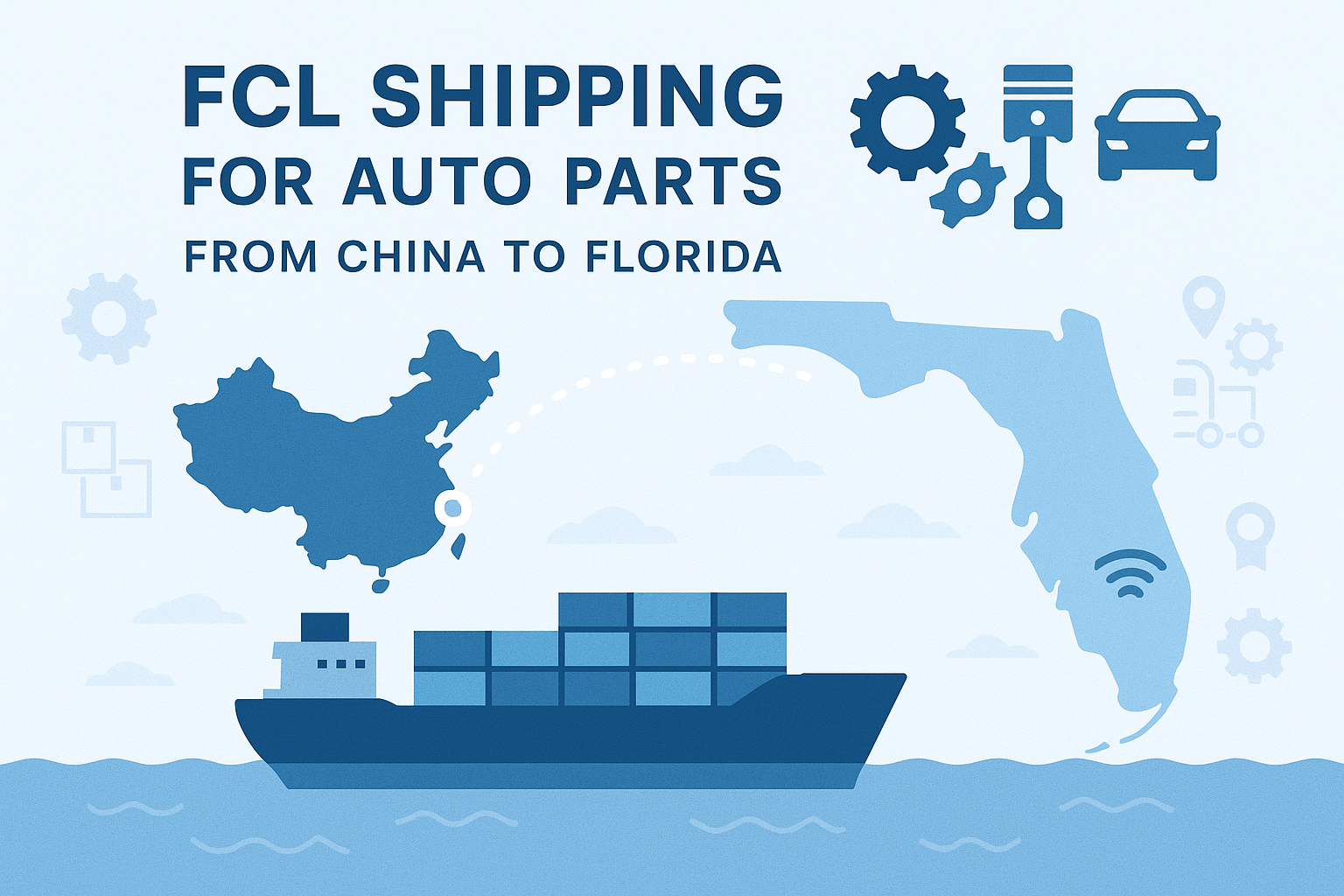
Because the automotive supply chain requires precision and stable delivery, many importers depend on FCL shipping for auto parts from China to Florida to maintain predictable production schedules; however, equipment readiness, customs rules, and routing choices often complicate planning. Moreover, importers seeking consistent performance increasingly rely on experienced partners such as Top China Freight to stabilize freight scheduling, reduce risks, and optimize container loading for sensitive components.
Why Does FCL Shipping Matter for Auto Parts Moving From China to Florida?
Although auto parts vary from lightweight accessories to heavy mechanical components, FCL shipping protects their structural integrity and reduces handling risk. Furthermore, Florida’s distribution hubs—including Jacksonville, Tampa, and Miami—serve Southeast dealerships, maintenance centers, and aftermarket warehouses, which makes consistent supply crucial. Because FCL eliminates consolidation delays and minimizes damage, importers choosing full-container strategies experience faster turnaround and smoother inland distribution.
Additionally, the automotive sector depends heavily on delivery schedules, so stable freight rates and predictable timelines become essential for production continuity.
What Types of Auto Parts Are Commonly Shipped in FCL Containers?
Auto parts differ widely in sensitivity, value, and packaging requirements. Moreover, selecting FCL enables shippers to organize structured loading plans tailored to each product category.
Common Cargo Types
- Engine parts, pistons, and crankshafts
- Gearboxes, clutches, and transmission components
- Brake systems, shock absorbers, and suspensions
- Headlights, sensors, and electronic controls
- Tires, wheels, and bulky accessories
Because these items vary in density and fragility, importers often combine heavy items with packaged accessories to balance weight distribution and protect components in transit.
How Should Importers Optimize Container Loading for Auto Parts?
Although FCL shipping reduces risk, loading strategy determines actual cargo safety. Moreover, proper weight distribution ensures containers comply with shipping line and U.S. road limit standards.
Container Optimization Techniques
- Stack heavy components near the floor and center
- Use wooden frames or steel brackets for mechanical parts
- Apply anti-slip mats to reduce vibration
- Keep electronic components elevated to avoid moisture exposure
- Secure tires and large accessories with belt systems
Additionally, FCL container optimization for auto parts cargo improves protection and reduces the likelihood of damage claims.

What Routing Options Are Available for Florida-Bound Auto Parts?
Auto parts shipped from China typically enter Florida through a network of coastal and Gulf gateways. Furthermore, routing selection affects cost, transit time, and inland movement efficiency.
Common Routes for Florida Auto Parts Imports
| Route | Transit Time | Cost Level | Advantages |
|---|---|---|---|
| China → Miami | 28–35 days | Medium | Fast access to South Florida dealerships |
| China → Jacksonville | 30–38 days | Medium-Low | Strong automotive distribution networks |
| China → Tampa | 30–40 days | Medium | Balanced routing for central Florida |
| China → Houston → Florida | 32–42 days | Medium | Reliable Gulf alternative during peak seasons |
Because the Florida market includes diverse inland destinations, importers often gain flexibility by mixing direct port calls with Gulf transshipment during peak congestion.
Case Studies
Case: Engine components shipped from Guangzhou to Miami
- Cargo: Engine blocks + electronic sensors
- Container: 1 × 20GP FCL
- Transit: 31 days
- Solution Used: Weight-balanced loading + moisture-control materials
- Result: Zero damage; reduced handling time; improved Florida-bound freight scheduling for future orders.
Case: Transmission systems transported from Ningbo to Jacksonville
- Cargo: Gearbox assemblies + bulky mechanical accessories
- Container: 1 × 40GP FCL
- Transit: 34 days
- Solution Used: Reinforced bracketing + optimized pallet layout
- Result: Faster unloading; minimal inland delays; stable container planning for repeated monthly shipments.
What Are the Typical Costs Involved in FCL Shipping for Auto Parts?
Although pricing fluctuates with logistics trends, several predictable cost components remain consistent across China–Florida lanes. Moreover, understanding these elements helps importers build accurate budgets.
Cost Components for FCL Auto Parts Shipping
| Cost Component | Description |
|---|---|
| Freight Rate | Base ocean rate depending on port pair and season |
| Origin Fees | Trucking, warehouse loading, documentation |
| Terminal Handling | Charged at both origin and destination |
| Inland Delivery | Drayage to Florida distribution centers |
| Insurance | Recommended for high-value mechanical components |
Because auto parts often contain high-value metals and electronics, many importers add freight insurance to protect against accidental damage.
How Does Customs Compliance Influence Auto Parts Shipping?
Although FCL shipping simplifies cargo flow, customs documentation still requires strict precision—especially for mechanical assemblies. Furthermore, auto parts often fall under regulated HS codes, and incorrect declarations may lead to delays.
Key Customs Documents for Auto Parts Imports
| Document | Purpose |
|---|---|
| Commercial Invoice | Declares value and product details |
| Packing List | Confirms packaging structure and HS codes |
| Bill of Lading | Provides transport terms for release |
| ISF Filing | Required before cargo reaches the U.S. |
| EPA/DOT Compliance | Mandatory for certain automotive components |
Additionally, importers using customs brokerage services reduce compliance issues, especially when handling mixed automotive shipments.
How Do Logistics Trends Influence China–Florida Auto Parts Shipping?
Industry-wide supply chain changes—such as fluctuating freight rates, shifting demand cycles, and evolving customs regulations—directly influence planning for auto parts. Furthermore, automotive manufacturing continues to grow across Florida and neighboring states, increasing demand for steady container flows.
Key Trends Affecting Importers
- Rising demand for aftermarket parts in Southeast USA
- Increased customs enforcement for automotive electronics
- Stronger focus on sustainability and optimized routing
- Digital visibility becoming standard for inventory planning
Additionally, China–Florida trade patterns remain resilient, which encourages importers to refine long-term shipping strategies.
Conclusion
In summary, FCL shipping for auto parts from China to Florida remains the most reliable method for moving high-value mechanical components, electronic modules, and bulk automotive accessories. Moreover, proper loading, accurate documentation, and strategic routing greatly improve safety and efficiency across the entire supply chain. Therefore, importers seeking long-term stability should enhance forecasting, diversify modes when necessary, and collaborate with experienced logistics partners for seamless operations. For improved performance, businesses may request a tailored logistics plan to support their Florida distribution network.
Request A Free Quote
Start shipping smarter with TopChinaForwarder today! 🚢✨ Request a Free Quote 📝 and get a tailored logistics plan built around your cargo and timeline.
FAQ:
How early should I book FCL shipping for auto parts?
Booking 1–2 weeks before production completion ensures better sailing options and container availability.
Do customs rules differ for electronic auto parts?
Some sensors and ECUs require additional declarations. Early document preparation prevents clearance delays.
What influences freight rates for China–Florida shipments?
Rates depend on season, carrier capacity, port congestion, and global logistics trends.
How do I reduce moisture damage during long sailings?
Use desiccants, anti-rust wrapping, and elevated storage for sensitive electronics and steel parts.
Can tracking tools support my inventory planning?
Real-time visibility helps adjust warehouse schedules and maintain spare parts availability.