
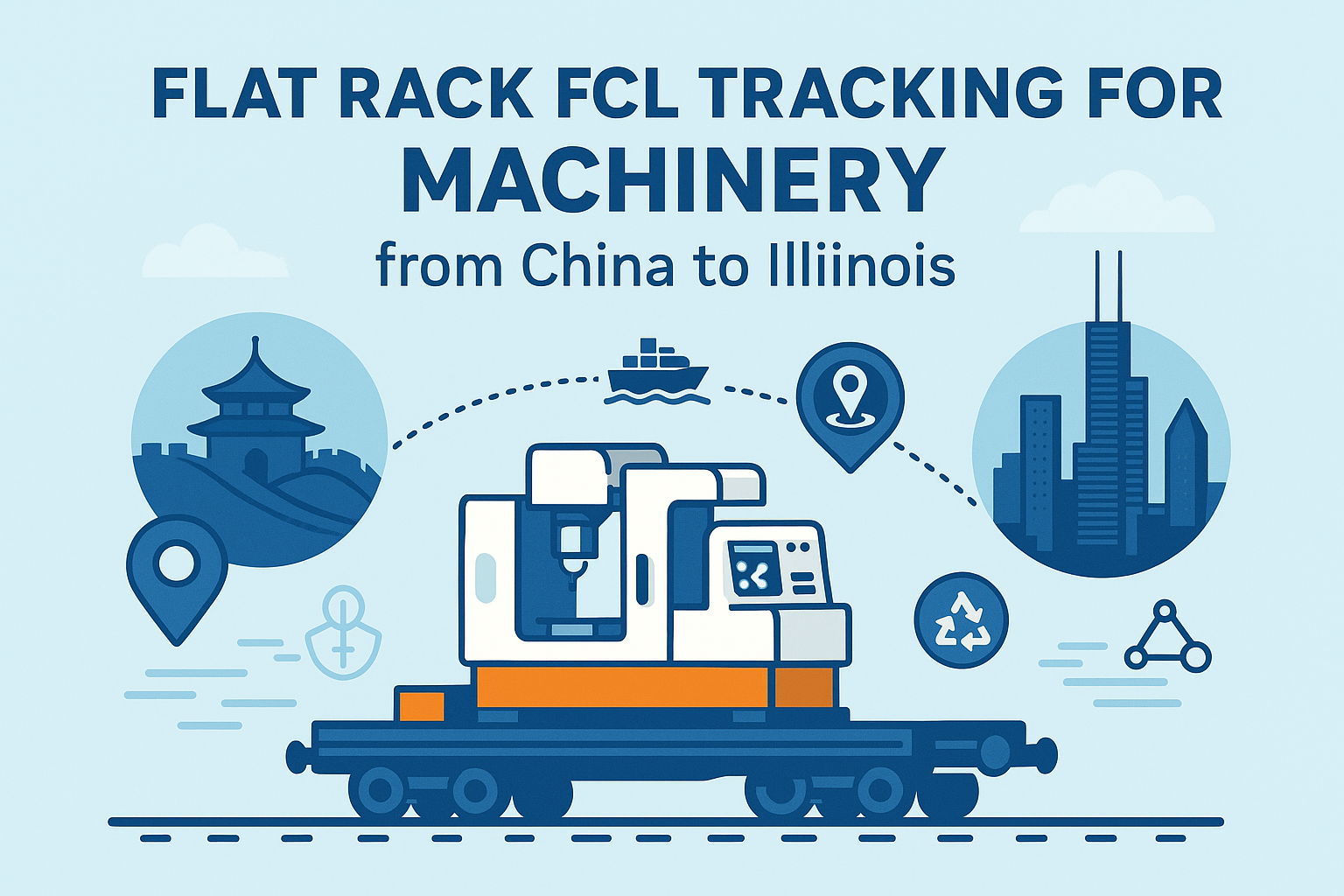
Although shipping oversize industrial machinery requires careful planning, managing Flat Rack FCL tracking for machinery from China to Illinois often becomes even more challenging without reliable visibility. Therefore, this guide explains how companies can improve control, predict transit time accurately, and reduce risk throughout the journey from China to the U.S. Midwest. Since better visibility supports better decisions, here you will also find workable solutions and expert tips powered by partners like Top China Freight.
What Makes Flat Rack FCL Tracking for Machinery from China to Illinois So Important?
Because machinery often exceeds the dimensions of standard containers, Flat Rack shipments require stronger coordination and continuous tracking. Moreover, machinery valued at hundreds of thousands of dollars must remain secure, monitored, and fully compliant with shipping regulations. As a result, real-time tracking helps import managers reduce uncertainty, avoid unnecessary delays, and prevent costly misrouting.
Furthermore, oversize cargo travels through multiple handling points, so tracking updates reduce guesswork and support more reliable delivery schedules. Additionally, accurate tracking supports customs preparation and ensures supply chain alignment with U.S. port handling procedures.

How Does Machinery Size and Weight Affect Flat Rack Tracking Accuracy?
Because Flat Rack cargo remains exposed, weather conditions, handling frequency, and vessel load plans influence tracking stability. Nevertheless, reliable tracking tools can overcome most variables when combined with proper loading and route planning.
Key influencing factors include:
- Heavy machinery weight distribution
- Over-dimension cargo width or height
- Securing points for chains and belts
- On-deck vs under-deck placement
- Port congestion and terminal equipment availability
Although these factors vary by shipment, consistent monitoring ensures your logistics team can anticipate potential risk areas more effectively.
Why Do Oversize Machinery Shipments Face More Tracking Interruptions?
Because Flat Rack units ride in exposed positions, movement sensors can experience interruptions during rough sea conditions or when stacked against metal structures. However, modern IoT tracking devices mitigate most of these limitations.
Common causes include:
- Metal interference from adjacent containers
- High-deck wind pressure
- Extended port dwell times
- U.S. inland transfer delays
- Incorrect scanning by terminal systems
Consequently, import managers should combine IoT devices with carrier-level visibility tools to ensure tracking continuity across each stage.
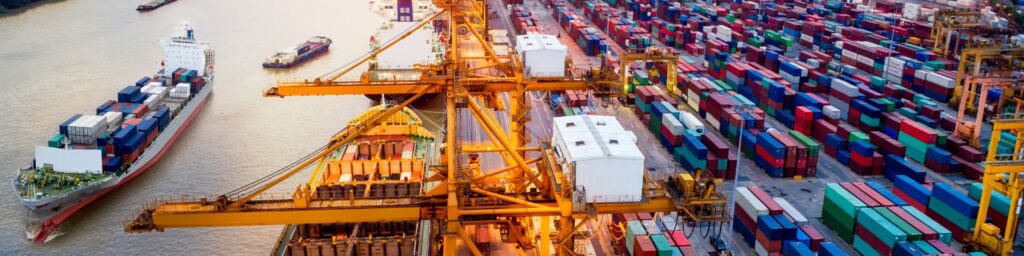
What Is the Standard Transit Time from China to Illinois?
Below is a practical reference table for machinery moving from China to Illinois via Flat Rack FCL. Although actual schedules may vary, the ranges offer useful planning benchmarks.
Transit Time & Route Reference Table
| Route Segment | Estimated Time | Notes |
|---|---|---|
| China Port → U.S. West Coast Port | 16–20 days | Most common route for heavy machinery |
| U.S. West Coast → Rail to Chicago | 4–7 days | Rail preferred for stable handling |
| Chicago → Illinois Final Delivery | 1–3 days | Depends on machinery dimensions |
| Total China → Illinois | 21–30 days | Includes standard dwell & handling |
Although the timeline varies, tracking tools help companies adjust delivery schedules more accurately.
Case Studies
Flat Rack Machinery Shipment from Qingdao to Illinois
Cargo: CNC machining center
Dimensions: Oversize, requiring Flat Rack
Route: Qingdao → LA → Chicago rail → Illinois delivery
Total Transit: 26 days
Cost Summary: Mid-range ocean freight, additional lashing fees
Outcome:
Although the CNC unit required reinforced blocking and export preparation, tracking remained stable through IoT devices. Moreover, the Illinois receiver scheduled rigging teams accurately because visibility data predicted the final delivery window within a 6-hour range. As a result, unloading finished ahead of schedule without extra storage charges.
Heavy Hydraulic Press Transport from Shanghai to Illinois
Cargo: 35-ton hydraulic press
Mode: Flat Rack FCL with oversize escort to origin port
Route: Shanghai → Seattle → Chicago rail → Illinois facility
Total Transit: 29 days
Key Challenges:
- Rail vibration risks
- Weather interference on deck
- Large lifting equipment required
Outcome:
By using dual tracking layers (carrier visibility + IoT GPS), the importer received consistent updates. Additionally, rail milestones synchronized with warehouse staff in Illinois, allowing cranes to be reserved on the correct delivery day. Consequently, the machinery installation project proceeded without delays.
Why Top China Freight Strengthens Flat Rack Tracking & Delivery Stability
Because Flat Rack machinery requires experience and precise coordination, importers benefit from working with a team able to manage origin handling, lashing standards, U.S. rail transfers, and tracking consolidation. Furthermore, Top China Freight integrates documentation support and milestone monitoring with end-to-end project cargo workflows.
What Customs Documentation Supports Smooth Machinery Entry into Illinois?
Below is a simplified document reference table to help teams prepare paperwork early.
| Document Type | Purpose | Machinery-Specific Notes |
|---|---|---|
| Commercial Invoice | Declares value | Must show machinery serial numbers |
| Packing List | Lists cargo details | Indicate oversize dimensions clearly |
| HS Code Declaration | Determines duty | Accurate classification prevents delays |
| ISF Filing | Required for U.S. import | Must be filed before vessel departure |
| Bill of Lading | Shipment receipt | Should specify Flat Rack & machinery type |
Therefore, preparing these documents ahead of time reduces compliance risk and improves supply chain flow.
Comparison of Tracking Tools for Machinery Shipments
| Tracking Method | Strengths | Limitations | Best Use Case |
|---|---|---|---|
| Carrier Milestone Tracking | Integrated with shipping line systems | Not continuous | Standard visibility for predictable routes |
| IoT GPS Devices | Real-time location | Metal interference possible | High-value machinery & oversize cargo |
| Sensor-Based Monitoring | Detects vibration/tilt | Requires battery maintenance | Engineering equipment needing stability checks |
| Web-Based Dashboards | Centralizes updates | Quality varies by provider | Multi-party project coordination |
Although each tool has pros and cons, combining at least two methods yields the strongest reliability for Flat Rack FCL cargo.
Conclusion
In summary, effective Flat Rack FCL tracking for machinery from China to Illinois improves control, strengthens safety, and enhances delivery accuracy across every stage of the supply chain. Moreover, businesses handling high-value engineering equipment can reduce delays, avoid demurrage, and protect their logistics budgets when they rely on strong visibility tools. Therefore, companies seeking predictable results should invest in a combined tracking strategy and work with experienced partners for reliable end-to-end coordination.
Request A Free Quote
Start shipping smarter with TopChinaForwarder today! 🚢✨ Request a Free Quote 📝 and get a tailored logistics plan built around your cargo and timeline.
FAQ:
How are tracking updates generated for Flat Rack machinery shipments?
Updates come from carrier milestones and IoT devices, providing frequent location reports and signals during ocean and inland legs.
Do Flat Rack shipments face more delays than standard containers?
Not always. However, oversize cargo may require extra handling time at ports or during rail transfer.
Does weather affect tracking signals?
Severe weather or high wind on deck can cause temporary interruptions, but IoT devices minimize gaps.
How early should machinery tracking be activated?
Activation usually begins at the origin port before gate-in to ensure the whole journey is recorded.
What documents improve tracking and clearance speed?
Accurate invoices, packing lists, HS codes, and ISF filings support smooth visibility and customs flow.