
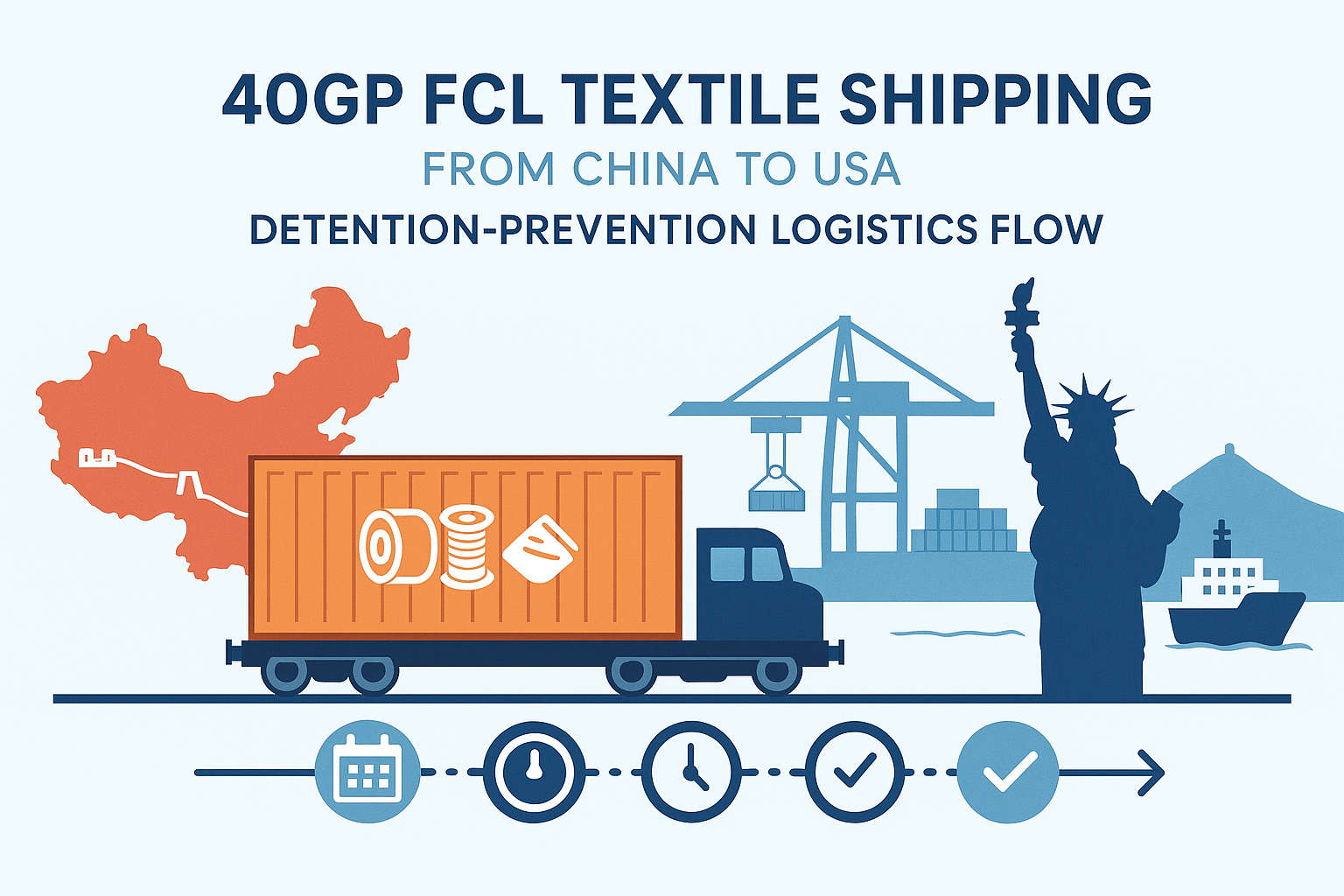
When shipping large textile volumes from China to the USA, 40GP FCL detention prevention becomes a top priority for import managers. Because detention fees can escalate quickly, businesses look for reliable ways to control port timelines, improve container flow, and strengthen supply-chain coordination. Moreover, with early planning supported by clear actions, companies can avoid unnecessary costs while keeping shipments smooth through the entire route. As you explore these strategies, you may also rely on professional forwarders such as Top China Freight, whose expertise is reflected on its homepage for trusted import planning.
What Makes 40GP FCL Detention Prevention for Textiles from China to USA So Challenging?
Detention risks increase when textile shipments move through congested ports, experience customs delays, or arrive during peak season. Additionally, textile orders often include multiple SKUs, sensitive packaging layers, and strict receiving deadlines, which means cargo readiness must be managed carefully. The challenge grows when importers have limited visibility into vessel schedules or port storage limits.
Key Difficulty Factors
- High SKU variety requiring longer unloading time
- USA ports’ limited free days for 40GP containers
- Seasonal textile peak cycles
- Sudden customs inspection or re-examination
- Warehouse receiving delays
- Inaccurate booking or late trucking arrangement
Because these risks stack rapidly, detention prevention becomes essential for protecting margins.
How Can Textile Importers Reduce Detention Risk Before the Vessel Leaves China?
Early planning offers the strongest protection against detention. Therefore, textile importers should align suppliers, forwarders, truckers, and customs brokers long before the vessel cut-off.
Pre-Departure Prevention Actions
- Finalize textile cargo readiness timeline
- Optimize 40GP loading to avoid overweight rework
- Prepare customs-ready textile documents early
- Confirm USA drayage slot 1–2 weeks ahead
- Validate HS codes before packing
- Maintain supply chain visibility for every milestone
During this stage, textile shippers can also combine trucking and ocean coordination with solutions such as sea freight options, naturally embedded through partners like Top China Freight.
Why Does Customs-Ready Documentation Matter for 40GP FCL Detention Prevention?
Since customs issues remain a leading cause of delays, complete and accurate documents play a major role. Moreover, when textile importers provide precise fiber composition, COO, and packing lists, cargo clears more smoothly.
Below is a simplified checklist:
Textile Import Customs Documentation Checklist
| Document | Key content | Risk point description |
|---|---|---|
| Commercial Invoice | HS codes, fiber ratio, unit values | Mis-declared fiber composition triggers exam |
| Packing List | SKU, roll count, weight | Incorrect roll number delays clearance |
| Bill of Lading | Consignee, notify, seal | Wrong notify party causes notice delay |
| COO Certificate | Origin confirmation | Missing COO extends clearance |
| Textile Compliance Docs | Fiber labeling, product tests | Missing lab tests increases inspection |
| Arrival Notice | Pickup scheduling | Late receipt reduces free time |
What Port Logistics Actions Help Avoid Detention in the USA?
Importers often underestimate the need for synchronized port-side planning. However, coordinating trucking, customs, and warehouse receiving times makes detention prevention significantly easier.
Port-Side Best Practices
- Arrange trucking before vessel arrival
- Track port congestion risk daily
- Use digital port visibility tools
- Align warehouse team with drayage timing
- Confirm container free-time management rules
- Keep alternative trucking vendors on standby
Additionally, some importers rely on multimodal choices—such as rail freight solutions—when inland transportation requires more predictable timelines.
How Does Supply Chain Visibility Strengthen Detention Prevention?
Clear visibility allows importers to make fast decisions. Because textiles move through multiple handling points, real-time updates help users adjust their schedules before free days expire.
Visibility Enhancements
- Real-time milestone updates from origin to warehouse
- ETA revision alerts from shipping carriers
- Automated truck dispatch notifications
- Digitized document sharing
- Predictive alerts for congestion risk
Although visibility tools support operations, they work best when paired with professional freight management.
Case Studies
Guangzhou to Los Angeles (40GP FCL Textiles)
Cargo: 26,500 kg knitted textiles
Container: 40GP
Route: Nansha → Los Angeles
Transit Time: 15 days
Total Cost: USD 4,280 (ocean + drayage)
Challenge: Congested LA port + limited warehouse staffing
Solution: Early trucking booking + synchronized receiving schedule
Result: No detention fees; container unloaded within free time
Ningbo to Houston (Textile Rolls in 40GP)
Cargo: 22,000 kg textile rolls
Container: 40GP
Route: Ningbo → Houston
Transit Time: 24 days
Total Cost: USD 4,950
Challenge: Documentation errors (fiber labeling)
Solution: Pre-departure document review with forwarder
Result: Cleared customs without delay; saved 3-day detention cost

How Should Companies Choose a Forwarder to Support Detention Prevention?
Choosing an experienced partner matters because forwarders handle documentation, bookings, drayage, and customs support. Additionally, companies that operate multiple service modes—like Top China Freight—offer consistent tracking, flexible air or ocean options, and strong port relationships.
What Cost Factors Affect 40GP FCL Detention Prevention for Textiles?
Detention costs vary across U.S. ports, shipping lines, and cargo volumes. Furthermore, when receiving warehouses lack staff or scheduling windows, containers sit longer, causing fees to accumulate.
Reference Cost Drivers for Detention Fees
| Cost Driver | Impact Level | Description |
|---|---|---|
| Port Free Days | High | Usually 4–7 days depending on port & carrier |
| Trucking Availability | High | Tight drayage slots cause extra days |
| Customs Exams | Medium | Exams add 1–3 days; intensive exams add more |
| Warehouse Schedule | High | No-window receiving creates delays |
| Peak Season | Medium | Higher congestion reduces flexibility |
| Incorrect Docs | High | Missing data extends clearance timelines |
Conclusion
Effective 40GP FCL detention prevention for textiles from China to USA relies on early planning, correct documentation, realtime visibility, and coordinated port operations. Therefore, importers who optimize loading, track congestion, and schedule drayage early avoid unnecessary fees and maintain smooth supply chains. To further strengthen your textile import reliability, consider contacting a professional logistics partner for tailored FCL solutions.
Request A Free Quote
Need a reliable logistics partner? Share your shipment details and we’ll provide a tailored quotation quickly and accurately.
FAQ:
How are detention fees calculated for 40GP shipments?
Detention fees are based on daily container use beyond free days. Carriers set different rates depending on port, season, and equipment availability.
What documents help avoid customs delays for textiles?
Accurate invoices, packing lists, HS codes, COO, and fiber compliance certificates speed clearance and cut detention risks.
Does peak season increase detention risk for textiles?
Yes. Peak volumes reduce trucking availability and congest ports, making early scheduling essential.
Is cargo insurance needed for textile FCL shipments?
Insurance isn’t mandatory but protects against loss, damage, and exam-related delays.
How does drayage scheduling impact detention fees?
Fast drayage booking ensures containers leave the port on time, reducing detention risks.