
- By rudy
- December 2, 2025
- Freight knowledge, Services, Shipping
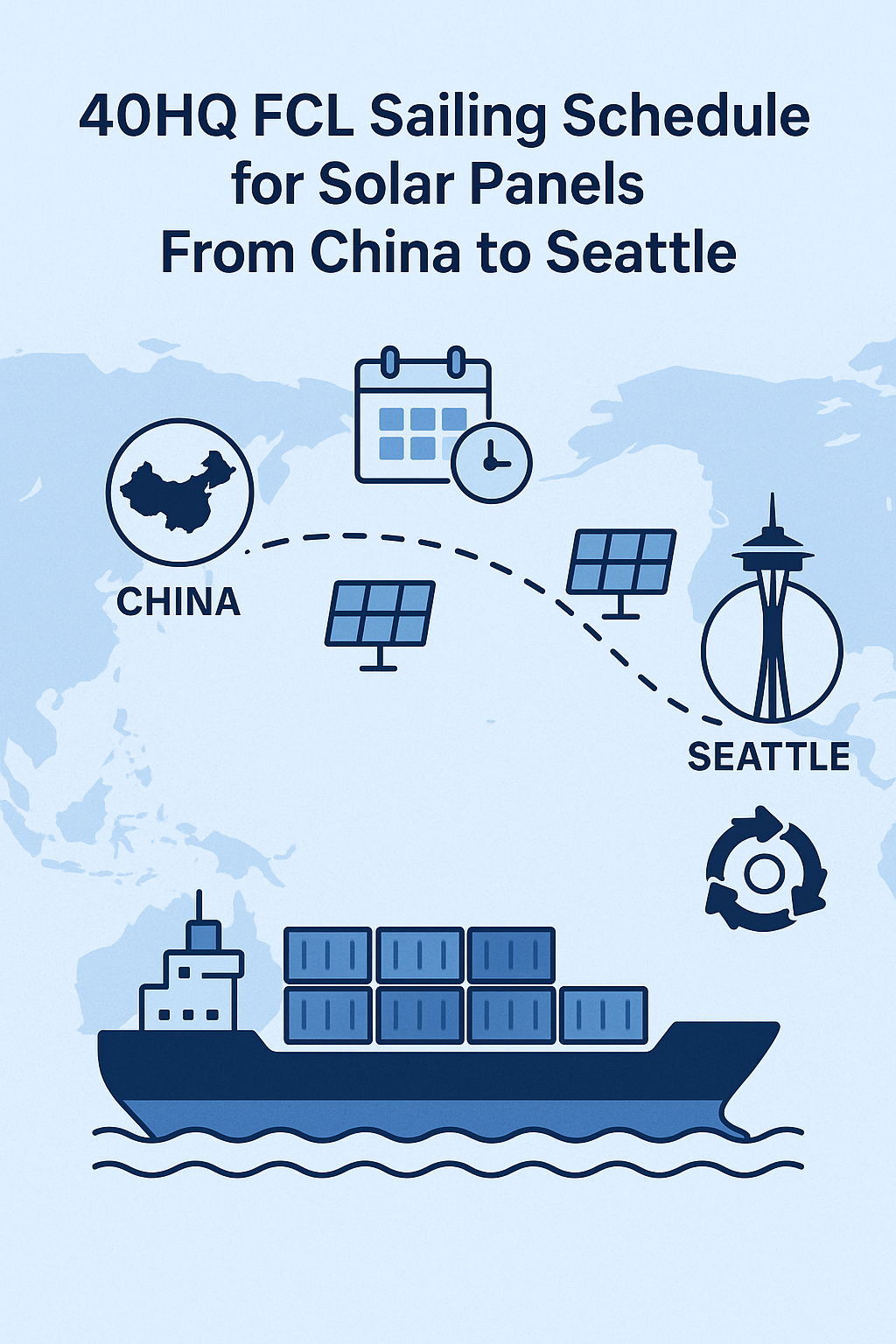
Although solar cargo moves steadily, the 40HQ FCL sailing schedule for solar panels from China to Seattle often shifts with vessel rotations, port congestion, and seasonal demand. Therefore, shippers who rely on predictable timelines need a clear, actionable guide supported by real market behavior and practical logistics planning. For easier planning and stable routing, you may also refer to our Top China Freight homepage embedded here: Top China Freight.
Why Does the 40HQ FCL Sailing Schedule From China to Seattle Matter?
Because solar panel importers operate with tight installation deadlines, understanding sailing frequencies, departure windows, and cutoff times directly affects project execution. Moreover, predictable scheduling improves supply chain stability and reduces unnecessary warehouse or demurrage expenses. Additionally, delays during peak energy-project seasons can jeopardize procurement planning.
What Routes Influence the China–Seattle 40HQ FCL Sailing Schedule?
Most solar panel exporters ship through Shanghai, Ningbo, or Qingdao, and each port offers different departure frequencies. Furthermore, carriers such as COSCO, EMC, CMA-CGM, and HMM adjust rotations weekly, causing slight variations in timelines.
Key Route Notes
- Shanghai → Seattle: most stable sailing timeline
- Ningbo → Seattle: ideal for East China solar manufacturing zones
- Qingdao → Seattle: common for large solar module plants in Shandong
How Long Is the 40HQ FCL Transit Time for Solar Panels to Seattle?
Transit times typically range from 13–20 days depending on the carrier rotation and port performance. Although the average is predictable, weather patterns, Golden Week, and year-end holiday surges may extend timelines.
Approximate Transit Time by Origin Port
| Origin Port | Transit Time Range | Sailing Frequency |
|---|---|---|
| Shanghai | 13–16 days | Weekly |
| Ningbo | 15–18 days | Weekly |
| Qingdao | 16–20 days | Weekly–Biweekly |
How Much Does a 40HQ Container Cost for Solar Panels to Seattle?
Because freight rates fluctuate, shippers usually see wide price intervals. Still, reference ranges help budgeting.
Reference 40HQ Freight Cost Ranges
| Service Type | Reference Cost Range | Notes |
|---|---|---|
| Standard FCL | USD 2,800–4,500 | Market-dependent |
| Premium Space Guarantee | USD 4,800–6,200 | Faster loading priority |
| Eco-Energy Shipment Program | USD 3,500–5,200 | Sustainable routing programs |
Moreover, fuel adjustment factors and terminal handling charges influence final invoice totals.

What Is the Best Time to Book Space for Solar Panels?
You should reserve space 10–14 days before vessel departure. Additionally, during peak renewable-energy procurement seasons (May–September), space becomes extremely tight. However, early planning significantly increases sailing reliability and protects project timelines.
To simplify this process, many shippers choose Top China Freight for early allocation planning using our sea freight services.
Case Studies
Ningbo → Seattle Solar Panel Shipment
Cargo: 40HQ, 22 tons of solar modules
Route: Ningbo → Seattle
Transit Time: 17 days
Cost: USD 3,950 (market rate)
Notes: Early peak-season booking avoided a two-week delay. The shipper optimized loading based on installation deadlines and avoided storage charges.
Shanghai → Seattle Project Cargo Delivery
Cargo: 40HQ, mixed solar panels + inverters
Route: Shanghai → Seattle
Transit Time: 14 days
Cost: USD 4,380
Notes: A tight deadline required premium space guarantee. Although premium pricing applied, the cargo met the construction site schedule without cost overrun.
How Can Top China Freight Improve Your China–Seattle Solar Route?
Because the renewable-energy sector demands predictable delivery schedules, Top China Freight supports clients with planning, booking, and end-to-end coordination. Additionally, our door-to-door shipping solutions provide seamless factory pickup, export processing, and U.S.-side coordination. Therefore, solar energy importers reduce downtime and improve project ROI.
What Customs Requirements Apply to Solar Panel Imports in Seattle?
Although solar panels are non-hazardous, they fall under HTS codes requiring clean documentation. Furthermore, importers must ensure accurate CO, packing lists, technical specs, and product certifications. Additionally, incorrect paperwork frequently triggers inspections that delay unloading.
Essential Customs Document Checklist
| Required Document | Purpose |
|---|---|
| Commercial Invoice | Duty assessment |
| Packing List | Cargo verification |
| Bill of Lading | Shipment release |
| CO / Form A | Proof of origin |
| Technical Specs | Solar electrical compliance |
For seamless clearance, you may also explore our customs brokerage service.
Conclusion
In summary, the 40HQ FCL sailing schedule for solar panels from China to Seattle depends on departure port behavior, cutoff management, customs preparation, and seasonal shipping trends. Moreover, proactive booking and accurate documentation significantly raise your schedule reliability. For detailed timelines or tailored routing plans, you may contact our team for consultation or a customized freight quotation.
Request A Free Quote
Need a reliable logistics partner? Share your shipment details and we’ll provide a tailored quotation quickly and accurately.
FAQ:
How early should I book a 40HQ FCL for solar panels?
Booking 10–14 days before departure is ideal. It ensures space stability and avoids peak-season delays.
What affects the China–Seattle transit time most?
Carrier rotation, weather, port congestion, and seasonal demand impact the overall timeline.
How can I reduce inspection risks at Seattle Port?
Submit accurate CO, invoice details, and technical specs. Clean documents reduce exam likelihood.
What surcharges may apply to FCL shipments?
Common add-ons include bunker adjustment, peak-season surcharges, and terminal handling fees.
How can I track a China–Seattle 40HQ shipment?
Carriers offer online tracking and event updates from gate-in to arrival.