
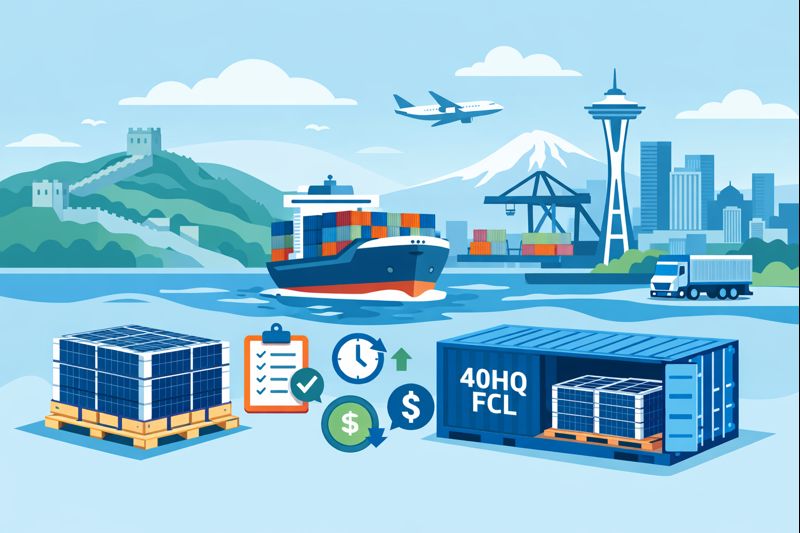
When managing 40HQ FCL demurrage prevention for solar panels from China to Seattle, even minor delays can trigger thousands of dollars in avoidable port charges. Therefore, importers increasingly rely on structured planning and experienced coordination through partners like Top China Freight to keep timelines predictable. In this guide, you’ll discover practical, field-tested methods to minimize demurrage risks while keeping solar panel shipments compliant and on schedule.
What Makes Solar Panel Shipments Highly Vulnerable to Demurrage?
Solar panels present a unique logistics profile, and as a result, demurrage exposure rises quickly if planning gaps appear.
Cargo Characteristics That Increase Risk
Although solar panels are not classified as dangerous goods, they still pose operational challenges:
• Oversized pallet dimensions limit flexible container loading
• Fragile glass surfaces require slow, careful handling
• High cargo value increases inspection frequency at destination
Consequently, a single delay during unloading or customs review can immediately impact container free time.
Why 40HQ FCL Containers Are Common but Risky
A 40HQ container is often selected because it maximizes cubic capacity for solar panels. However, this choice also concentrates risk. If one container misses a release window, the entire shipment faces detention and demurrage charges simultaneously, especially at congested ports like Seattle.
How Do Demurrage and Detention Charges Accumulate at Seattle Port?
Understanding cost mechanics is essential before implementing prevention strategies.
Typical Free Time Structure
Although policies vary by carrier, most Seattle-bound FCL shipments follow this pattern:
| Cost Item | Typical Free Time | Daily Charge Range (USD) |
|---|---|---|
| Demurrage (Port) | 4–5 days | 150–300 per container |
| Detention (Equipment) | 5–7 days | 120–250 per container |
Therefore, even a two-day clearance delay can erase margin on a solar panel shipment.
Common Delay Triggers at Seattle
Meanwhile, the most frequent demurrage causes include:
• Port congestion during renewable energy import peaks
• Customs exams triggered by documentation mismatches
• Truck appointment shortages after container release
As a result, prevention must start long before the vessel arrives.
How Does Customs Clearance Affect 40HQ FCL Demurrage Prevention?
Customs is often the most underestimated risk factor.
Inspection Probability for Solar Panels
Due to trade compliance scrutiny and anti-dumping regulations, solar panels frequently undergo:
• Document review exams
• X-ray scanning
• Physical inspections in select cases
As a result, even compliant shipments may face short delays if brokers are unprepared.
Coordinating Clearance With Inland Transport
To mitigate this, clearance planning must align with inland trucking. When customs release and truck appointments are synchronized, containers exit the terminal immediately, minimizing demurrage and detention exposure.
This coordination is often handled through integrated FCL & LCL shipping services that link port operations with inland delivery planning.
Why Timing and Sailing Schedule Matter More Than Freight Rates
Although freight rates attract attention, timing often has a larger financial impact.
Managing FCL Shipping Time Variability
Ocean transit from China to Seattle typically ranges from 14 to 21 days. However, variability increases during peak renewable energy shipping seasons. Therefore, buffer time should always be built into project schedules, especially when coordinating inland delivery.
Choosing Carriers With Predictable Port Performance
Rather than focusing solely on price, experienced shippers prioritize carriers with stable berth windows and faster container release processes. In practice, this approach often reduces demurrage exposure more effectively than negotiating lower base rates.
Case Studies
40HQ Solar Panel Shipment From Ningbo to Seattle
Route: Ningbo → Seattle
Cargo: Solar panels, 40HQ FCL
Volume: 22 pallets, oversized
Transit Time: 18 days port-to-port
Outcome: Zero demurrage
Key Actions Taken:
• Pre-approved pallet layout for fast devanning
• Customs documents submitted 72 hours pre-arrival
• Truck appointment booked before vessel berthing
As a result, the container exited the port within 48 hours of discharge.
Large-Scale Solar Panel Import to Seattle Distribution Center
Route: Shanghai → Seattle
Cargo: Solar panels, 40HQ FCL
Volume: 26 pallets, reinforced crates
Transit Time: 20 days port-to-port
Outcome: One-day inspection, no demurrage
Key Actions Taken:
• Pre-submitted customs entry and ISF
• Truck appointment secured pre-arrival
• Contingency plan activated during inspection
As a result, the container exited within free time despite inspection delays.
How Can Inland Transport Planning Prevent Post-Clearance Delays?
After customs release, timing becomes even more critical.
Securing Truck Capacity Before Vessel Arrival
Because Seattle trucking capacity fluctuates, proactive booking is essential. Therefore, experienced importers reserve truck slots before vessel berthing rather than waiting for release confirmation. This approach ensures containers exit the terminal immediately once cleared.
Avoiding Chassis and Appointment Bottlenecks
Meanwhile, chassis shortages and terminal appointment limits remain common. To reduce exposure:
• Use carriers with dedicated chassis pools
• Schedule flexible pickup windows
• Align warehouse receiving hours with port availability
As a result, containers move directly to final destinations without unnecessary dwell time.
What Role Does Compliance Play in Demurrage Prevention?
Compliance is not optional—it’s foundational.
Aligning HS Codes and Product Descriptions
Solar panels often include inverters, frames, and accessories. Therefore, each component must be correctly classified. Misaligned HS codes frequently trigger inspections that extend port dwell time.
Coordinating With Licensed Customs Brokers
Working with experienced customs teams ensures filings remain accurate and responsive. Integrated support through professional customs brokerage services significantly reduces inspection-related delays.
Why Experience Matters in Solar Panel Logistics
Solar cargo requires more than standard handling.
Specialized Knowledge Reduces Guesswork
Experienced logistics providers understand seasonal trends, inspection patterns, and port behavior. Therefore, they anticipate risks rather than reacting to them. This expertise underpins the practical solutions delivered by Top China Freight, especially for high-value renewable energy shipments.
Conclusion
Effective 40HQ FCL demurrage prevention for solar panels from China to Seattle depends on early planning, documentation accuracy, and synchronized execution across the supply chain. While freight rates matter, timing, compliance, and coordination ultimately determine cost outcomes. By applying these strategies, importers protect margins and maintain predictable delivery schedules.
Request A Free Quote
Start shipping smarter with TopChinaForwarder today! 🚢✨ Request a Free Quote 📝 and get a tailored logistics plan built around your cargo and timeline.
FAQ:
What costs are included in demurrage charges?
Demurrage covers container storage at the port after free time expires, excluding trucking and detention fees.
How long is free time at Seattle for FCL shipments?
Free time usually ranges from 4–5 days, depending on the carrier and terminal.
Can customs inspections be avoided entirely?
No shipment is exempt, but accurate documentation significantly lowers inspection probability.
Are solar panels considered special cargo?
They’re not dangerous goods, but their value and size increase handling and inspection scrutiny.
How early should truck appointments be booked?
Ideally before vessel arrival to ensure immediate pickup after customs release.