
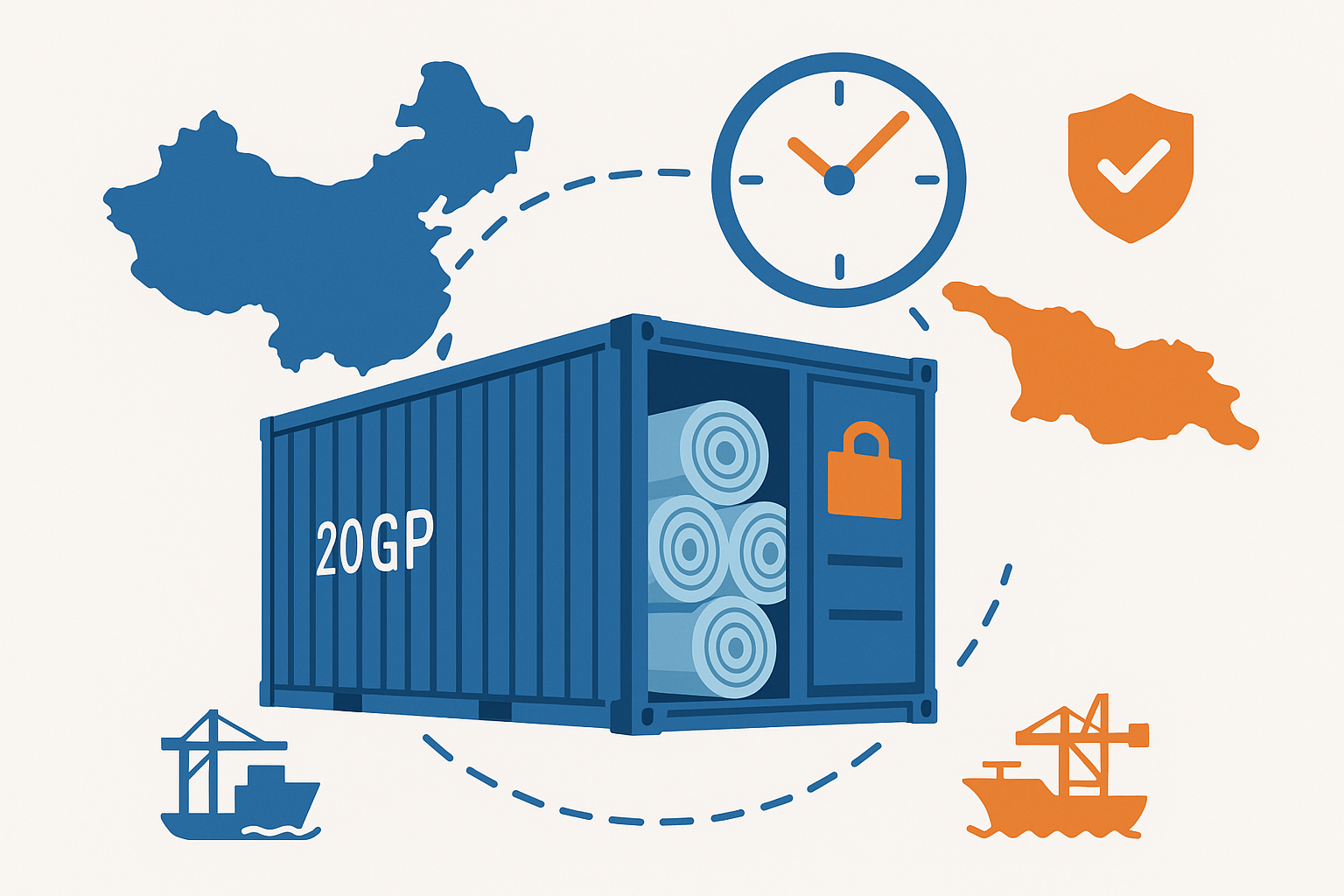
Because detention fees can quickly erode profit margins for textile importers, mastering 20GP FCL detention prevention for textiles from China to Georgia becomes essential for maintaining predictable logistics costs. Since textile rolls, fabric bolts, and apparel components often move on tight schedules, any delay at customs, port yards, or inland terminals creates significant operational risk. Therefore, this guide offers actionable strategies backed by insights from Top China Freight to help you reduce detention exposure and stabilize your supply chain.
What Causes Detention for 20GP Textile Shipments Between China and Georgia?
Although detention fees appear simple on paper, several operational factors compound the risk. For example, incomplete customs paperwork in Georgia delays container release, while mismatched packing lists trigger additional inspections. Moreover, textile shipments often arrive during seasonal congestion when yards struggle to process inbound 20GP containers quickly. Because each hour beyond the free period generates cost, importers must track the entire timeline from vessel arrival to final unloading.
Common Detention Triggers
- Unsubmitted or inaccurate customs documents
- Late truck appointments at Georgian inland depots
- Port congestion during peak textile seasons
- Misaligned supplier production timing
How Does Early Documentation Prevent Detention for Textile Cargo?
Since customs in Georgia requires precise declarations—especially for goods such as fabric rolls, yarn, and finished apparel—early documentation serves as the first line of defense. Therefore, importers prepare commercial invoices, HS codes, packing lists, and supplier certificates well before arrival. Additionally, digital pre-checks help eliminate errors that normally cause clearance delays.
Early documentation also synchronizes well with booking cycles, ensuring the importer receives cargo-release instructions without waiting at the terminal.
Essential Documents for Faster Release
| Document | Why It Matters |
|---|---|
| Commercial Invoice | Clarifies value and textile classification |
| Packing List | Confirms roll count and carton dimensions |
| Certificate of Origin | Supports compliance checks |
| Bill of Lading | Required for container release |
| Importer Registration ID | Ensures proper customs linkage |
Why Does Route and Transit-Time Planning Reduce Detention Risk?
Because textiles often move through transshipment hubs such as Istanbul or Poti, transit-time variability can disrupt inland transport scheduling. Additionally, when importers fail to align factory finishing dates with vessel cut-offs, containers sit idle at origin, increasing the likelihood of late arrivals and missed appointments in Georgia. Therefore, route planning must balance speed, cost, and reliability.
Planning Priorities
- Avoid high-congestion transshipment hubs when schedules are tight
- Choose carriers with consistent service reliability for 20GP lanes
- Build buffer time for customs inspections
- Coordinate trucking availability ahead of vessel arrival
Moreover, visibility platforms allow importers to adjust trucking appointments dynamically, reducing dwell time during unexpected delays.
How Should Textile Exporters Prepare 20GP Containers to Avoid Operational Delays?
Because textiles vary in weight, density, and packaging, improper loading slows down inspection and unloading processes. Therefore, exporters adopt standardized stacking patterns and uniform labeling to streamline handling at Georgian depots. When customs officers can quickly verify carton counts and roll sequences, clearance times drop significantly.
Recommended Loading Enhancements
- Align fabric rolls by category and length
- Maintain consistent carton height for stability
- Use breathable wrapping for moisture-sensitive textiles
- Add clear labeling to speed up depot processing
Additionally, loading audits allow exporters to correct issues before sealing the container, eliminating surprises that may create detention risk later.
Case Studies
Knitted Fabric Rolls from Shanghai to Poti
Cargo Type: 21 tons of knitted cotton fabric
Route: Shanghai → Poti (direct)
Challenge: Tight seasonal arrival window
Solution:
The importer sent documents 4 days before vessel arrival, synchronized trucking with updated ETA, and applied structured carton labeling. As a result, the container cleared within free time, avoiding USD 250–300 in daily detention.
Mixed Textile Cartons from Ningbo to Batumi via Istanbul
Cargo Type: Fashion fabrics, interlinings, accessory items
Route: Ningbo → Batumi (transshipment via Istanbul)
Challenge: ETA shift due to hub congestion
Solution:
Using a visibility tool, the importer rebooked the truck one day earlier, preventing a missed pickup slot. Additionally, pre-arrival customs filing shortened inspections. The shipment avoided detention and delivered on schedule for a Georgian apparel factory.
How Do Carriers’ Free-Time Policies Affect Detention Prevention?
Although importers control most preventive actions, carrier free-time policies set the operational boundary. Therefore, businesses review tariff sheets carefully to understand how many free days apply at destination and whether special agreements exist for textile volumes. Because textile importers often run seasonal peaks, negotiated extensions—such as 7–10 additional free days—significantly reduce exposure.
Free-Time Comparison Example
| Carrier | Standard Free Time | Typical Guidance |
|---|---|---|
| Carrier A | 5 days | Best for fast-cycle clearance |
| Carrier B | 7 days | Balanced option for textiles |
| Carrier C | 10 days | Suitable for high-volume importers |
Moreover, many carriers offer upgraded free-time packages when volumes exceed agreed thresholds, making annual contract negotiation highly worthwhile.

Should Importers Use Professional Detention-Management Services?
Because detention involves operational, financial, and regulatory dimensions, many textile importers rely on professional partners to manage the process. Services similar to those provided by Top China Freight include deadline monitoring, document preparation reviews, trucking coordination, and exception handling. Furthermore, integrated multimodal options—supported by tools showcased in the rail freight and FCL/LCL service pages—provide additional flexibility at critical points.
Consequently, importers gain predictable costs and a stronger, more stable China–Georgia logistics flow.
What Additional Steps Help Lower Detention Risk for Textile Cargo?
Even with strong planning, importers strengthen their performance through layered protection measures. Therefore, many adopt pre-loading inspections, shared dashboards for supplier coordination, and standardized unloading workflows at Georgian warehouses. When stakeholders share the same timeline expectations, dwell time drops substantially.
Additional Preventive Measures
- SOP alignment across suppliers
- Shared inspection templates
- Depot appointment forecasting
- Supplier-side document audits
Because textiles include fragile, high-value, and time-sensitive SKUs, maintaining discipline across every step ensures consistent detention-free operations.
Conclusion
Understanding 20GP FCL detention prevention for textiles from China to Georgia empowers importers to take control of transit schedules, customs coordination, and inland logistics. Because detention fees quickly scale during seasonal peaks, proactive documentation, visibility tools, and strong trucking coordination make a measurable impact. Ultimately, companies that implement structured prevention strategies maintain lower costs and a more predictable textile supply chain.
Request A Free Quote
Start shipping smarter with TopChinaForwarder today! 🚢✨ Request a Free Quote 📝 and get a tailored logistics plan built around your cargo and timeline.
FAQ:
What causes most detention fees for textile shipments?
Late document submission, port congestion, and missed trucking appointments are the leading triggers.
How early should documents be prepared?
Prepare all documents several days before arrival to allow time for customs checks and corrections.
Are transshipment routes riskier for detention?
They can be when ETAs fluctuate, but visibility tools and flexible trucking reduce the risk.
How does tracking technology help?
It provides ETA updates, port congestion alerts, and pre-arrival insights for scheduling trucks.
It provides ETA updates, port congestion alerts, and pre-arrival insights for scheduling trucks.
Yes, delays at depots or warehouses can cause containers to exceed free time.