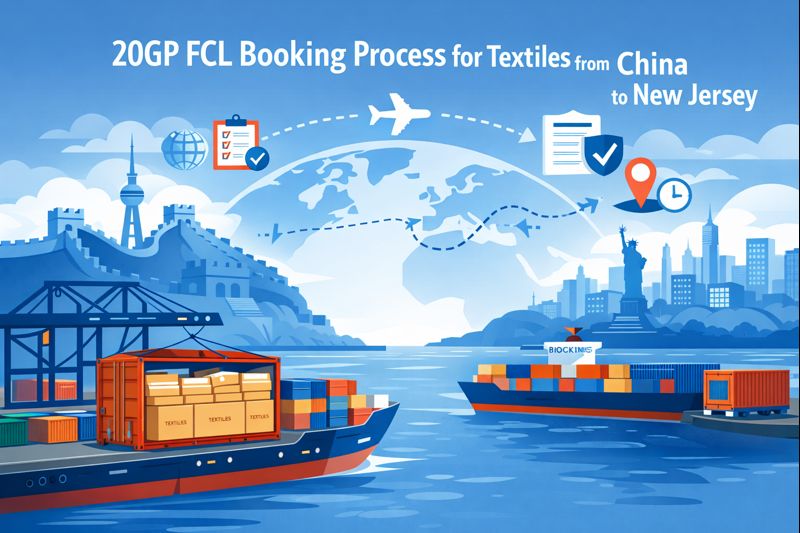
When textile shipments move from China to the U.S. East Coast, the 20GP FCL booking process for textiles from China to New Jersey quickly becomes a time-sensitive and detail-driven task. Because missed cutoffs or incomplete documents can delay production schedules, importers need a clear, repeatable booking workflow. Therefore, many textile buyers rely on structured booking support from partners such as Top China Freight to keep delivery schedules predictable and compliant.
What Does a 20GP FCL Booking Process Involve for Textiles?
At its core, a 20GP FCL booking process coordinates space, equipment, documentation, and timing into one controlled shipment. Unlike LCL, a full container booking gives textile importers exclusive use of the container, which reduces handling and damage risk.
For textile cargo, booking accuracy matters because:
Fabric rolls and cartons vary in density
Production readiness dates shift frequently
U.S. customs requires precise descriptions
As a result, booking is not a single step but a sequence of decisions.
How Early Should Importers Start the Booking Process?
Timing often determines success. Ideally, the booking process begins before cargo finishes production.
Recommended booking timeline
Stage
Recommended Timing
Production completion forecast
3–4 weeks before ETD
Space booking request
14–21 days before ETD
Documentation draft
7–10 days before cutoff
Container pickup
3–5 days before port cutoff
Therefore, early planning gives importers flexibility when schedules change.
How Does Documentation Fit into the Booking Process?
Documentation links booking with customs clearance. Errors here often cause delays after arrival.
Core documents for textile shipments
Commercial invoice
Packing list
Bill of lading instructions
Importer Security Filing (ISF)
When aligned early with customs brokerage support, document preparation becomes proactive rather than reactive.
What Are the Typical Transit Times for 20GP FCL to New Jersey?
Transit time depends on routing, carrier selection, and seasonal congestion. However, realistic planning avoids unrealistic promises.
Route Type
Transit Time Range
Direct East Coast service
30–35 days
West Coast + rail
28–33 days
Transshipment via hub
34–40 days
Because textiles often support retail timelines, transit reliability matters more than the shortest advertised route.
Case Studies
Fabric Rolls from Ningbo to New Jersey
Origin: Ningbo, China Destination: Port of New York & New Jersey Cargo: Cotton fabric rolls, 18 tons Container Type: 20GP FCL Transit Time: 32 days Cost Range: Mid-market East Coast rate
By starting the booking process three weeks before cargo readiness, the importer avoided peak-season rollovers and met retail delivery deadlines.
Garment Cartons from Shanghai to Newark
Origin: Shanghai Destination: Newark, New Jersey Cargo: Finished garments, boxed Container Type: 20GP FCL Transit Time: 34 days Cost Range: Stable contract rate
Because documentation finalized before cutoff, customs clearance began immediately upon arrival.
Although the booking steps look straightforward, small mistakes often trigger costly delays. Therefore, proactive checks should sit inside the booking workflow rather than after confirmation.
High-impact risks and how to prevent them
Risk Area
Typical Problem
Practical Prevention
Cutoff mismatch
Docs ready after port cutoff
Lock internal deadlines 48 hours earlier
Data inconsistency
Weight/CBM differs from SI
Final verification before SI submission
Equipment shortage
20GP unavailable
Early booking or alternate sailings
As a result, importers who add buffer time reduce rollovers and demurrage exposure.
Should Importers Choose Door-to-Door or Port-to-Port?
The booking process also depends on service scope. While port-to-port suits experienced teams, door-to-door simplifies coordination.
When inland pickup, ocean transport, and final delivery align under one plan, door-to-door services reduce handoffs and speed issue resolution. Consequently, many textile importers prefer door-to-door during peak seasons.
How Does Tracking Improve After Booking Confirmation?
Once the booking confirms, visibility becomes the next priority. Instead of waiting for arrival, importers benefit from milestone tracking.
Effective tracking covers:
Empty container pickup
Gate-in confirmation
Vessel departure
ETA updates to New Jersey
Therefore, booking and tracking together create predictable delivery schedules.
Conclusion
A well-managed 20GP FCL booking process for textiles from China to New Jersey depends on timing, accurate data, and risk-aware planning. By starting early, aligning documentation, and selecting reliable routes, importers keep shipments on schedule and costs controlled. Ultimately, a disciplined booking process turns routine textile shipments into predictable, scalable operations.
Request A Free Quote
Start shipping smarter with TopChinaForwarder today! 🚢✨ Request a Free Quote 📝 and get a tailored logistics plan built around your cargo and timeline.