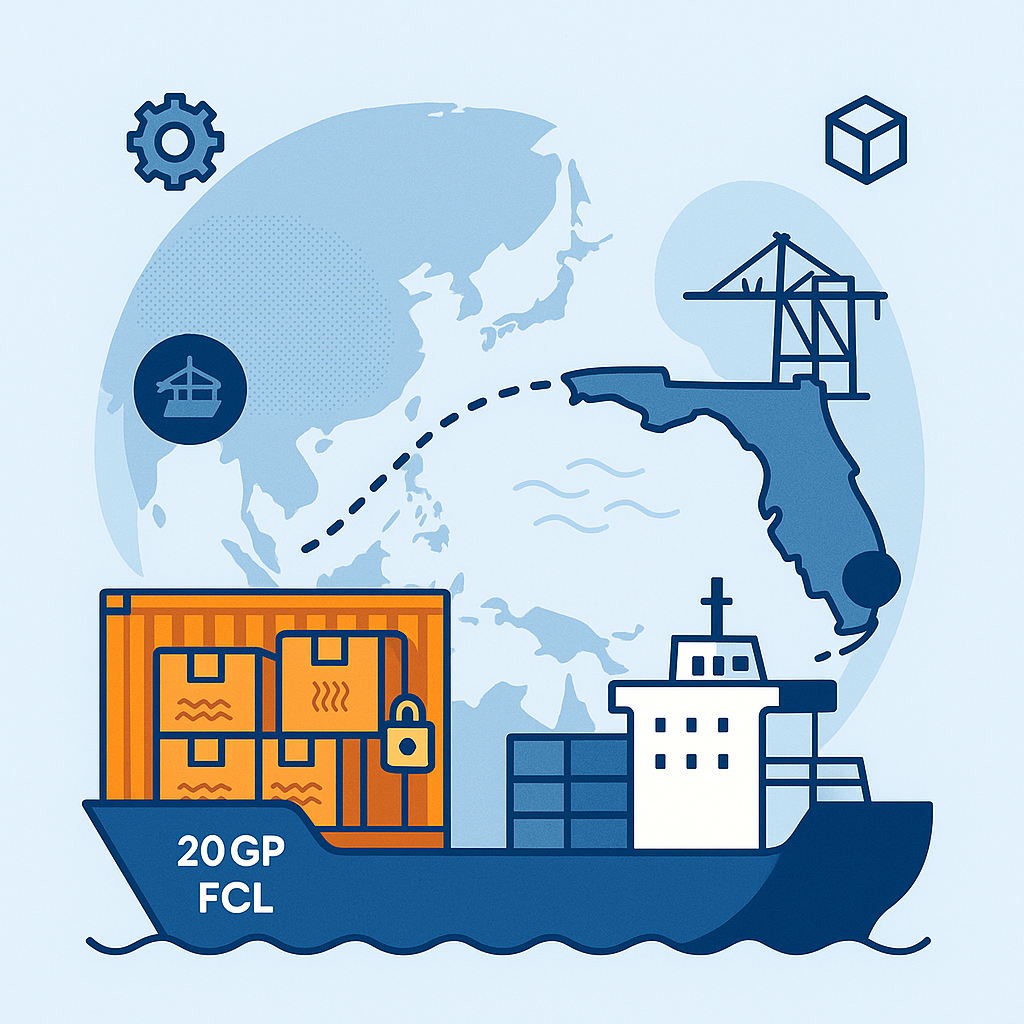
As global apparel sourcing continues to shift toward Asia, many importers struggle to identify the 20GP FCL best route for textiles from China to Florida that balances cost, transit time, and customs compliance. Therefore, this guide explains proven routing strategies, port choices, and risk controls used by experienced shippers working with partners such as Top China Freight. Ultimately, you’ll gain clear, actionable steps to stabilize your textile supply chain into the U.S. Southeast.
What Makes Textiles Ideal for 20GP FCL Shipping to Florida?
Although textiles vary in density, many importers prefer 20GP containers because they offer predictable loading and lower risk. Moreover, fabrics, garments, and finished apparel often fit weight limits well before volume caps.
Key textile cargo characteristics
High carton count with standardized dimensions
Moderate weight that suits 20GP payload limits
Sensitivity to moisture and contamination
Strong seasonality tied to retail calendars
Because of these traits, full container load shipping reduces handling while improving delivery schedules.
Why Route Selection Matters for China–Florida Textile Imports
While ocean freight is cost-effective, not all routes perform equally. Consequently, choosing the wrong U.S. port can increase dwell time, demurrage, and inland transport costs.
Core routing factors to evaluate
Sailing frequency from China
Port congestion history
Rail and trucking access to Florida
Customs efficiency for textile HS codes
For this reason, route planning must align with both freight rates and downstream distribution.
Which China Ports Work Best for Textile Exports?
Generally, exporters ship textiles from ports close to manufacturing clusters. As a result, inland drayage costs stay controlled.
Common origin ports
Shanghai – strong weekly sailings and carrier diversity
Ningbo – competitive rates and stable schedules
Shenzhen (Yantian) – ideal for South China garment hubs
Qingdao – preferred for northern textile mills
Because sailing frequency varies, aligning production timelines with port departures remains essential.
Which U.S. Ports Are Optimal for Florida-Bound Cargo?
Although Florida has its own ports, many shippers route containers through major hubs first. Therefore, final port choice depends on inland transit trade-offs.
Most used gateway ports
U.S. Port
Typical Use Case
Inland Move to Florida
Savannah
Fast customs, rail efficiency
Truck or rail
Jacksonville
Direct Florida entry
Short trucking
Miami
Apparel-focused imports
Minimal inland haul
Charleston
Stable congestion levels
Truck or rail
Notably, Savannah often balances speed and cost, while Miami favors time-sensitive apparel.
Case Studies
Zhejiang to Savannah Apparel Shipment
Origin: Shaoxing, China Destination: Savannah, GA → Orlando, FL Cargo: Cotton T-shirts, boxed Container: 20GP FCL Transit Time: 37 days door-to-door Estimated Cost: USD 3,100
Because the shipper selected a direct Shanghai–Savannah service, inland delays were minimized, improving retail readiness.
Zhejiang to Savannah Apparel Shipment
Origin: Shaoxing, China Destination: Savannah, GA → Orlando, FL Cargo: Cotton T-shirts, boxed Container: 20GP FCL Transit Time: 37 days door-to-door Estimated Cost: USD 3,100
Because the shipper selected a direct Shanghai–Savannah service, inland delays were minimized, improving retail readiness.
How Long Does 20GP FCL Shipping from China to Florida Take?
Transit time varies by origin and routing. However, importers can estimate reliable ranges for planning.
Route
Ocean Transit
Door-to-Door Range
Shanghai → Savannah
28–32 days
35–40 days
Ningbo → Jacksonville
30–34 days
38–42 days
Shenzhen → Miami
26–30 days
33–38 days
Therefore, aligning booking dates with retail delivery schedules is critical.
How Can You Optimize the 20GP FCL Best Route for Textiles from China to Florida?
Although port selection matters, route optimization goes further. Therefore, experienced importers focus on synchronizing production, booking windows, and inland delivery plans.
Practical optimization actions
Lock weekly sailings early during peak seasons
Align factory cut-off dates with vessel ETDs
Use predictable carrier services rather than spot options
Combine ocean legs with stable inland trucking plans
When these steps are coordinated with professional sea freight solutions, schedule reliability improves noticeably.
Should You Choose Direct or Transshipment Services?
While direct sailings reduce handling, transshipment can sometimes offer cost advantages. However, this choice must reflect cargo sensitivity.
Direct service advantages
Fewer handling risks for textiles
Lower chance of moisture exposure
More predictable arrival dates
Transshipment considerations
Slightly longer shipping time
Higher reliance on intermediate port efficiency
Useful during capacity shortages
As a result, most textile importers prefer direct services for Florida-bound shipments unless pricing gaps are substantial.
Conclusion
Choosing the 20GP FCL best route for textiles from China to Florida requires more than comparing freight rates. Instead, success depends on aligning origin ports, U.S. gateways, inland delivery, and customs compliance into one strategy. With the right planning approach, textile importers can achieve stable transit times and predictable landed costs.
Request A Free Quote
Start shipping smarter with TopChinaForwarder today! 🚢✨ Request a Free Quote 📝 and get a tailored logistics plan built around your cargo and timeline.