
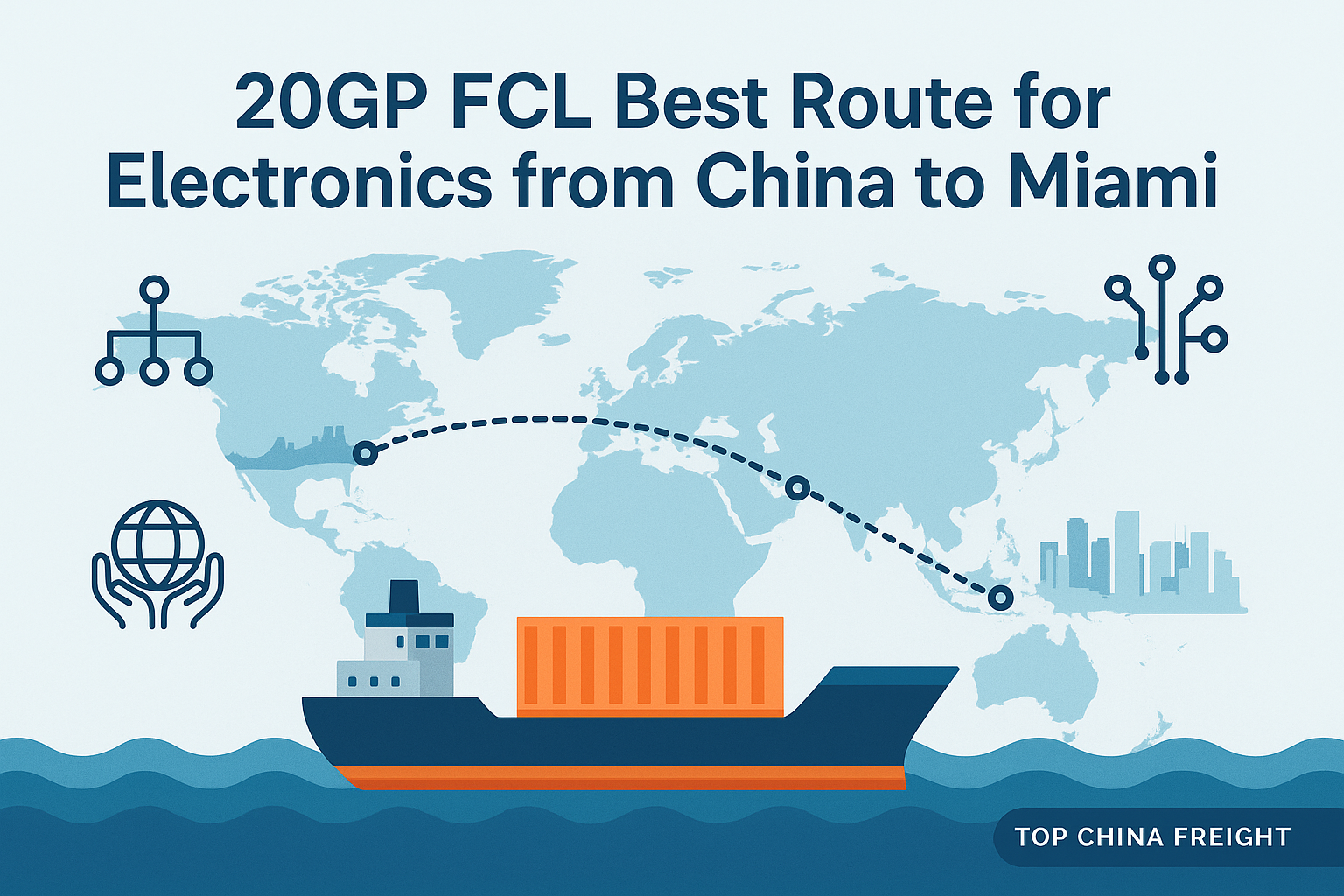
Although navigating the 20GP FCL best route for electronics from China to Miami often feels complex due to shifting ocean schedules and cargo-sensitivity concerns, shippers can still build predictable, low-risk routes by planning early and aligning transit choices with market conditions. Moreover, with support from a reliable partner such as Top China Freight, companies gain clearer visibility, stronger packing solutions, and routing strategies that fit the electronics supply chain.

What Makes the 20GP FCL Best Route for Electronics from China to Miami Unique?
Electronics such as tablets, gaming devices, circuit boards, servers, and home appliances require protection from vibration, moisture, and handling impact. Moreover, choosing the right route determines not only transit reliability but also the stability of sensitive components.
Key route characteristics include:
- Congestion levels at departure ports
- Transshipment frequency and port efficiency
- Weather patterns across the Pacific or Panama Canal region
- Carrier schedule reliability
- Customs workload at Miami terminals
Because electronics are among the most fragile high-volume imports into Miami, route optimization becomes a major driver of both cost and delivery accuracy.
How Should Shippers Select the Best China Origin Port for Miami-Bound Electronics?
Origin port selection directly shapes transit time, risk level, and schedule flexibility. Additionally, choosing a port that matches cargo sensitivity makes downstream delivery smoother.
Comparison of Major China Origin Ports
| China Port | Miami Transit Time | Pros for Electronics | Cons / Limitations |
|---|---|---|---|
| Shenzhen/Yantian | 32–38 days | Stable capacity, strong electronics hub | Possible peak-season congestion |
| Shanghai | 34–40 days | Frequent sailings & high vessel reliability | Longer distance increases weather exposure |
| Ningbo | 35–42 days | Competitive rates & flexible carriers | Occasional bottlenecks at transshipment hubs |
This evaluation helps exporters align routing with their electronics type, budget, and delivery timeline.
Why Do Transshipment Hubs Influence the 20GP FCL Best Route to Miami?
Transshipment ports play a large role in schedule reliability. Because electronics shipments require low-shock handling, fewer transfers reduce risk.
Common Transshipment Hubs Used for Miami Routes
- Busan – efficient but weather-influenced in winter
- Singapore – predictable schedules and fast crane operations
- Manzanillo (Panama) – essential for Panama Canal routing
- Colón – strong access to U.S. East Coast lanes
Moreover, optimized 20GP routing for sensitive electronics reduces delays and improves downstream warehouse planning.
How Can Shippers Minimize Damage Risk in Electronics FCL Shipping?
Damage prevention remains a central priority for electronics logistics. Furthermore, humidity-controlled packing for ocean electronics shipments significantly reduces corrosion and circuit degradation.
Key Protection Methods
- Anti-static and moisture-barrier wrapping
- Pallet stacking designed to prevent tilt
- Shock-absorption pads below heavy units
- Vacuum-sealed inner packaging for circuit-based items
- Real-time shock indicators inside the container
Additionally, electronics damage prevention during long-haul FCL shipping requires engineering-grade packaging specifications rather than generic packing shortcuts.
Case Studies
20GP FCL of Consumer Electronics from Shenzhen to Miami
Cargo Type: High-value tablets, gaming consoles, boxed accessories
Route: Yantian → Panama → Miami
Transit Time: 35 days
Challenge: Peak-season congestion at Panama Canal
Solution: Early booking + routing through a carrier with priority canal slots
Outcome: On-time arrival and smooth Miami distribution center intake
20GP FCL of Server Components from Shanghai to Miami
Cargo Type: Rack servers & sensitive circuit units
Route: Shanghai → Singapore → Miami
Transit Time: 38 days
Challenge: Moisture and vibration risk
Solution: Anti-static vacuum sealing + reinforced pallets + shock tracking
Outcome: Zero damage and predictable DC arrival schedule

What Role Does Documentation Play When Shipping Electronics to Miami?
Documentation helps ensure smooth clearance through U.S. CBP and avoids inspection delays. Moreover, customs-ready documentation for Miami electronics imports aligns the shipment with regulatory requirements.
Required documents:
- Commercial invoice with accurate product descriptions
- HS codes for electronic components and finished devices
- Battery declarations for lithium-powered products
- FCC compliance statements where applicable
- Packing list with fragile handling notes
- Certificate of origin
When prepared early, proper documents reduce transit variability and avoid unplanned storage fees.
How Can Partnering with Specialists Improve Electronics Routing?
Electronics exporters often benefit from coordinated routing, engineered packaging, and early documentation review. Therefore, working with a specialist like Top China Freight enhances schedule stability and supply chain visibility. Moreover, shippers seeking multimodal alternatives can evaluate sea freight solutions or time-critical movements through express service when deadlines tighten.
How Do Trade Lanes Affect Transit Time from China to Miami?
Different carriers use different lanes, some passing through the Panama Canal while others use trans-Pacific + transshipment combinations.
Typical Route Types
- Direct + Panama Canal: Most predictable but sensitive to canal congestion
- China → Singapore → Panama → Miami: Balanced between cost and schedule
- China → Busan → Los Angeles → Miami rail/feeder: Faster during certain seasons
- China → Mexico Pacific → Miami feeder: Alternative routing during peak pressure
Because congestion-avoidance strategies for China–US East routes improve overall delivery predictability, lane selection should reflect both season and cargo priorities.
Conclusion
In conclusion, choosing the 20GP FCL best route for electronics from China to Miami requires analyzing origin port efficiency, transshipment stability, seasonal conditions, and cargo protection standards. Moreover, when shippers emphasize documentation accuracy and engineered packaging, electronics arrive safely and predictably. Therefore, importers seeking consistent performance should evaluate routing options early and collaborate with professionals who understand electronics-specific logistics.
Request A Free Quote
Start shipping smarter with TopChinaForwarder today! 🚢✨ Request a Free Quote 📝 and get a tailored logistics plan built around your cargo and timeline.
FAQ:
What affects the best FCL route from China to Miami?
Route performance depends on origin port choice, transshipment hubs, seasonality, and carrier schedule reliability.
How can I reduce electronics damage in 20GP shipping?
Use anti-static wrapping, humidity control, shock pads, and reinforced pallets, ensuring container stability throughout the voyage.
How early should I book 20GP space for electronics?
Booking 3–5 weeks ahead improves capacity access and ensures better route selection.
What packing standard is recommended for fragile electronics?
Shock-resistant, anti-static, and moisture-barrier packaging methods protect sensitive circuitry during long-haul transit.
Is multimodal shipping useful for urgent electronics?
For time-critical batches, combining air freight or feeder services helps maintain launch timelines.