
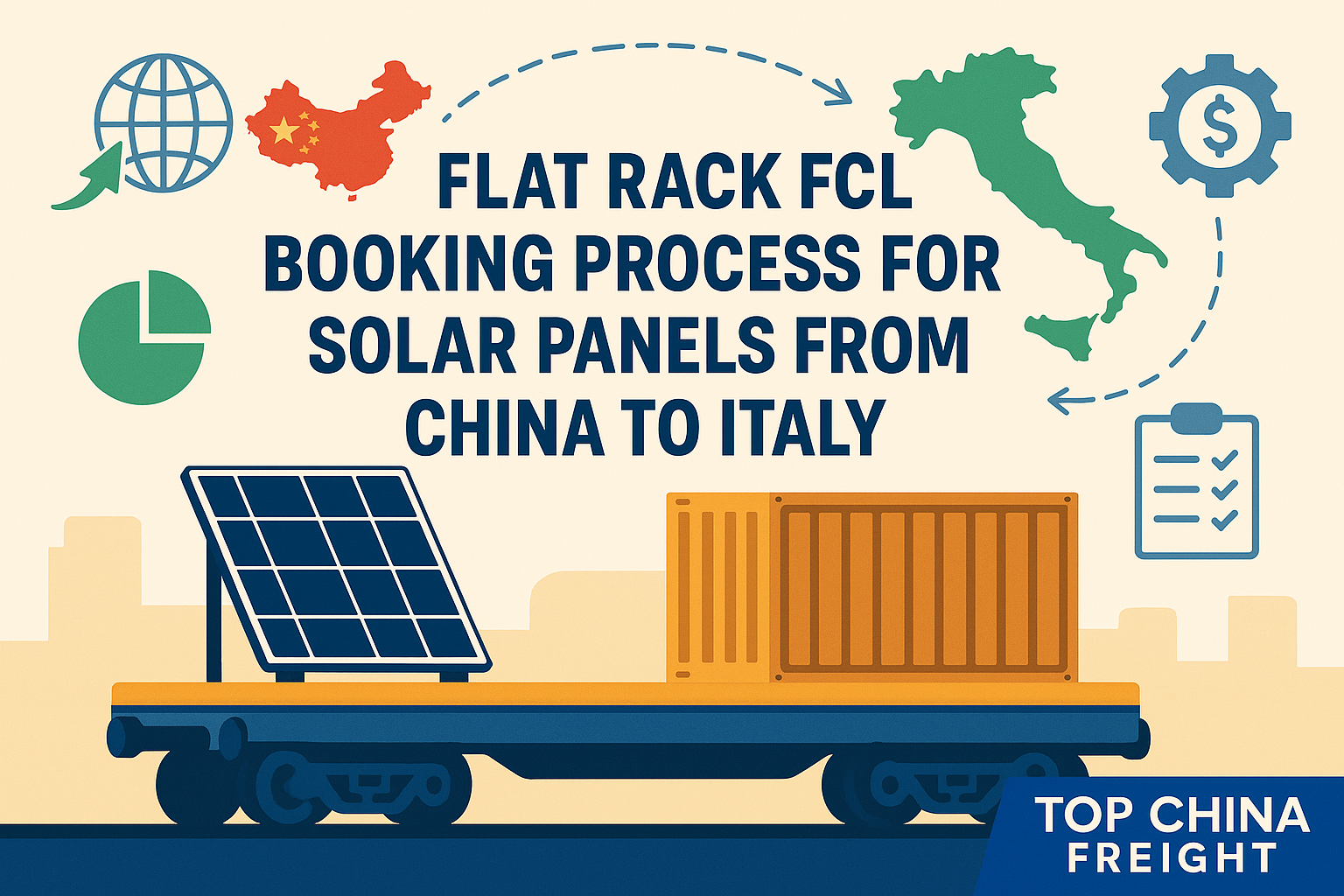
Although demand for renewable energy equipment continues to surge, managing the Flat Rack FCL booking process for solar panels from China to Italy requires far more precision than standard container shipping. Therefore, exporters must navigate carrier approvals, fragile cargo handling, and EU compliance while still meeting strict project timelines, and partners like Top China Freight offer the structured guidance needed to make this workflow predictable. Moreover, with the right planning framework, solar panel shipments can move smoothly from factory readiness to vessel departure and ultimately reach Italy without costly delays.
What Makes the Flat Rack FCL Booking Process for Solar Panels So Different?
Because solar panels are fragile, oversized, and frequently packaged in wide reinforced crates, the booking workflow for flat rack containers becomes far more complex than standard FCL. Moreover, European renewable-energy demand often creates capacity shortages, meaning exporters must secure carrier approvals earlier than usual. As a result, companies shipping to Italy must manage equipment scarcity, documentation accuracy, and port-handling constraints simultaneously.
Additionally, solar projects in Milan, Naples, and Genoa follow strict installation schedules, so shipment delays directly influence construction timelines and labor planning. Therefore, exporters benefit from a structured booking model that anticipates changes in freight rates, sailing windows, and EU import controls.
Why Do Solar Panels Require Flat Rack Containers Instead of Standard FCL?
Although some smaller modules fit into standard containers, large-scale photovoltaic panels demand open-sided flat racks due to crate width and handling needs. Moreover, forklift operators require full access to avoid compression, vibration, or micro-cracking risks. Therefore, flat racks remain the safest choice for utility-grade solar shipments from China to Italy.
Key advantages include:
- Wider loading tolerance for oversized crates
- Stable lifting points for heavy photovoltaic modules
- Reduced pressure on panel frames
- Easier coordination with cranes and port handlers
Consequently, Italian buyers prefer flat rack shipments for large renewable-energy installations, particularly for solar farms.
How Should Exporters Prepare for the Flat Rack FCL Booking Workflow?
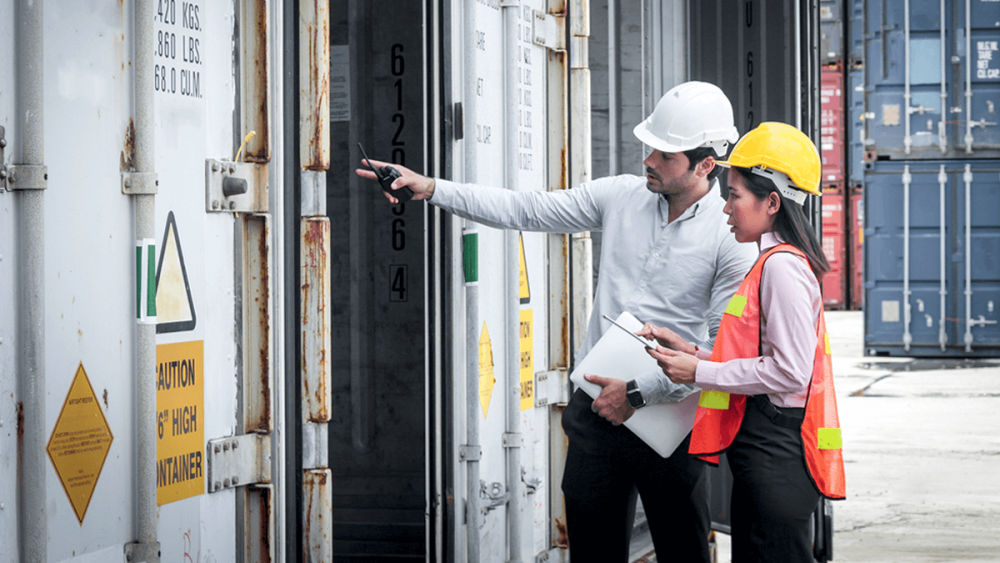
Although booking seems simple on the surface, solar exporters must follow a multi-step process to ensure predictable results. Moreover, overlooked details such as incorrect crate dimensions or late trucking can jeopardize booking approvals.
Preparation Checklist
- Confirm factory readiness with solar manufacturers
- Provide exact crate dimensions (L/W/H)
- Validate weight distribution for lifting
- Prepare OOG drawings for fragile cargo
- Align inland trucking with carrier time windows
Additionally, exporters should ensure their supply chain aligns with documentation deadlines to prevent last-minute carrier rejections.
What Documentation Does Italy Require for Solar Panels?
Italy applies strict import standards for photovoltaic systems, especially regarding HS tariff classification, origin verification, and safety certification. Therefore, exporters must present a complete and consistent document set.
Documentation Overview
| Document | Importance | Notes |
|---|---|---|
| Commercial Invoice | Confirms value & classification | Include solar technology details |
| Packing List | Lists crate size & weight | Essential for port equipment planning |
| OOG Diagram | Confirms over-gauge transport | Needed for fragile modules |
| Certificate of Origin | Confirms China origin | Helps Italian customs verify compliance |
| CE or product certificate | Ensures EU compatibility | Mandatory for electrical components |
Because inconsistencies trigger customs checks, exporters often rely on Top China Freight for document reviews before final submission.
Case Studies
Solar Crates From Shanghai to Genoa
Cargo: 40 crates of utility-grade solar panels
Route: Shanghai → Genoa
Cost Range: USD 5,200–7,600
Transit Time: 27–33 days
Summary:
Although the crates exceeded standard height, early OOG approval and reinforced lashing allowed seamless booking. Moreover, inland trucking was dispatched ahead of schedule to avoid gate congestion, resulting in an on-time sailing and quick clearance in Italy.
Oversized Solar Frames From Ningbo to La Spezia
Cargo: 3m-long solar frames requiring open-side access
Route: Ningbo → La Spezia
Cost Range: USD 4,900–7,100
Transit Time: 28–35 days
Summary:
The exporter worked with Top China Freight to prepare a custom loading plan. Furthermore, photo documentation helped the carrier approve the cargo on the first submission. Consequently, the project team in Italy received the equipment within the planned installation phase.
What Steps Define the Flat Rack FCL Booking Process for Solar Panels From China to Italy?
Although timelines vary by carrier and port, exporters can follow a unified sequence to reduce delays.
Step-by-Step Booking Process
1. Cargo Specification Submission
Exporters share crate dimensions, weight, and photos to start OOG evaluation.
2. Carrier OOG Approval Request
Carriers review technical diagrams to decide whether the solar cargo meets safety guidelines.
3. Space Booking & Rate Confirmation
Once approved, the freight rate and vessel schedule are locked in; however, rates fluctuate, so early confirmation is beneficial.
4. Inland Trucking Arrangement
Although sometimes overlooked, trucking must be scheduled 24–48 hours ahead to avoid missing terminal cut-offs.
5. Loading & Lashing Instruction Preparation
Solar crates require shock-absorbing pads, reinforced belts, and waterproof wrapping.
6. Gate-In & Terminal Handover
Cargo is delivered to the terminal for inspection and loading onto the designated flat rack.
7. Sailing & Visibility Tracking
Exporters monitor progress until arrival at Italian ports such as Genoa or Trieste.
Because this workflow involves several approval layers, early coordination significantly reduces operational risk.

Should Exporters Consider Multimodal Solutions for Italian Solar Projects?
Although ocean freight remains the primary mode, multimodal strategies improve flexibility for project deadlines. For example, urgent spare parts or replacement panels may travel by air freight to Milan, while heavy OOG cargo moves by sea.
Options include:
- Sea + Rail via Northern Italy logistics hubs
- Sea + Truck for final distribution to solar farms
- Express service via express delivery for small urgent components
Because renewable projects often operate under strict installation timelines, multimodal planning provides additional stability.
Risk-Control Measures for Flat Rack Solar Shipments
Although solar panels are durable in operation, they remain fragile during transit. Therefore, exporters must take preventive steps to minimize damage risks.
Risk-Control Table
| Risk | Prevention |
|---|---|
| Crate vibration | Use shock-absorbing pallets |
| Moisture exposure | Add waterproof covers |
| Misalignment | Follow precise forklift handling |
| Frame compression | Use additional edge protection |
| Gate delays | Schedule trucks earlier |
Because micro-cracks negatively affect solar efficiency, exporters must prioritize secure equipment handling.
Conclusion
The Flat Rack FCL booking process for solar panels from China to Italy requires structured planning, accurate documentation, and early communication with carriers. Moreover, exporters who anticipate equipment availability, customs requirements, and sailings benefit from fewer delays and predictable logistics performance. If your next solar project demands stability, safety, and transparency, consider working with a specialized forwarder for tailored solutions.
Request A Free Quote
Start shipping smarter with TopChinaForwarder today! 🚢✨ Request a Free Quote 📝 and get a tailored logistics plan built around your cargo and timeline.
FAQ:
When should I start the flat rack booking process for Italy?
Begin at least 2–3 weeks before cargo readiness to secure equipment and approval.
Do carriers always need OOG approval for solar panels?
Yes. Oversized crates and fragile cargo require technical review before booking.
What factors influence transit time to Italy?
Weather, port congestion, vessel rotations, and equipment availability.
How can I protect panels during loading?
Use reinforced crates, shock absorbers, waterproof wrapping, and stable lashing.
What affects freight rates for flat rack cargo?
Season, space demand, equipment shortage, and project urgency.