
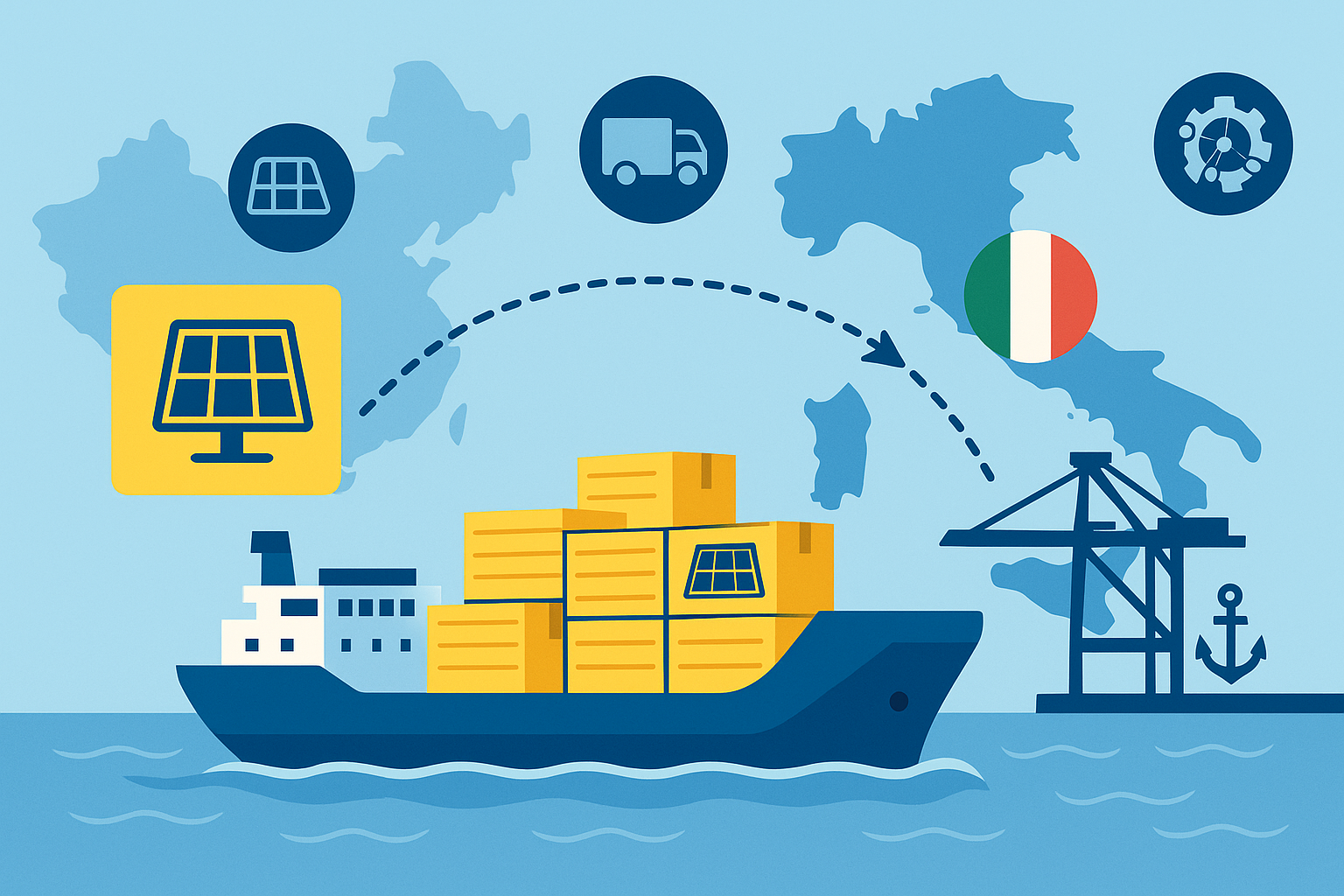
Therefore, FCL shipping for solar panels from China to Italy has become a critical supply-chain challenge as demand accelerates across Europe. However, many importers still face delays, port handling issues, and documentation inconsistencies, which disrupt solar project timelines. To solve these problems, this guide offers clear, practical steps backed by the experience of Top China Freight, whose global team and digital processes streamline operations from China to Italy. For foundational logistics guidance, you may also explore our home page for broader shipping insights.
What Makes FCL Shipping for Solar Panels From China to Italy Unique?
Although all FCL routes follow a similar operational framework, shipping solar panels introduces higher sensitivity to impact, humidity, and stacking pressure. Moreover, Italian buyers increasingly demand predictable ETAs due to tight installation schedules. Because solar panels occupy large volume but relatively low weight, freight cost structure shifts toward dimensional efficiency, making route planning more strategic than ever. Additionally, China–Italy routes require careful coordination between maritime carriers and inland Italian distribution hubs, especially when handling high-volume renewable energy cargo.
How Do Shipping Conditions Affect Solar Panel Integrity During FCL Transport?
Since solar panels are fragile and surface-sensitive, even minor vibration can reduce their usable output. Consequently, manufacturers and logistics teams rely heavily on solar panel packaging and loading best practices to stabilize every stack inside the FCL. Furthermore, shipping time management for solar module containers helps prevent excessive moisture exposure at transshipment ports along long-distance maritime routing for PV modules. When executed properly, these preventive actions ensure that each pallet arrives ready for installation without costly inspections or replacement cycles.
How Do Freight Rates Change for FCL Solar Panel Shipping to Italy?
Even though base freight rates depend on seasonality and carrier capacity, renewable-energy cargo typically benefits from volume-based pricing. Additionally, cost-control methods for bulk solar panel shipping—such as freight consolidation for Europe-bound shipments—allow importers to reduce cost per watt delivered. However, freight savings require careful forecasting of purchase orders so loading teams can optimize container utilization. Because Italy experiences strong demand peaks before summer, shippers who plan early usually secure better rate stability.
Comparison of FCL vs LCL for Solar Panel Shipping
| Shipping Method | Transit Time | Cost Efficiency | Risk Level | Best Use Case |
|---|---|---|---|---|
| FCL | 28–38 days | High for bulk loads | Low | Large solar panel shipments, project cargo |
| LCL | 32–45 days | Lower for small loads | Medium | Small test batches, replacement kits |
Because solar panels ship in large volumes, FCL almost always provides better protection and lower total landed cost.
What Documentation Is Required for Smooth FCL Solar Panel Shipping to Italy?
Because photovoltaic cargo falls under renewable-energy import regulations, Italian customs require extra transparency in documentation. Moreover, incomplete information frequently triggers inspections that delay delivery schedules. To avoid this, importers should prepare a high-volume solar panel export documentation checklist, ensuring every file aligns with EU and Italy-specific requirements.
Key Documents Needed
- Detailed packing list with wattage, module type, and pallet count
- Certificate of Conformity (CE declaration)
- Commercial invoice matching HS codes
- Test reports for solar modules
- Bill of Lading with precise cargo descriptions
Since missing or inconsistent certifications slow down the customs channel, coordinating documentation through a single logistics provider significantly reduces compliance risk.
Case Studies
Solar Panels via Shanghai → Genoa
Origin: Shanghai
Destination: Genoa, Italy
Cargo Volume: 26 pallets of 550W modules
Method: FCL shipping with moisture-controlled preparation
Transit Time: 31 days
Cost Level: Mid-range
Key Advantages: Accurate documentation, stable routing, high container utilization
Because the importer used precise pallet dimensions and followed optimal loading methods, the shipment passed customs smoothly. Moreover, inland delivery to Milan proceeded without delays, supporting the EPC contractor’s installation schedule.
Solar Equipment via Ningbo → Piraeus → Trieste
Origin: Ningbo
Destination: Trieste, Italy
Cargo Volume: Mixed solar panels + inverters
Method: FCL transshipment via Piraeus
Transit Time: 35–38 days
Cost Level: Moderate due to additional handling
Key Advantages: High schedule reliability, predictable rail link to Northern Italy
Although the routing was slightly longer, the importer prioritized reliability during Europe’s peak installation season. Consequently, the project team avoided on-site delays and maintained EPC delivery milestones.
What Are the Main Route Options for Solar Panel Shipping to Italy?
Although most FCL solar cargo enters Italy via Genoa, Trieste, or La Spezia, importers can explore additional transshipment routing options for Italian energy projects. Because alternative ports sometimes offer more schedule stability, choosing the right one depends on season, cost, and inland delivery requirements.
Common Routing Paths
| Route Type | Example Path | Pros | Considerations |
|---|---|---|---|
| Direct Mediterranean | Shanghai → Genoa | Fast, predictable | Peak-season congestion |
| Transshipment via Piraeus | Ningbo → Piraeus → Trieste | High frequency | Slightly longer |
| Transshipment via Singapore | Qingdao → Singapore → Italy | Strong schedule reliability | Extra handling steps |
Although transshipment increases total handling, it often offers more consistent equipment availability during seasonal peaks.
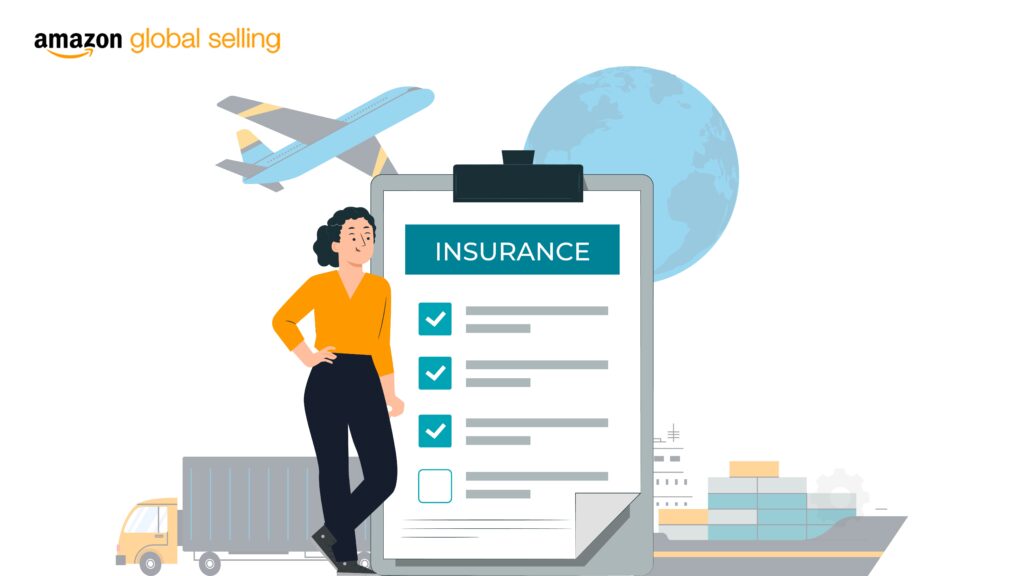
How Does Supply-Chain Coordination Improve China–Italy Solar Panel Shipping?
Effective China-to-Italy solar panel logistics rely on synchronized manufacturing, container booking, and port-handling operations. Because renewable-energy supply chains often run on project-based deadlines, renewable energy supply-chain coordination strategies help prevent bottlenecks. Additionally, coordinating factory readiness with sailing schedules improves shipping time management for solar module containers, ensuring modules arrive before foundation or grid-connection work begins.
Furthermore, integrated partners like Top China Freight can manage routing, sailing visibility, documents, and inland delivery as a unified workflow—reducing lead-time variability.
Customs & Compliance Checklist for Italy
| Compliance Area | Requirement | Risk if Missing |
|---|---|---|
| CE Certificates | Module conformity documents | Customs hold |
| HS Code Accuracy | Correct classification of PV modules | Duty reassessment |
| Packing Details | Wattage, module model, pallet data | Additional scans |
| Test Reports | Electrical + mechanical tests | Clearance delay |
| Invoice Consistency | Matches packing & certification | Value verification |
Since Italy enforces strict renewable-energy inspections, compliance prevents detention and demurrage fees.
Conclusion
Managing FCL shipping for solar panels from China to Italy requires much more than choosing a vessel schedule. It demands precise documentation, professional loading methods, strong supply-chain coordination, accurate route planning, and predictable inland delivery. Moreover, companies that adopt data-driven routing and early-booking strategies consistently achieve lower costs and higher schedule reliability. For solar developers and energy EPC firms, partnering with an experienced logistics provider ensures every module arrives safely and on time.
Request A Free Quote
Start shipping smarter with TopChinaForwarder today! 🚢✨ Request a Free Quote 📝 and get a tailored logistics plan built around your cargo and timeline.
FAQ:
How early should I book FCL shipping for solar panels?
Booking 2–4 weeks in advance ensures better schedules and more container availability.
Which Italian port is best for solar imports?
Genoa and Trieste offer strong capacity and inland connectivity.
Do solar panels face higher inspection rates?
Sometimes, because PV modules require conformity certificates.
What slows down customs clearance in Italy?
Incorrect HS codes, missing CE certificates, or inconsistent invoices.
Is inland trucking difficult for solar pallets?
Oversized pallets require special trucks, so early booking avoids delays.