
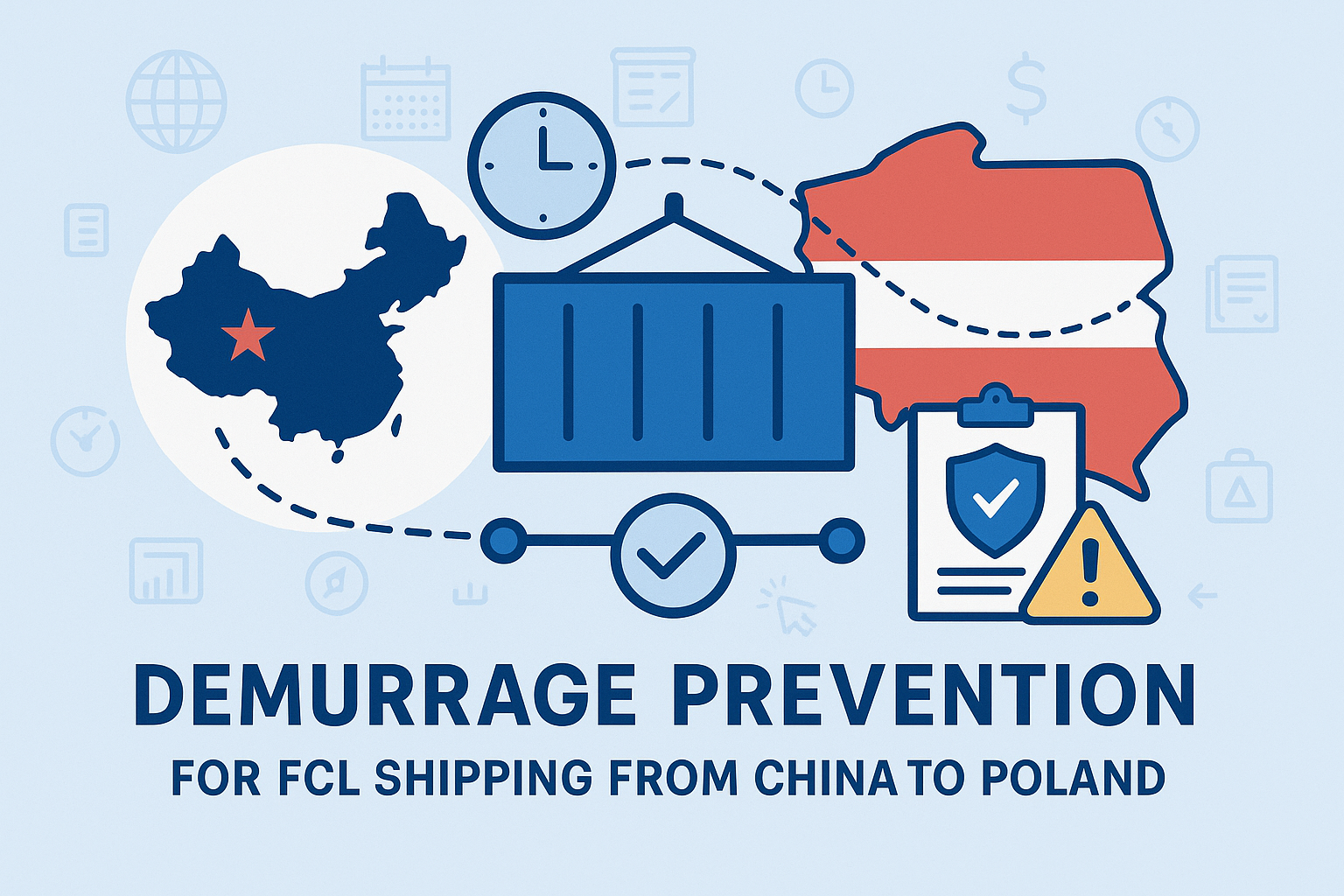
Although FCL freight into Poland is growing quickly, delays at ports and customs often trigger unexpected demurrage charges that disrupt budgets and timelines. Therefore, this guide explains demurrage prevention for FCL shipping from China to Poland and delivers clear, repeatable methods that keep containers moving. As you explore these strategies, you can also count on reliable resources such as the Top China Freight homepage for end-to-end support.

What causes demurrage risks for FCL shipping from China to Poland?
Understanding the root causes is crucial because demurrage often accumulates quietly while containers remain in terminals. Moreover, peak-season port congestion in Gdańsk, Gdynia, and Warsaw ICDs increases dwell-time risks. Documentation mismatches, delayed customs declarations, and outdated shipment schedules also create friction. Consequently, early planning and strict timeline control are essential for Poland-bound importers.
Key operational triggers
- Missing or late-arriving commercial documents
- Customs inspection delays or incomplete HS classification
- Congested terminals during automotive or electronics peak cycles
- Slow coordination between truckers, terminals, and brokers

How can importers build a delay-proof FCL workflow?
A delay-proof workflow starts with synchronized planning across suppliers, carriers, truckers, and brokers. Additionally, when teams align on scheduling and responsibilities, dwell time drops noticeably. This section outlines a structured method to avoid time-sensitive bottlenecks.
Step-by-step timeline alignment
| Task | Optimal Timing | Purpose |
|---|---|---|
| Finalize shipping documents | 3–5 days before arrival | Avoid customs delays |
| Pre-clear customs | Before vessel arrival | Reduce port stay |
| Book trucker slot | 24–48 hours early | Guarantee pickup |
| Confirm terminal release | Same day | Prevent idle container time |
This schedule significantly reduces the likelihood of demurrage because every party moves in sequence.
Why early-document submission directly prevents demurrage?
Because Polish customs requires consistent documentation, even small inaccuracies can delay clearance by several days. Furthermore, when documents reach customs before vessel arrival, inspections begin sooner, which shortens container stay at terminals. This method is especially important for industries like textiles, electronics, and machinery.
Document set checklist
| Document | Notes |
|---|---|
| Commercial Invoice | Ensure HS codes match customs database |
| Packing List | Include weight, dimensions, textile fiber breakdown |
| Bill of Lading | Verify consignee information and freight terms |
| Certificates | Origin, fumigation, compliance, where required |
For companies seeking a smoother process, linking customs services early through a partner such as a licensed broker helps maintain compliance. A useful reference is the integrated solution available via customs brokerage services.
What role does trucking coordination play in demurrage prevention?
Although customs clearance often receives more attention, trucking is frequently the true bottleneck. Delayed truck allocation leads directly to prolonged container storage at ports. Therefore, importers should secure fixed trucking capacity or book flexible windows for peak seasons.
Tips for truck-dispatch optimization
- Reserve trucking slots before vessel arrival
- Use real-time visibility tools for container release updates
- Align trucker ETA with terminal opening hours
- Pre-share container and seal numbers to avoid on-site delays
When trucking teams know container status earlier, waiting hours shrink dramatically.
Case Studies
Electronics importer avoided €1,800 in demurrage fees
Route: Shenzhen → Gdańsk
Cargo: 1×40HQ of small consumer electronics
Challenge: Supplier sent documents late, threatening a 3-day clearance delay.
Solution: The importer implemented an early-document workflow and verified HS codes before sailing.
Outcome: Customs cleared the shipment within 12 hours of arrival, and the trucker collected the container the same day—eliminating potential demurrage entirely.
Textile manufacturer cut dwell time by 48%
Route: Ningbo → Gdynia
Cargo: 1×20GP of textile rolls
Challenge: Trucking availability tightened due to local congestion.
Solution: The importer pre-booked trucking slots two days in advance and used digital release alerts to synchronize pickup.
Outcome: Container departed the terminal quickly, reducing dwell time from 50 hours to 26 hours, avoiding penalties.
Can route selection influence demurrage exposure for FCL shipments?
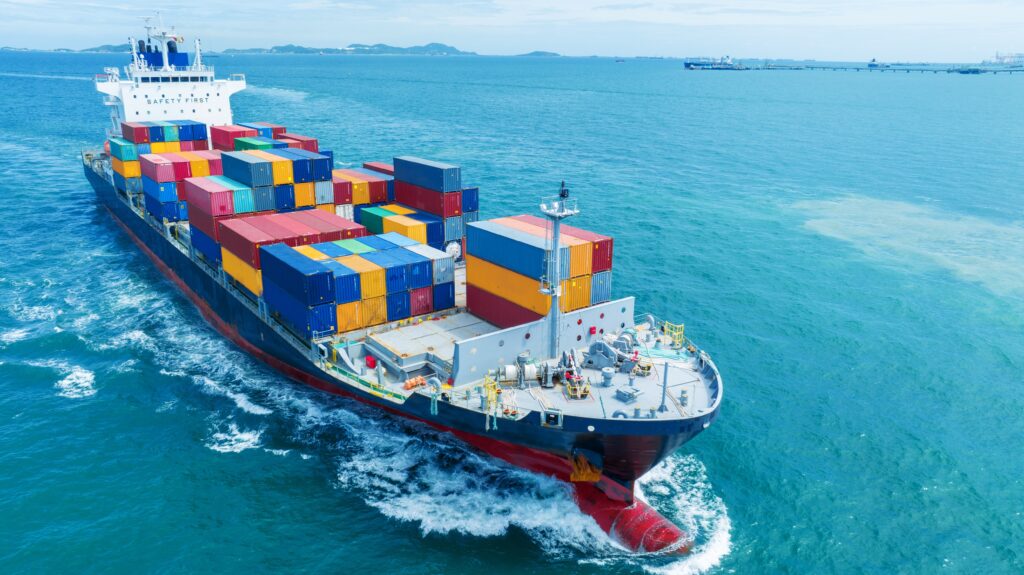
Choosing the right route is surprisingly important. Although ocean freight from major Chinese ports (Shanghai, Ningbo, Shenzhen, Qingdao) to Poland typically arrives via Gdańsk or Gdynia, each gateway behaves differently depending on seasonal congestion. Therefore, importers should evaluate lane stability rather than relying solely on published schedules.
Common China → Poland FCL route patterns
| Origin Port | Usual Transit Time | Typical Polish Entry Point |
|---|---|---|
| Shanghai | 33–38 days | Gdańsk Deepwater |
| Ningbo | 34–40 days | Gdynia |
| Yantian | 32–37 days | Gdańsk / Rail ICD |
| Qingdao | 35–41 days | Gdańsk |
Stable lanes with predictable ETAs make trucking and customs scheduling much easier, which in turn reduces demurrage exposure.
Should importers use third-party logistics partners for demurrage prevention?
Third-party logistics partners provide structured schedules, automated alerts, and integrated customs coordination. Consequently, decision-making becomes faster, and operational gaps shrink. When importers handle seasonal cargo or high-volume flows, partnering with a professional forwarder helps maintain consistency.
For companies seeking a tightly controlled FCL workflow, end-to-end services such as FCL & LCL solutions or Polish-entry customs assistance often deliver measurable savings.
Why collaboration across partners is essential for demurrage prevention?
Since delays usually emerge from small misalignments across multiple players—supplier, carrier, customs broker, trucker—strong coordination becomes the backbone of demurrage prevention. Moreover, when stakeholders communicate early, the entire timeline becomes more predictable.
Build a connected FCL ecosystem
- Share pre-alerts with all partners 3–5 days before vessel arrival
- Maintain unified digital dashboards
- Confirm roles and escalation paths
- Use standardized templates for updates
When every stakeholder owns a piece of the process, containers move faster—and demurrage rarely appears.
Conclusion
Demurrage prevention for FCL shipping from China to Poland depends on synchronized planning, timely documentation, proactive customs management, and reliable last-mile coordination. When these elements work together, containers move through terminals without unnecessary delays, and cost predictability improves dramatically. To strengthen operational control, importers should consider structured logistics support or request a tailored plan that aligns with their supply-chain timelines.
Request A Free Quote
Start shipping smarter with TopChinaForwarder today! 🚢✨ Request a Free Quote 📝 and get a tailored logistics plan built around your cargo and timeline.
FAQ:
What factors influence demurrage charges in Poland?
Delays from customs inspections, missing documents, port congestion, and slow trucking pickup all contribute. Controlling timelines and preparing documents early reduces these risks.
How early should documents be submitted to avoid delays?
Submitting complete documents 3–5 days before arrival helps ensure customs pre-clearance and smooth release, significantly lowering demurrage exposure.
Can digital tools help track container release?
Absolutely. Real-time dashboards and automated alerts allow importers to adjust trucking schedules quickly and avoid extra dwell time.
Should I pre-book truckers for Polish ports?
Yes. Pre-booking ensures the trucker arrives promptly once customs clears the container, minimizing time at the terminal.
What industries face the highest demurrage risk?
Electronics, machinery, textiles, and any cargo requiring document accuracy or potential inspection typically face more timing-sensitive clearance.