
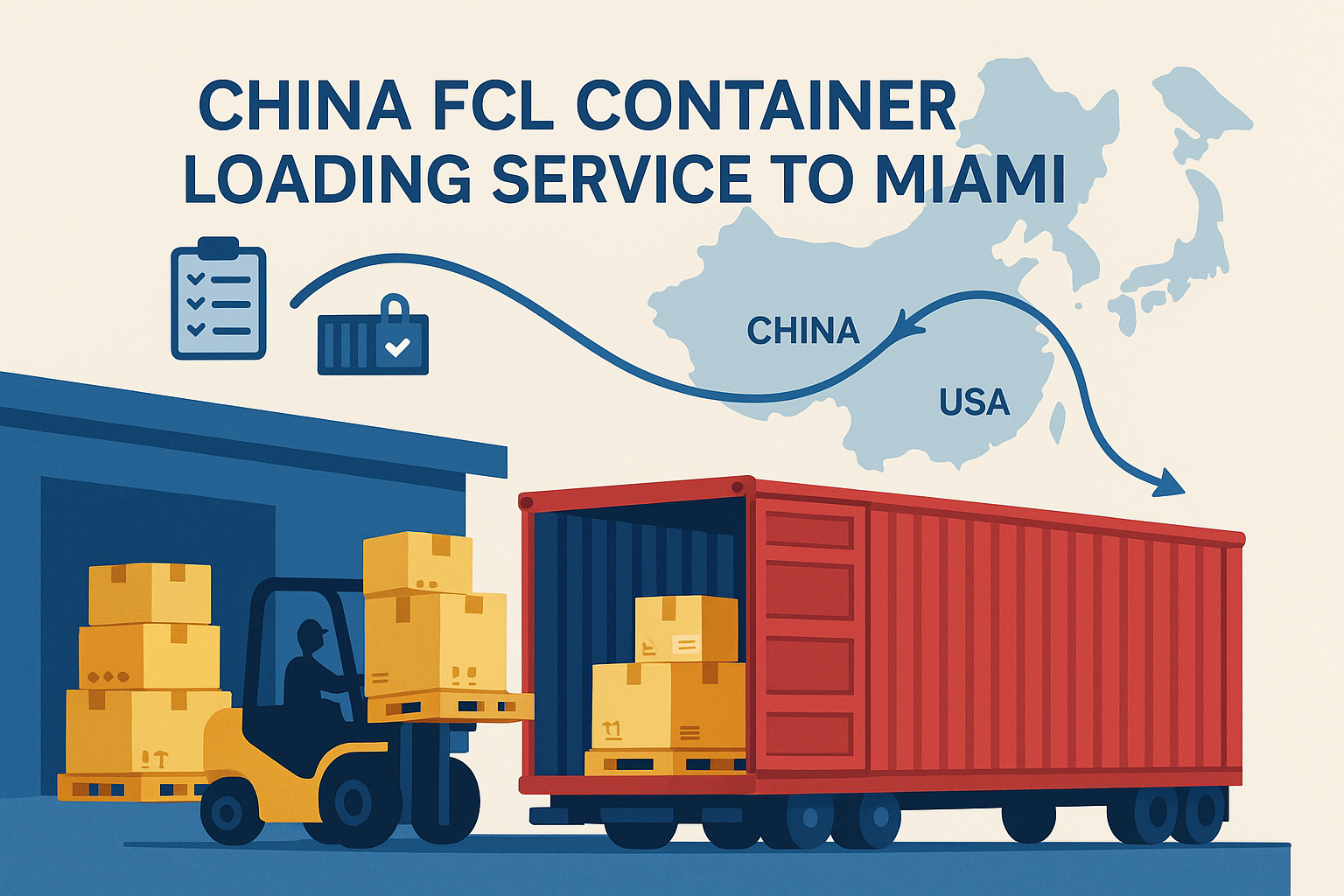
Because loading quality directly affects transit stability and delivery performance, many importers rely on a China FCL container loading service to Miami to secure consistent packing standards and damage-free arrival. Moreover, shippers increasingly require accurate supervision, optimized weight distribution, and professional photo records to comply with today’s import expectations. As the loading process becomes more regulated, using an experienced partner like Top China Freight—starting from our homepage—helps streamline compliance, improve container utilization, and reduce costly loading errors.
What Defines a China FCL Container Loading Service to Miami?
A China FCL container loading service to Miami includes the complete workflow of preparing, supervising, and securing goods inside a full container before export. Although loading appears straightforward, the process requires strict control over pallet placement, structural stability, and cargo protection. Additionally, Miami-bound shipments must comply with United States CBP guidelines, which highlight packing transparency and safety labeling.
Therefore, the loading service typically covers:
- China export consolidation planning
- Palletized cargo loading
- Weight distribution checks
- Cargo securing and lashing
- Full loading supervision with photos
- Sealing and documentation verification
Because these steps directly influence inbound handling at Miami, shippers treat loading as a critical quality-control phase rather than a simple warehouse task.
Why Is Proper Container Loading Critical for Miami-Bound FCL Shipments?
Although the sailing duration remains unchanged, poor loading can cause cargo shift, structural damage, and insurance disputes. Consequently, Miami importers emphasize compliance-level loading in China to prevent rework or claim issues upon arrival.
Key Reasons Loading Matters
- Proper loading reduces breakage for electronics, furniture, and industrial components.
- Balanced weight improves transit stability and protects container flooring.
- Accurate pallet alignment speeds up unloading at Miami terminals.
- Structured labeling prevents customs repositioning.
- Secured cargo meets safety requirements for high-density sea freight.
Additionally, most claims filed in Miami originate from improper China-side handling, making loading supervision essential for long-haul routes.
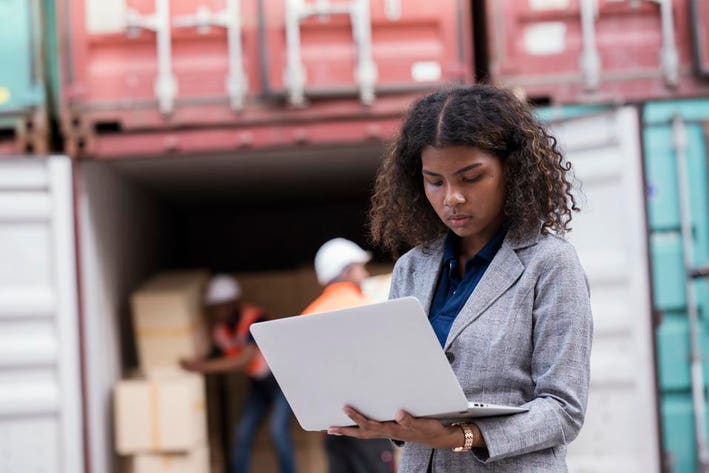
How Does a China FCL Container Loading Service to Miami Work Step-by-Step?
A standardized loading model reduces timing risks, enhances transparency, and improves container utilization. Furthermore, a structured workflow ensures that goods match Miami’s port standards while maintaining smooth export clearance.
Step 1 — Pre-loading Inspection in China
Technicians check cargo condition, packaging strength, labels, and HS code markings. Pre-loading inspection China helps detect fragile or under-packed items early, preventing damage during transit.
Step 2 — Warehouse Coordination and Cargo Staging
Cargo is positioned by size and weight. Although many factories attempt self-loading, warehouse loading coordination ensures that the container is filled in a secure pattern.
Step 3 — Container Stuffing Service (Key Step)
Teams organize pallet placement, stack limits, and aisle clearance. This step includes:
- Pallet wrapping
- Block-and-brace techniques
- Weight distribution measures
- Fragile-zone separation
Because this is the most technical phase, many importers rely on third-party supervision for photo documentation.
Step 4 — Final Locking, Sealing, and Recording
Supervisors capture full loading photos, apply seals, and verify carton counts. Moreover, recording weight and seal data supports faster CBP clearance in Miami.
What Are the Main Loading Patterns Used for Miami Shipments?
Although each commodity requires a different loading method, most Miami-oriented shipments follow structured patterns to preserve stability and avoid unnecessary handling.
Common Loading Patterns and Their Best Uses
| Loading Pattern | Best For | Advantages | Notes |
|---|---|---|---|
| Column Loading | Cartons, electronics | Maximizes space, easy unloading | Requires balanced stacking |
| Palletized Loading | Food, cosmetics, tools | Fast loading & USA-friendly | May reduce space usage |
| Mixed-Mode Loading | Furniture + cartons | Flexible with odd sizes | Needs skilled coordination |
| Block-and-Brace Loading | Machinery, heavy goods | Very secure | Extra materials required |
Because Miami handles large volumes of electronics, apparel, and household goods, mixed-mode and palletized loading remain widely used.
Case Studies
Shenzhen → Miami (Home Appliances)
Cargo Type: Small kitchen appliances
Container: 40’ FCL
Loading Method: Mixed-mode loading
Special Requirement: Fragile-zone reinforcement
Transit Time: 34 days
Outcome: Zero damage upon arrival; unloading completed 28% faster due to structured labeling.
Because the shipper needed precise positioning, Top China Freight supervised the entire loading process, optimizing aisle gaps and reinforcing high-risk corners.
Ningbo → Miami (Commercial Lighting Fixtures)
Cargo Type: LED commercial lighting
Container: 20’ FCL
Loading Method: Palletized loading
Special Requirement: Height restrictions
Transit Time: 32 days
Outcome: Balanced pallet layout reduced handling time; Miami customs cleared the shipment one day earlier than expected.
By coordinating warehouse loading and providing on-site supervision, our team ensured proper weight distribution and compliant stacking height.
What Documents Are Critical for FCL Loading Quality and Miami Clearance?
Miami customs require accurate and complete packing information. Therefore, China-side loading documentation becomes a crucial clearance element.
Essential Loading Documents for Miami Imports
| Document | Purpose | Miami Impact |
|---|---|---|
| Loading Photos | Visual proof of packing | Reduces inspection time |
| Packing List | Shows counts, weight, dimensions | Speeds CBP processing |
| Commercial Invoice | Declares cargo value | Required for release |
| Seal Record | Verifies container integrity | Prevents re-check |
| Factory Compliance Notes | Confirms proper packaging | Reduces CBP queries |
| Weight Confirmation | Safety compliance | Avoids overweight penalties |
Although paperwork seems administrative, accurate documentation prevents unexpected CBP re-inspection in Miami.
How Can Shippers Optimize Their FCL Loading Strategy for Miami?
While loading depends on cargo type, several proactive strategies can significantly improve efficiency. Moreover, these strategies help shippers avoid downstream issues such as peak-season delays and unloading congestion.
Optimizing Strategies
- Use a standardized China–US loading checklist
- Assign a dedicated loading supervisor
- Consolidate multi-supplier cargo before stuffing
- Implement pallet height limits for easier Miami unloading
- Request full loading photo reports
- Align carton labeling with Miami distribution plans
To further optimize, some shippers integrate door-to-door services to synchronize China loading with Miami last-mile delivery, reducing warehouse handoff delays.
What Cost Factors Influence China-to-Miami Loading Service Pricing?
Although loading service fees are minor compared with the full freight cost, they directly impact the total landed cost. However, shippers can maintain budget consistency through transparent pricing.
Main Pricing Factors for China FCL Loading
| Cost Component | Description | Pricing Influence |
|---|---|---|
| Loading Labor Fees | Warehouse manpower | Direct impact |
| Material Usage | Straps, blocks, pallets | Depends on cargo size |
| Consolidation Work | Multi-supplier staging | Increases handling |
| Equipment Time | Forklift & dock usage | Adds hourly cost |
| Documentation Output | Photo reports & seal logs | Administrative fee |
| Oversized Items | Special positioning | Additional charges |
Because high-value products require more reinforcement, their loading cost tends to be slightly higher than general cargo.
Conclusion
In summary, a China FCL container loading service to Miami provides structural stability, accurate documentation, and safer cargo positioning, which directly improves delivery performance in the United States. Furthermore, consistent supervision reduces claim risks and enhances unloading efficiency at Miami terminals. If your supply chain requires predictable packing quality and professional cargo handling, partnering with a reliable provider like Top China Freight ensures accuracy from the first pallet to the final seal.
Request A Free Quote
Start shipping smarter with TopChinaForwarder today! 🚢✨ Request a Free Quote 📝 and get a tailored logistics plan built around your cargo and timeline.
FAQ:
How early should I schedule FCL loading in China?
Scheduling 3–5 days before the vessel cut-off ensures proper inspection, warehouse coordination, and timely truck arrival.
Are loading photos required for Miami customs?
They are not mandatory but strongly recommended because they accelerate CBP checks and provide proof of proper loading.
What loading method is best for fragile cargo?
Palletized or block-and-brace loading reduces impact risk and stabilizes fragile shipments during ocean movement.
How does weight distribution affect safety?
Balanced loading prevents collapse, improves container stability, and reduces unloading hazards at Miami terminals.
Do consolidation shipments affect loading time?
They can, but proper staging and coordination ensure smooth stuffing, especially for multi-supplier cargo.