
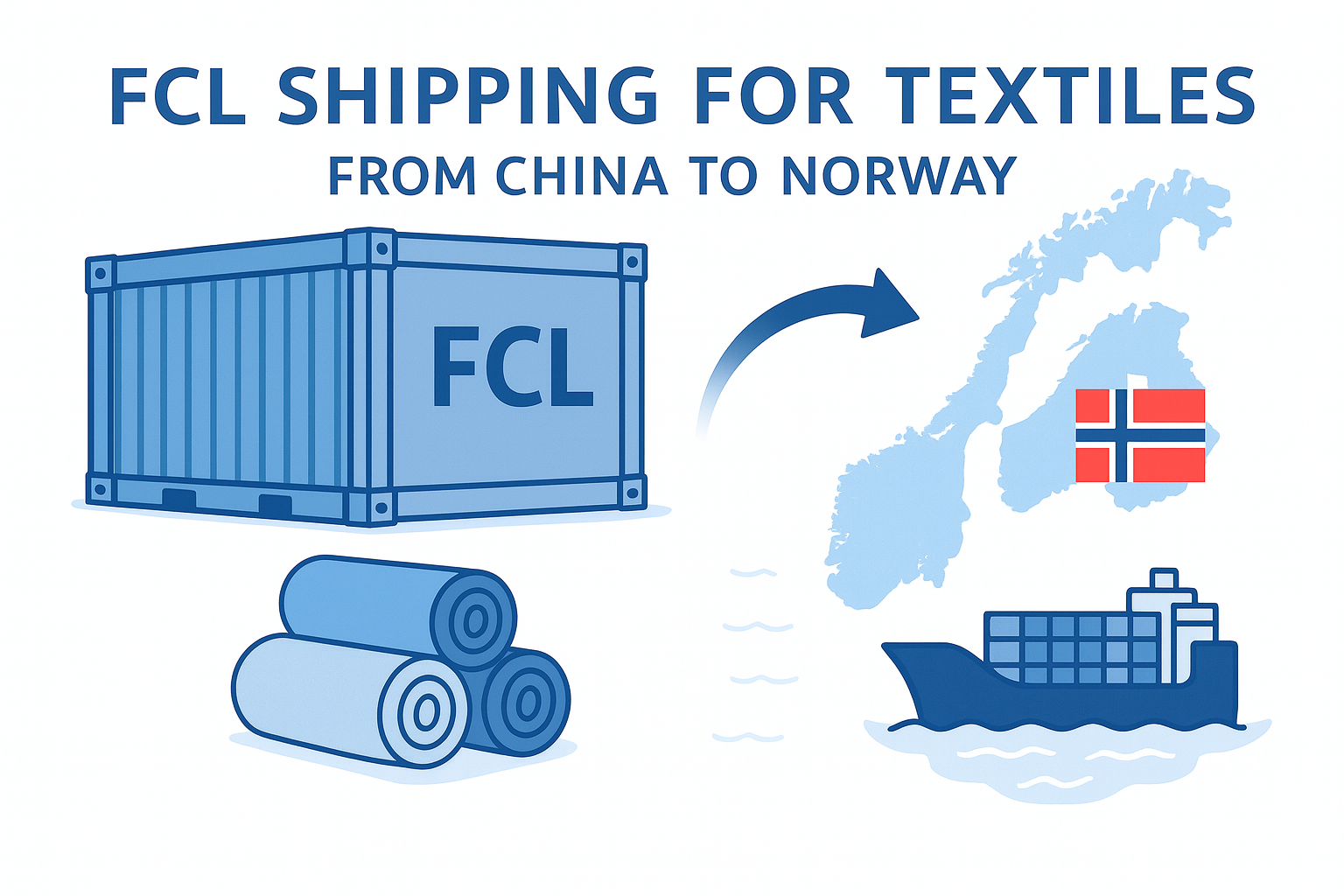
Shipping textiles efficiently requires planning, speed, and reliability. Choosing FCL shipping for textiles from China to Norway ensures cost-effectiveness, safe handling, and faster delivery. This guide explores optimal routes, freight rates, customs documentation, and real-world case examples to help you manage textile exports successfully.
What Is FCL Shipping and Why Is It Ideal for Textiles?
FCL (Full Container Load) shipping means one container is dedicated entirely to your cargo. This method provides better protection and flexibility than LCL shipping, particularly for bulk textile products like fabrics, garments, and upholstery materials.
| Feature | FCL Shipping | LCL Shipping |
|---|---|---|
| Container Usage | Exclusive | Shared |
| Cost Efficiency | Better for large volumes | Higher per unit |
| Cargo Handling | Minimal | Frequent |
| Risk of Damage | Very low | Moderate |
| Best for | Fabrics, clothing, accessories | Small samples |
Why it matters: FCL allows textile exporters to load goods directly from their factories, reducing handling time and minimizing moisture or contamination risks.
How Long Does It Take to Ship Textiles from China to Norway?
Transit time varies depending on the origin port and route.
| Origin Port (China) | Destination Port (Norway) | Transit Time (Days) | Route Type |
|---|---|---|---|
| Shenzhen | Oslo | 32–36 | Via Rotterdam |
| Ningbo | Bergen | 33–38 | Via Hamburg |
| Shanghai | Oslo | 30–34 | Direct or Suez route |
| Qingdao | Stavanger | 34–39 | Via Gdansk |
Tip: Direct sailings through Rotterdam or Hamburg are more reliable, offering better transshipment schedules to Norwegian ports.
What Are the Costs of FCL Shipping for Textiles to Norway?
Freight costs depend on container type, season, and destination.
| Container Type | Average Cost (USD) | Cargo Example | Transit Time (Days) |
|---|---|---|---|
| 20GP | 2,900–3,400 | Cotton fabrics | 32–35 |
| 40GP | 3,800–4,400 | Clothing cartons | 33–37 |
| 40HQ | 4,100–4,800 | Mixed textile shipments | 34–38 |
Cost-saving tip: Book your FCL space two weeks in advance and consider flexible departure ports to lock in lower rates.
How to Prepare Textiles for FCL Shipping?
Proper packaging ensures cargo integrity and compliance with import regulations.
Best Practices for Textile Exports:
- Use poly-wrapped pallets to prevent moisture absorption.
- Label all rolls or boxes with HS codes and product descriptions.
- Use desiccants to maintain humidity below 65%.
- Avoid overloading — maximum weight per 40HQ is 26 tons.
| Container Type | Capacity (CBM) | Estimated Weight (KG) |
|---|---|---|
| 20GP | 28 | 21,000 |
| 40GP | 58 | 26,000 |
| 40HQ | 68 | 26,000 |
Need a shipping solution? 🚢 Request a Free Quote 📝 from TopChinaFreight and get the best rates and fastest routes today!
Real Case Studies: Textile FCL Shipping from China to Norway
Case 1: Shenzhen → Oslo (Garment Shipment)
- Container Type: 40HQ FCL
- Cargo Volume: 67 CBM (22 tons)
- Transit Time: 33 days
- Freight Cost: USD 4,250
- Result: On-time delivery; customs cleared within 24 hours.
Case 2: Ningbo → Bergen (Fabric Rolls)
- Container Type: 20GP FCL
- Cargo Volume: 27 CBM (18 tons)
- Transit Time: 35 days
- Freight Cost: USD 3,150
- Result: Moisture control maintained; no damage reported.
Case 3: Shanghai → Oslo (Home Textile Products)
- Container Type: 40GP FCL
- Cargo Volume: 56 CBM (25 tons)
- Transit Time: 34 days
- Freight Cost: USD 4,300
- Result: Successfully delivered to Oslo warehouse with zero demurrage.
What Customs Documents Are Required for Textile Imports?
| Document | Purpose |
|---|---|
| Commercial Invoice | Declares cargo value and seller details |
| Packing List | Lists quantity, packaging, and weight |
| Bill of Lading | Legal proof of shipment |
| Certificate of Origin | Confirms Chinese origin |
| CE Certification | Required for textile-related machinery |
| Import Declaration | Filed with Norwegian Customs |
Reminder: Norway follows EFTA trade regulations, allowing favorable import duties for Chinese textile exporters under specific agreements.
How to Prevent Delays in FCL Shipping?
Delays can occur due to customs issues, port congestion, or weather. Here’s how to stay on schedule:
- Prepare accurate documents and double-check HS codes.
- Book early to avoid space shortages.
- Coordinate with reliable freight forwarders for tracking.
- Use multi-route transit monitoring to respond to vessel changes.
Pro Tip: Choose carriers with established routes to Rotterdam or Hamburg, ensuring smooth transshipment to Norway.
Why Choose TopChinaFreight for Textile FCL Shipments?
TopChinaFreight specializes in FCL shipping for textiles from China to Norway, providing end-to-end solutions tailored to textile exporters.
Advantages:
- Guaranteed vessel space during high season.
- Professional packaging and moisture-control guidance.
- Integrated customs clearance and local delivery in Norway.
- Competitive pricing with major carriers such as MSC, Maersk, and COSCO.
Their expertise ensures your textile cargo arrives safely, on time, and within budget.
Conclusion
Choosing FCL shipping for textiles from China to Norway guarantees reliability, better cost management, and cargo protection. With accurate documentation, efficient route planning, and professional logistics support from TopChinaFreight, textile exporters can optimize their supply chain performance and avoid costly delays.
Request A Quote
Get started with TopChinaFreight today! 🚢✨ Simply Request a Free Quote 📝 to receive a customized shipping solution tailored to your needs. Our experts will provide the best rates 💰, fastest routes 🚀, and professional guidance 🌍 for your international logistics.
FAQs:
1. How long does FCL shipping from China to Norway take?
FCL shipping typically takes 32–38 days depending on route, port congestion, and carrier schedule.
2. Why is FCL shipping preferred for textile exports?
It provides full container usage, better cargo protection, and lower unit freight costs for high-volume textile shipments.
3. Which ports in China offer the best routes to Norway?
Shenzhen, Ningbo, and Shanghai provide regular FCL sailings with fast transshipment via Rotterdam or Hamburg.
4. What documents are required for textile imports to Norway?
You’ll need a commercial invoice, packing list, bill of lading, and certificate of origin for customs clearance.
5. How can I avoid shipping delays during textile export?
Book early, verify customs compliance, and work with experienced freight forwarders to handle all logistics stages.