
- By della
- November 13, 2025
- Rail Fregiht, Shipping
Sending goods from China to Europe can be challenging—especially when you seek balance between cost and delivery time. Today, cheap rail freight from Shenzhen to Germany offers that perfect balance. It’s faster than sea freight, cheaper than air freight, and ideal for businesses looking to streamline logistics without overpaying.
This guide explores affordable yet reliable rail freight solutions, complete with transit times, pricing, documentation, routing, and proven case examples.

What Is Rail Freight and Why Is It Cost-Effective for China–Germany Trade?
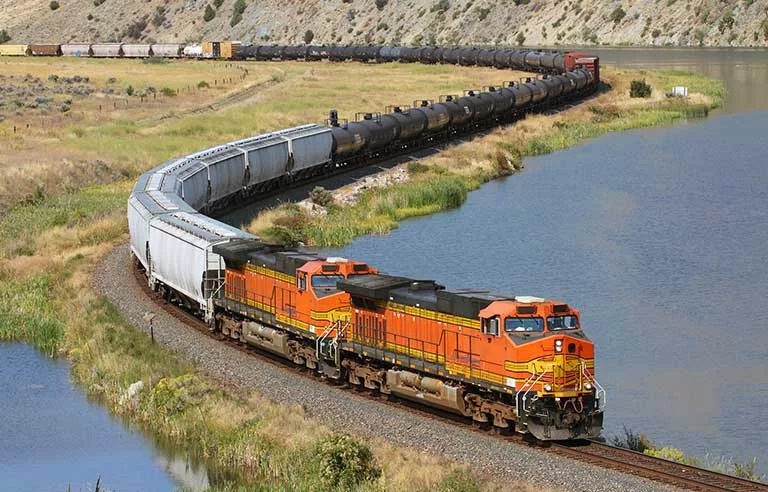
Rail freight is a land-based shipping method using major international railway corridors, especially the New Silk Road linking China with Europe. Cargo from Shenzhen travels by train through Central Asia, Russia, and Poland, finally reaching German logistics hubs like Hamburg, Duisburg, and Frankfurt.
| Shipping Mode | Transit Time | Avg. Cost per CBM | Best For |
|---|---|---|---|
| Air Freight | 6–10 Days | 4.5–4.5–8/kg | Fast, small-volume cargo |
| Rail Freight | 18–22 Days | 80–80–130 | Mid-volume, semi-urgent shipments |
| Sea Freight | 35–45 Days | 45–45–65 | Large, low-speed permitted shipments |
In short, rail is the most economical land-based option for cross-border trade with Europe, balancing cost, efficiency, and sustainability.
How Long Does Rail Freight Take from Shenzhen to Germany?
Transit times via rail are significantly shorter than sea, while much more affordable than air, making it ideal for medium urgency cargo.
Estimated Transit Times by Destination
| German City | Transit Time (Rail) | Final Delivery (Truck) |
|---|---|---|
| Hamburg | 18–20 Days | + 1–2 Days |
| Berlin | 19–21 Days | + 1 Day |
| Frankfurt | 18–20 Days | + 1–2 Days |
| Munich | 20–22 Days | + 2–3 Days |
Though exact schedules can fluctuate due to customs and weather conditions, experienced freight forwarders help avoid unnecessary delays by optimizing customs pre-clearance and final delivery logistics.
What Makes Rail a Cheaper Freight Option than Air?
Rail freight costs are significantly lower than air because price is based on volume (CBM) and weight, not speed urgency.
| Cargo | Weight/Size | Mode | Estimated Cost (USD) | Transit Time |
|---|---|---|---|---|
| Small electronics batch | 150kg / 1 CBM | Air Freight | 1,100–1,100–1,400 | 6–9 Days |
| Same batch via rail | 150kg / 1 CBM | Rail Freight | 480–480–620 | 18–20 Days |
🔎 Businesses prioritize rail freight to cut shipping costs while still achieving better-than-sea delivery windows.
What Documents Are Needed for Rail Freight to Germany?
Exporters must provide proper documentation to avoid customs clearance delays or overcharges along rail corridors.
Commonly Required Documents
| Document | Purpose |
|---|---|
| Commercial Invoice | Lists values, HS codes, Incoterms |
| Packing List | Contents, box sizes, weights, and dimensions |
| Rail Waybill (CIM/SMGS) | Official shipping contract and cargo tracker |
| Certificate of Origin | For Free Trade Agreement proof (where applicable) |
| EORI Number (EU importer) | Required for clearance into Germany |
| Insurance Certificate | Strongly advised for palletized electric cargo |
💡 Ensuring accuracy across invoice and declaration improves compliance with German customs authorities.
What Are Real Case Studies of Cheap Rail Freight from Shenzhen?
🚚 Case Study 1: Automotive Components to Frankfurt
- From: Shenzhen Bao’an
- To: Frankfurt auto warehouse
- Cargo: 1 pallet (400kg auto sensors)
- Route: Rail freight + truck final mile
- Cost: $950 USD
- Duration: 19 Days
💡 Outcome: Delivered two days early for production schedule; used DDP terms to cover customs duties in Germany.
📦 Case Study 2: Consumer Goods to Hamburg
- From: Shenzhen logistics center
- To: Hamburg fulfillment center
- Cargo: 2 CBM (kitchen appliances)
- Mode: LCL Rail + Onward truck
- Cost: $780 USD
- Time: 20 Days
Add Your HeaWhat Are the Pros and Cons of Shipping by Rail?ding Text Here
Understanding the pros and cons helps businesses decide whether rail fits their supply chain model.
Freight Mode Comparison
| Factor | Rail Freight | Air Freight | Sea Freight |
|---|---|---|---|
| Transit Speed | Medium (18–22 days) | Fastest (3–7 days) | Slow (30–45 days) |
| Cost Efficiency | Affordable | Expensive (per kg) | Cheapest for bulky items |
| Environmental Factor | Low emissions 🌱 | High footprint 💥 | Moderate emissions |
| Loading Flexibility | Pallet/LCL/FCL supported | Best for lightweight cargo | Ideal for large shipments |
| Weather Impact | Moderate | Low | High (port delays) |
✅ Use rail freight when you need moderate speed and low cost—but more automation than sea transit.
Lorem ipsum dolor sit amet, consectetur adipiscing elit. Ut elit tellus, luctus nec ullamcorper mattis, pulvinar dapibus leo.
What Types of Goods Are Best Shipped by Rail to Germany?
Rail is ideal for goods that are non-perishable, moderately urgent, and priced per kilo or by crate.
| Industry | Example Goods |
|---|---|
| Electronics | Phones, routers, LED panels |
| Fashion Accessories | Clothing, handbags, shoes |
| Automotive | Spare parts, sensors, OEM kits |
| FMCG/Durables | Coffee machines, small appliances |
| Office Equipment | Chairs, printers, POS systems |
Because Europe’s rail hubs connect directly to inland warehouses, rail freight fits item-level fulfillment systems well.
Lorem ipsum dolor sit amet, consectetur adipiscing elit. Ut elit tellus, luctus nec ullamcorper mattis, pulvinar dapibus leo.
How to Choose a Reliable and Affordable Rail Freight Partner?
Choose a freight forwarder that offers expertise, proactive service, and transparency.
✅ Should specialize in China-Europe rail logistics
✅ Offers both FCL and LCL rail freight
✅ Can handle EORI setup, customs declarations, and HS classifications
✅ Includes DAP and DDP pricing
✅ Uses bonded warehouses and documents pre-clearing options
✅ Offers multilingual support (CN🇨🇳 + DE🇩🇪 + EN🇺🇸)
🛠️ A reliable forwarder can help you avoid up to 75% of potential customs issues by preparing documents and manifests in advance.
✅ Conclusion
In a world of rising shipping demand and squeezed budgets, cheap rail freight from Shenzhen to Germany gives importers a smart, sustainable logistics option. It offers a blend of moderate cost, quick delivery, and minimal risk—especially when compared to traditional sea or high-cost air transport.
By partnering with a trusted freight provider, businesses can improve delivery timeframes, avoid customs complications, and ensure ongoing supply chain stability from China to Germany’s core logistics hubs.
Rail is not just cost-effective—it’s strategically smart.
Request A Free Quote
Get started with TopChinaFreight today! 🚢✨ Simply Request a Free Quote 📝 to receive a customized shipping solution tailored to your needs. Our experts will provide the best rates 💰, fastest routes 🚀, and professional guidance 🌍 for your international logistics.
FAQs
Q1. Is rail freight from Shenzhen available for small businesses?
Yes, LCL rail freight allows affordable shipping for small-volume importers heading to Germany.
Q2.How much can I save with rail compared to air?
Typically 40–60%, especially for cargo between 150–1000kg versus commercial air cargo.
Q3.Can I use rail if I only have 2 CBM?
Absolutely. Less than container load (LCL) services are perfect for 1–10 CBM shipments.
Q4.Do I need an EORI to import into Germany?
Yes, all commercial shipments into the EU require an EORI number for customs clearance.
Q5. Is tracking available during rail transport?
Definitely. Most providers offer milestone-based tracking at terminals and customs points.