
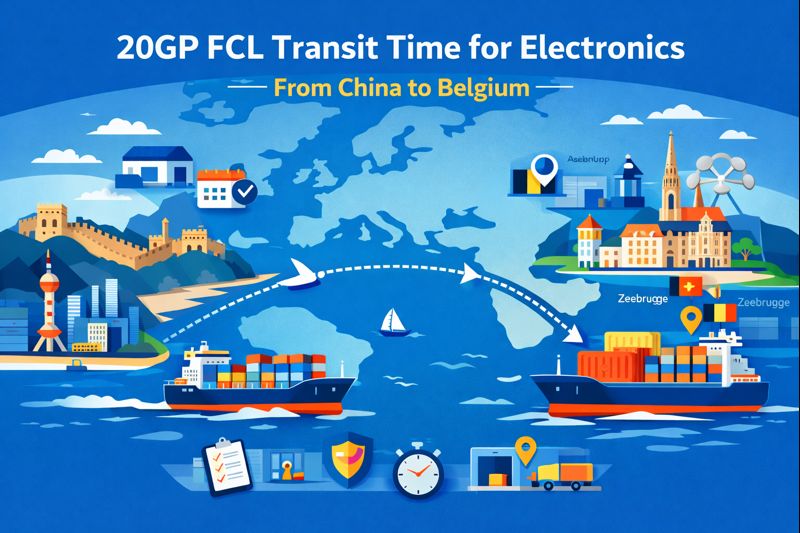
To manage the 20GP FCL transit time for electronics from China to Belgium, importers must align production cycles with realistic ocean schedules and EU customs requirements. However, because electronics cargo is both time-sensitive and high-value, even small delays can disrupt inventory planning. Therefore, this guide explains transit timelines, route choices, and risk controls based on practical experience from Top China Freight.

What Does 20GP FCL Transit Time Mean for Electronics Shipments?
Understanding transit time starts with clarity on what is actually measured.
Port-to-port versus door-to-door timelines
Port-to-port transit time covers vessel sailing only, while door-to-door includes inland pickup, customs clearance, and final delivery. Consequently, electronics importers should evaluate both to avoid planning gaps.
Why electronics require tighter timelines
Because electronics face rapid market cycles and depreciation, predictable shipping time matters more than minimal cost. As a result, stable 20GP FCL shipping schedules often outperform cheaper but inconsistent options.
Which China Ports Are Most Efficient for Belgium-Bound Electronics?
Origin port selection directly influences the 20GP FCL transit time for electronics from China to Belgium.
Shanghai and Ningbo for schedule stability
Shanghai and Ningbo offer the most frequent Europe sailings. Therefore, exporters using these ports benefit from better carrier options and lower roll-over risk.
Shenzhen for South China manufacturers
For electronics produced in Guangdong, Shenzhen provides efficient container handling and flexible feeder connections. As a result, overall transit planning becomes more predictable.
Secondary ports and feeder considerations
Ports such as Xiamen or Qingdao may require feeder legs. Although this adds a few days, inland cost savings can sometimes justify the trade-off.
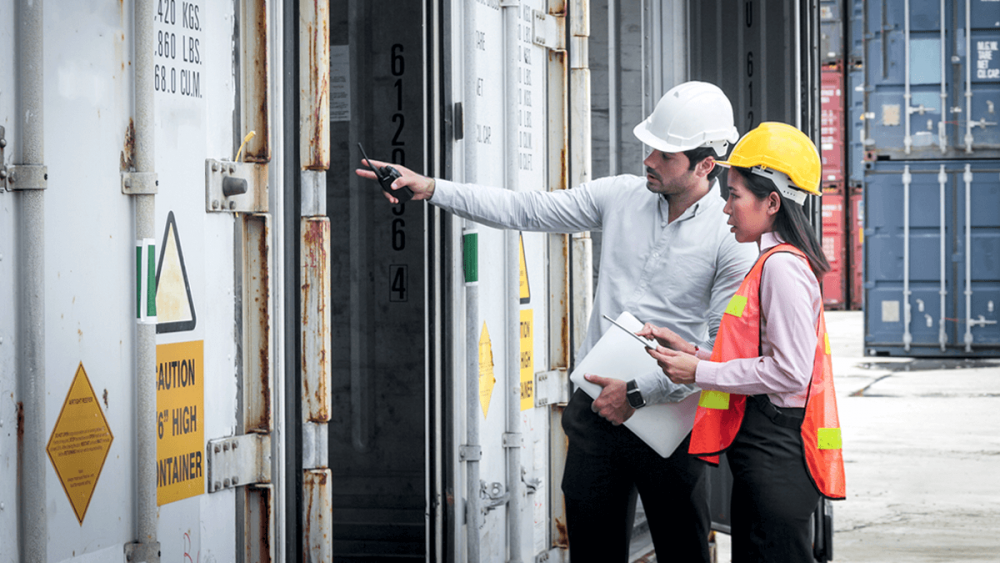
What Factors Commonly Cause Delays for Electronics Containers?
Even with careful planning, several variables affect transit time.
Port congestion and blank sailings
During peak season, vessel capacity tightens. Therefore, electronics shippers should expect potential delays unless space is secured early.
Customs inspections and compliance checks
Electronics often trigger document reviews related to CE marking and EU compliance. As a result, incomplete paperwork can add days at destination.
Weather and operational disruptions
Seasonal weather and labor constraints occasionally disrupt schedules. Consequently, adding buffer days remains a best practice.
How Long Is the Typical 20GP FCL Transit Time from China to Belgium?
Transit time varies by route structure and seasonal conditions.
| Route Type | Average Transit Time | Reliability Level |
|---|---|---|
| Direct China–Belgium service | 30–33 days | High |
| One transshipment | 34–38 days | Medium–High |
| Two transshipments | 38–45 days | Medium |
Although direct routes shorten sailing time, well-planned transshipment routes can still meet delivery targets when buffers are applied.
Case Studies
Consumer Electronics from Shanghai to Antwerp
Origin: Shanghai, China
Destination: Antwerp, Belgium
Cargo: Consumer electronics, 20GP
Route: Direct ocean service
Transit Time: 31 days port-to-port
Outcome: Stable delivery aligned with retail launch schedule
This shipment demonstrates how direct routing supports predictable 20GP FCL transit time for electronics from China to Belgium.
Industrial Electronics from Shenzhen to Zeebrugge
Origin: Shenzhen, China
Destination: Zeebrugge, Belgium
Cargo: Industrial electronics, 20GP
Route: One transshipment via Mediterranean hub
Transit Time: 36 days port-to-port
Outcome: Cost-efficient delivery with manageable buffer
Here, a transshipment route balanced cost and schedule without compromising supply chain stability.
How Can Importers Reduce Transit Risk for Electronics Shipments?
Even with a well-planned route, the 20GP FCL transit time for electronics from China to Belgium can fluctuate. Therefore, proactive controls should be built into daily operations.
Booking strategy and carrier selection
First, choosing carriers with consistent weekly departures reduces roll-over risk. Additionally, splitting volume across two sailings during peak weeks can stabilize delivery schedules.
Production alignment and buffer planning
Moreover, aligning factory readiness with vessel cut-offs prevents last-minute delays. By adding a modest buffer to sailing estimates, importers protect downstream inventory plans.
End-to-end coordination
Finally, coordinating ocean legs with inland delivery avoids port dwell time. Integrated door delivery planning often shortens total lead time compared with fragmented handovers.
How Can Forwarders Improve Transit Predictability?
Experienced forwarders analyze carrier performance, seasonal patterns, and port conditions. By combining ocean transport with structured FCL & LCL solutions, electronics importers gain clearer visibility and better control over delivery schedules.
How Do Seasonal Trends Affect Transit Time to Belgium?
Seasonality remains one of the strongest variables affecting the 20GP FCL transit time for electronics from China to Belgium.
Peak season constraints
During late summer and pre-holiday periods, vessel space tightens. Consequently, transit times may extend unless bookings are secured early.
Off-peak advantages
In contrast, off-peak months typically provide smoother port operations and more predictable delivery windows. Therefore, forward planning can unlock both time and cost efficiencies.
Conclusion
Managing the 20GP FCL transit time for electronics from China to Belgium requires more than choosing a fast sailing. By aligning port selection, customs readiness, and inland coordination, importers can achieve reliable and repeatable delivery outcomes. With the right strategy, transit time becomes a controllable variable rather than a risk.
Request A Free Quote
Start shipping smarter with TopChinaForwarder today! 🚢✨ Request a Free Quote 📝 and get a tailored logistics plan built around your cargo and timeline.
FAQ:
What is the average 20GP FCL transit time to Belgium?
Typical port-to-port transit ranges from 30–38 days, depending on route structure and seasonality.
Does electronics cargo clear customs slower in Belgium?
Clearance speed depends on documentation accuracy and EU compliance rather than cargo value alone.
Are direct routes always better for electronics?
Direct routes are often faster, but stable transshipment services can perform equally well with buffers.
How much buffer time should electronics importers plan?
Adding 5–7 days helps absorb minor delays without disrupting supply chains.
When should I book space during peak season?
Ideally 3–4 weeks in advance to secure capacity and stable sailing schedules.