
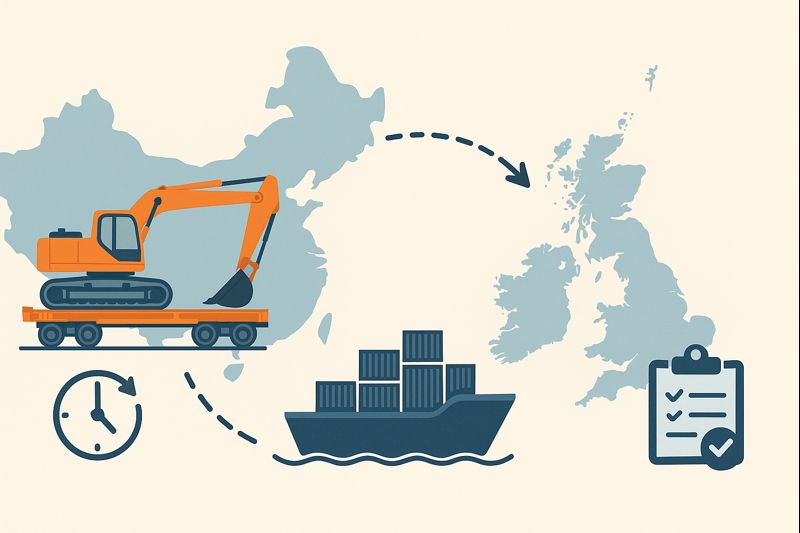
When importing oversized or heavy machinery, Flat Rack FCL transit time for machinery from China to UK is often harder to predict than standard container shipments; however, with the right planning, delays can be minimized. Therefore, this guide breaks down real transit timelines, port processes, and risk factors while showing how experienced partners like Top China Freight help keep complex machinery projects on schedule. Ultimately, you will gain practical steps to control shipping time, costs, and compliance from China to the UK.

What Makes Flat Rack FCL Transit Time Different from Standard Containers?
Flat rack container shipping time from China to UK differs significantly from dry containers because machinery rarely fits standard dimensions. As a result, flat rack FCL shipments require additional planning, approvals, and port coordination.
Why flat rack cargo needs extra handling
First, oversized machinery shipping from China to UK flat rack often involves overwidth, overheight, or overweight cargo. Consequently, terminals allocate special equipment, and carriers may impose restricted loading windows. Moreover, lashings, cradles, and surveys must be approved before loading, which can extend pre-departure timelines.
How this affects sailing schedules
While standard FCL cargo can be rolled to another vessel easily, flat rack FCL sea freight time China to UK is tied to vessel space availability. Therefore, missing a cutoff can push shipments back by one or even two sailings, especially during peak seasons.

How Long Is the Flat Rack FCL Transit Time from China to the UK?
Machinery flat rack FCL transit time China to Britain generally ranges between 28 and 45 days, depending on routing and port selection. However, the total timeline includes more than just time at sea.
Typical sea freight duration
In most cases, industrial machinery shipping lead time China to UK includes:
- Southern China to Felixstowe or Southampton: 28–35 days at sea
- Northern China to UK ports: 32–40 days at sea
Nevertheless, weather conditions, transshipment delays, and port congestion can add variability.
Pre-carriage and post-arrival factors
Before departure, flat rack container inspections and lashing approvals may take 3–5 days. After arrival, flat rack container port handling time UK machinery imports usually adds another 3–7 days, especially if inland transport requires special permits.
Which China and UK Ports Impact Transit Time the Most?
Choosing the right ports plays a crucial role in controlling flat rack container shipping time from China to UK. Therefore, port selection should align with machinery dimensions and inland delivery needs.
Major origin ports in China
Ports such as Shanghai, Ningbo, Qingdao, and Tianjin are preferred for project cargo flat rack shipping China to UK timeline because they have better lifting capacity and flat rack handling expertise. In contrast, smaller ports may lack equipment, increasing handling delays.
UK destination ports to consider
Felixstowe, Southampton, and London Gateway are commonly used for flat rack container freight rates China to UK because of their crane capacity and established customs processes. Moreover, proximity to final delivery sites can significantly reduce inland transport time.
How Does the Flat Rack FCL Shipping Process Work Step by Step?
Understanding the FCL flat rack shipping process from China to UK helps importers anticipate where time is spent and how delays occur.
| Stage | Key Activities | Time Impact |
|---|---|---|
| Cargo survey | Dimension check, lashing plan | 1–3 days |
| Export customs | HS code, export docs | 1–2 days |
| Port handling | Lifting, securing cargo | 2–4 days |
| Ocean transit | Main sea voyage | 28–40 days |
| Import clearance | UK customs & VAT | 2–5 days |
Because each stage depends on accurate documentation, errors often extend the overall flat rack FCL logistics solution for machinery exports to UK.
Case Studies
CNC Machine from Shanghai to Birmingham
A UK manufacturer imported a 28-ton CNC machine using a flat rack FCL solution. The cargo moved from Shanghai to Southampton, then by low-bed truck to Birmingham. The total transit time was 36 days, including customs clearance. By coordinating sea freight and inland delivery through one provider, schedule risks were reduced and costs remained predictable.
Construction Equipment from Ningbo to Manchester
A construction firm shipped a 32-ton excavator on a flat rack FCL from Ningbo to Felixstowe. The sea leg took 34 days, while customs clearance and inland transport required 6 additional days. By pre-arranging documentation and low-bed trucking, the total door-to-door timeline was kept under 42 days, avoiding project downtime and penalty costs.
How Do Freight Rates and Transit Time Interact?
While many importers focus on speed, flat rack container freight rates China to UK often influence transit decisions. Faster sailings or direct services typically cost more.
| Service option | Transit time | Cost level | Suitable for |
|---|---|---|---|
| Direct flat rack service | Shorter | Higher | Time-sensitive machinery |
| Transshipment route | Longer | Moderate | Cost-controlled projects |
| Door-to-door solution | Stable | Balanced | End-to-end planning |
Therefore, aligning budget with delivery deadlines is critical when managing heavy equipment shipping China to UK transit duration.

How Does Customs Strategy Influence Transit Time?
Even when sea transit runs smoothly, customs delays can disrupt delivery schedules. Therefore, preparation is essential.
Pre-clearance and compliance
Accurate HS classification, valuation, and compliance checks reduce inspection risks. In addition, engaging experienced customs brokerage support helps machinery shipments clear faster upon arrival.
Managing VAT and duties
Clear visibility on import taxes prevents holds due to payment issues. As a result, importers can release cargo immediately once clearance is granted.
Why Experienced Partners Matter for Flat Rack Projects
While many forwarders handle standard containers, flat rack machinery projects require specialized expertise. Therefore, working with experienced providers reduces uncertainty.
Professional teams like Top China Freight focus on coordinating surveys, carrier approvals, and compliance for oversized cargo. By integrating FCL planning, inland delivery, and documentation, they help stabilize flat rack FCL transit time for machinery from China to UK without overpromising unrealistic schedules.
Conclusion
Flat rack FCL transit time for machinery from China to UK depends on more than sailing days; it reflects planning quality, port coordination, and risk management. By selecting suitable ports, preparing documentation early, and aligning inland delivery, importers can achieve predictable timelines even for oversized machinery. With the right strategy and partners, complex shipments become manageable and cost-efficient.
Request A Free Quote
Start shipping smarter with TopChinaForwarder today! 🚢✨ Request a Free Quote 📝 and get a tailored logistics plan built around your cargo and timeline.
FAQ:
What determines flat rack FCL transit time most?
Transit time is influenced by port selection, vessel routing, cargo dimensions, and customs readiness rather than sea days alone.
Are flat rack shipments inspected more often?
Oversized machinery may face higher inspection probability, especially for used equipment or regulated machinery.
How early should flat rack bookings be made?
Bookings are recommended 2–3 weeks earlier than standard FCL, especially during peak season.
Can machinery be partially disassembled to save time?
Disassembly may improve handling flexibility but requires engineering review and may increase preparation time.
Do UK holidays impact clearance time?
Public holidays can slow customs processing and inland delivery if not planned in advance.