
- By rudy
- December 15, 2025
- Freight knowledge, Shipping
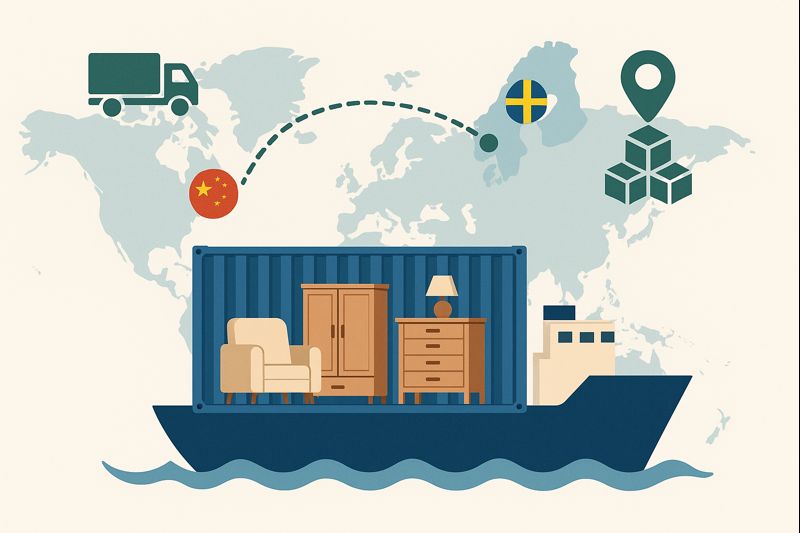
However complex furniture logistics may seem, the 40HQ FCL freight rate for furniture from China to Sweden remains one of the most searched cost questions among EU importers today. At the same time, price volatility, port congestion, and EU compliance rules make planning harder than expected. Therefore, this guide breaks down real cost drivers, transit expectations, and proven strategies, based on hands-on experience from Top China Freight.

What determines the 40HQ FCL freight rate for furniture from China to Sweden?
Although many shippers focus only on the headline ocean price, the total freight rate is shaped by several interconnected factors. Consequently, understanding these variables helps buyers avoid under-budgeting and last-minute surcharges.
Container size and loading efficiency
A 40HQ container offers extra cubic capacity, which suits flat-pack furniture, sofas, wardrobes, and bulky home décor. As a result, better load planning directly reduces cost per cubic meter.
Origin ports in China
Ports such as Shanghai, Ningbo, Shenzhen, and Qingdao offer different base rates. For example, southern ports often benefit exporters near Guangdong furniture clusters, while eastern ports serve large-scale factories efficiently.
Destination ports in Sweden
Most furniture shipments arrive via Gothenburg, while some routes move through transshipment hubs in Hamburg or Rotterdam. Therefore, port choice influences both transit time and terminal handling costs.
Seasonal freight demand
Peak seasons before Q4 retail cycles or summer home renovation periods often push rates higher. Meanwhile, off-peak windows may offer more stable pricing.
How do furniture characteristics affect freight pricing?
Because furniture varies widely in form and material, shipping costs are rarely “one-size-fits-all.” Instead, cargo properties strongly influence the final rate.
Volume-to-weight ratio
Furniture is typically volume-heavy rather than weight-heavy. Thus, optimizing carton dimensions and pallet stacking lowers wasted container space.
Material and compliance requirements
Wood furniture requires compliance with EU phytosanitary rules. In addition, treated wood packaging must meet ISPM 15 standards, which can affect preparation costs.
Assembly style
Flat-pack furniture usually ships more efficiently than fully assembled pieces. Consequently, exporters shipping knock-down designs often secure better FCL cost efficiency.

Why choose FCL instead of LCL for furniture shipments?
For furniture exporters, FCL often provides clearer cost control and lower risk.
Cost predictability
With FCL, the rate applies to the entire container, regardless of minor volume fluctuations. As a result, budgeting becomes more reliable.
Reduced cargo damage risk
Unlike LCL, FCL shipments avoid multiple handling stages. Therefore, delicate furniture finishes face fewer scratches or compression risks.
Faster port handling
FCL containers move more quickly through terminals, which helps reduce demurrage and storage charges at destination.
For most medium-to-large furniture orders, working with experienced providers of FCL and LCL services ensures the right balance between cost and protection.
What is the typical shipping time from China to Sweden by sea?
Although exact schedules vary, sea freight remains the most economical choice for furniture exports to Scandinavia.
| Route Type | Transit Time Range | Notes |
|---|---|---|
| Direct Asia–EU | 30–38 days | Faster but limited sailings |
| Transshipment via EU hub | 35–45 days | More flexible schedules |
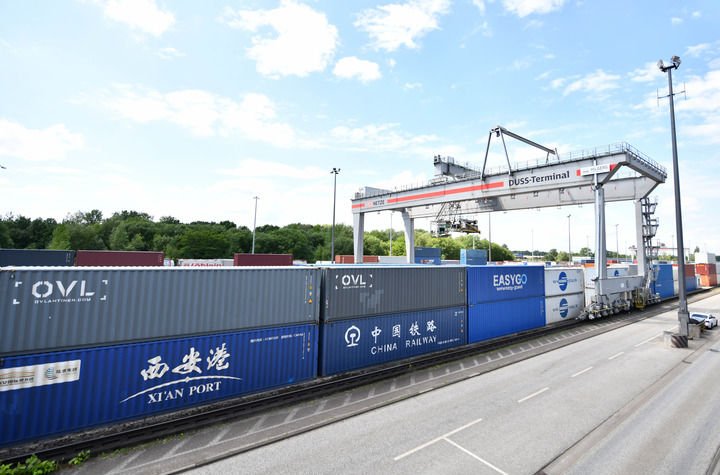
| Rail + Sea combination | 25–32 days | Higher cost, faster delivery |
Because furniture shipments are rarely urgent, most importers prioritize cost stability over speed. However, during peak seasons, buffer time becomes essential.
Case Studies
Flat-pack furniture from Foshan to Gothenburg
Shipment details:
• Origin: Foshan, China
• Destination: Gothenburg, Sweden
• Cargo: Flat-pack wooden cabinets
• Container: 1 × 40HQ FCL
Solution:
The shipper optimized carton dimensions and used full-height loading. As a result, container utilization reached 92%, reducing unit freight cost.
Outcome:
• Transit time: 34 days
• Total shipping cost: Mid-market range
• Damage rate: Zero reported
This case highlights how preparation impacts the effective 40HQ FCL freight rate for furniture from China to Sweden.
Upholstered sofas from Zhejiang to Stockholm
Shipment details:
• Origin: Zhejiang, China
• Destination: Stockholm DC
• Cargo: Upholstered sofas
• Container: 1 × 40HQ FCL
Solution:
Because of bulky dimensions, the exporter selected reinforced loading and moisture protection. Additionally, inland delivery was pre-booked to avoid port delays.
Outcome:
• Transit time: 38 days
• Cost efficiency: Improved vs LCL by ~22%
• Clearance: Smooth, no inspections
How do freight rates differ across Swedish destinations?
Although Sweden is a single market, inland delivery costs can vary based on final destination.
| Destination Area | Typical Use | Cost Impact |
|---|---|---|
| Gothenburg Port | Main gateway | Lowest |
| Stockholm region | Retail & distribution | Moderate inland cost |
| Malmö & southern cities | Regional hubs | Slightly higher |
| Northern Sweden | Project or bulk | Highest inland leg |
Therefore, when reviewing the 40HQ FCL freight rate for furniture from China to Sweden, inland transport must be evaluated alongside ocean freight.
How does door-to-door delivery affect total landed cost?
Many importers focus on port-to-port pricing. However, door-to-door solutions often deliver better visibility and control.
Simplified coordination
One contract covers ocean freight, customs, and inland transport. As a result, fewer handovers mean fewer delays.
Predictable timelines
Door-to-door services align delivery schedules with warehouse operations, reducing inventory holding costs.
Compliance assurance
For furniture imports, EU documentation and local delivery regulations are managed centrally. Businesses using integrated door-to-door transport often report smoother clearance outcomes.
What should importers expect during peak season surcharges?
Peak seasons amplify rate volatility. However, informed planning reduces exposure.
| Cost Factor | Impact During Peak Season | Mitigation Strategy |
|---|---|---|
| Ocean freight | Higher base rates | Early booking |
| Port handling | Congestion delays | Flexible routing |
| Inland delivery | Limited truck capacity | Pre-scheduled pickup |
Because furniture demand often peaks before retail cycles, aligning shipping calendars with sales forecasts becomes essential.
Conclusion
In summary, understanding the 40HQ FCL freight rate for furniture from China to Sweden requires more than comparing ocean quotes. Instead, furniture characteristics, port selection, inland delivery, and compliance planning jointly determine total landed cost. By combining strategic planning with reliable logistics partners, importers can secure stable rates, predictable transit times, and scalable supply chains.
Request A Free Quote
Start shipping smarter with TopChinaForwarder today! 🚢✨ Request a Free Quote 📝 and get a tailored logistics plan built around your cargo and timeline.
FAQ:
What makes up the 40HQ FCL freight rate for furniture shipments?
The rate typically includes ocean freight, terminal handling, documentation fees, and basic surcharges, while inland delivery and customs are usually separate.
How much does seasonality affect furniture shipping rates?
Rates often rise before peak retail seasons, sometimes by double-digit percentages, depending on capacity and demand.
Is insurance mandatory for furniture imports into Sweden?
Insurance is not mandatory, but it is strongly recommended due to the high value and damage sensitivity of furniture cargo.
How long does customs clearance take in Sweden?
With correct documentation, clearance usually completes within 1–3 working days.
Are there restrictions on wood furniture imports?
Wood furniture must comply with EU regulations, including ISPM 15 standards for packaging.