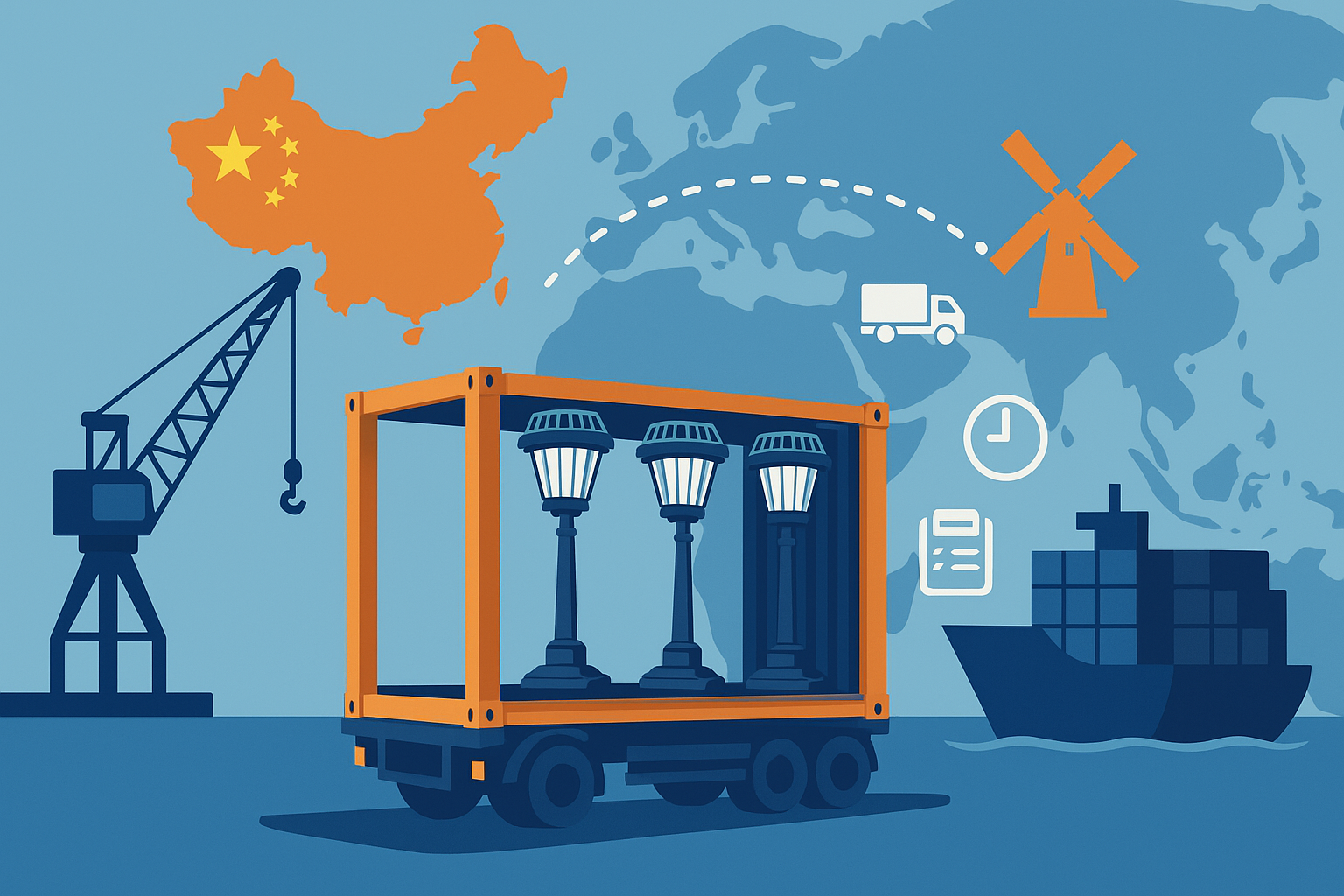
When oversized or tall lighting products require vertical loading, the Open Top FCL sailing schedule for lighting from China to Netherlands becomes a decisive factor in project planning and delivery accuracy. However, limited equipment availability, port restrictions, and variable sailing frequency often complicate scheduling decisions. Therefore, this guide breaks down realistic sailing timelines, port choices, and risk controls—while showing how experienced operators such as Top China Freight help importers secure stable open top capacity for European routes.
What Is an Open Top FCL Container and Why Is It Used for Lighting?
Open top FCL containers are designed without a fixed steel roof, allowing cargo to be loaded from above by crane. For lighting cargo, this structure is essential when fixtures exceed standard container height or require top-loading due to fragility.
Moreover, many architectural or industrial lighting units cannot be tilted safely during loading. As a result, open top containers offer both structural flexibility and safer handling for high-value lighting projects.
How Does the Open Top FCL Sailing Schedule Differ from Standard Containers?
Open top containers follow more restricted sailing schedules compared with standard dry containers. Because carriers allocate fewer open top units, weekly departures are not always guaranteed from every Chinese port.
In addition, some vessels limit open top intake due to lashing and stowage constraints. Therefore, importers must align production timelines with confirmed sailings rather than estimated schedules.
Which China Ports Offer the Most Reliable Open Top FCL Departures?
Not all ports handle open top containers equally. Ports with strong project cargo infrastructure generally provide better equipment availability and crane coordination.
Common origin ports include:
Shanghai: stable Europe sailings and experienced open top handling
Ningbo: competitive freight rates with flexible carrier options
Shenzhen (Yantian): efficient export procedures for oversized cargo
To improve schedule certainty, many shippers rely on professional sea freight services that pre-confirm equipment before booking.
What Are the Typical Sailing Schedules from China to the Netherlands?
In most cases, open top FCL shipments move on mainline Asia–Europe services terminating in Rotterdam. Transit times vary based on routing and carrier rotation.
Route Example
Typical Sailing Time
Notes
Shanghai → Rotterdam
28–33 days
Direct mainline service
Ningbo → Rotterdam
30–35 days
Slightly longer due to port rotation
Shenzhen → Rotterdam
32–38 days
Dependent on transshipment
Although these ranges appear predictable, open top availability often determines the actual departure date.
Case Studies
Architectural Lighting from Shanghai to Rotterdam
Shipment details:
Cargo: Large architectural lighting frames
Container: 1 × Open Top FCL
Route: Shanghai → Rotterdam
Outcome: Early equipment confirmation and pre-approved loading plans secured a sailing within the planned window. As a result, the shipment arrived in Rotterdam after 31 days, meeting installation deadlines without air freight escalation.
Industrial Lighting Units from Ningbo to the Netherlands
Shipment details:
Cargo: Tall industrial lighting units
Container: 1 × Open Top FCL
Route: Ningbo → Rotterdam
Outcome: Although weekly open top availability was limited, flexible routing and early booking ensured departure within ten days. Consequently, the importer avoided production downtime at the destination site.
How Do Loading Requirements Affect Sailing Confirmation?
Open top containers require strict compliance with loading and lashing rules. Carriers often demand detailed cargo dimensions, weight distribution plans, and lifting methods before confirming bookings.
If documentation is incomplete, sailing confirmation may be delayed. Therefore, early submission of loading plans and coordination with terminals significantly improves schedule reliability for open top FCL shipments.
How Does Customs Clearance Impact Open Top Lighting Shipments?
Customs procedures can indirectly affect sailing schedules. Because open top lighting cargo often appears oversized or unconventional, documentation accuracy matters more than usual.
Clear product descriptions, HS codes, and packing details reduce inspection probability. Many importers rely on professional customs brokerage services to align declarations and prevent clearance-related delays that might affect vessel cut-off times.
Should Importers Choose Open Top or Flat Rack for Lighting Cargo?
Selecting between open top and flat rack containers affects both schedule and handling risk.
Container Type
Sailing Frequency
Cargo Protection
Typical Use
Open Top FCL
Moderate
Medium
Tall lighting units
Flat Rack
Lower
Low
Extra-wide structures
For most tall but compact lighting products, open top containers offer a better balance between protection and schedule stability.
Conclusion
Ultimately, the Open Top FCL sailing schedule for lighting from China to Netherlands depends on equipment availability, carrier policies, and disciplined planning. Because open top containers follow more restricted schedules, early booking and accurate documentation become decisive advantages. By aligning route selection, loading preparation, and inland coordination, importers can ship oversized lighting cargo with confidence and control.
Request A Free Quote
Start shipping smarter with TopChinaForwarder today! 🚢✨ Request a Free Quote 📝 and get a tailored logistics plan built around your cargo and timeline.