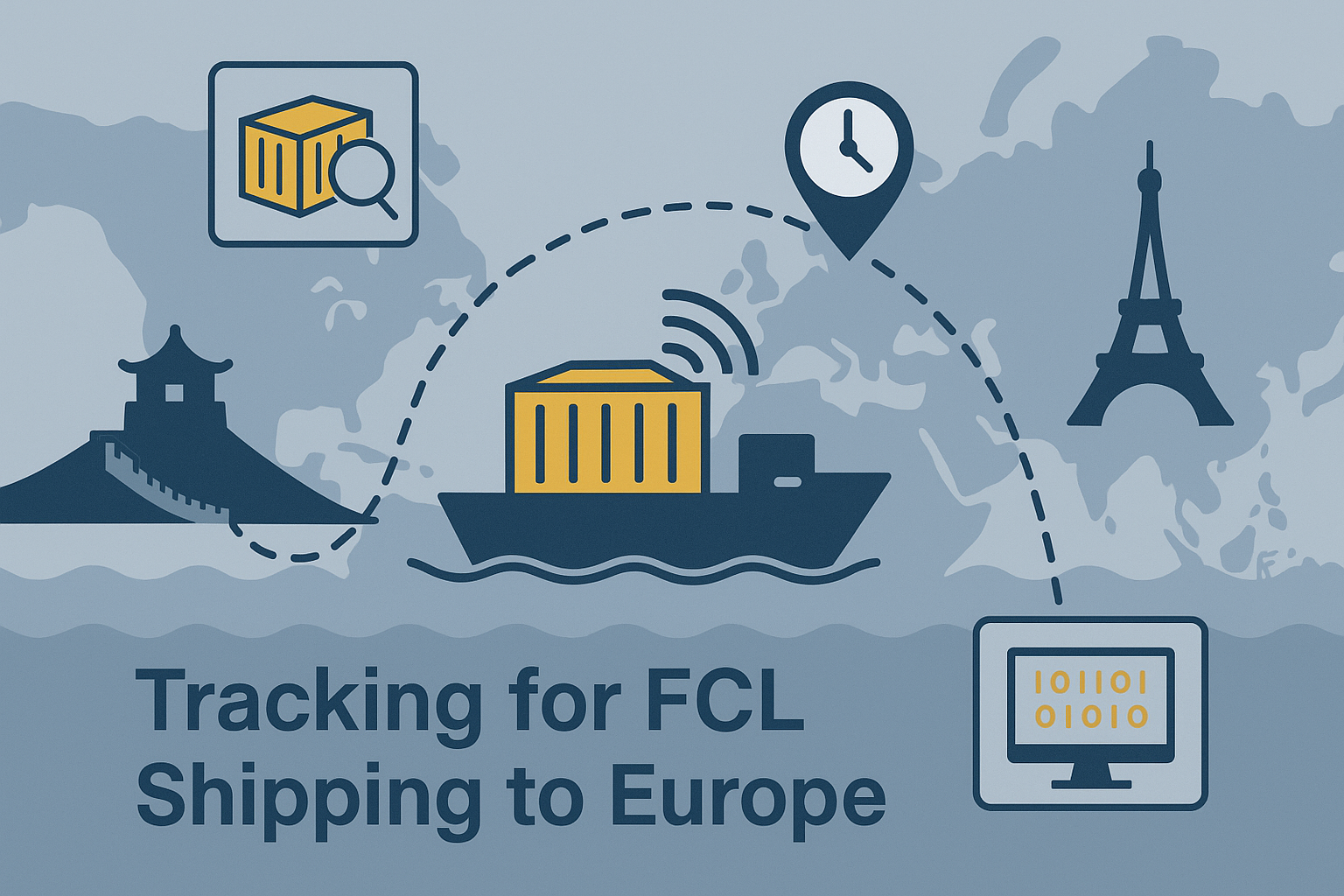
Tracking for FCL shipping from China to Europe has become a critical requirement for importers seeking predictable delivery schedules and stronger supply chain control. However, fragmented data across carriers, ports, and customs often limits real-time visibility. Therefore, this guide explains how FCL tracking actually works, which milestones matter most, and how European importers can gain actionable shipment transparency with support from Top China Freight.
What Does Tracking for FCL Shipping from China to Europe Really Include?
Tracking for FCL shipping goes far beyond checking a vessel’s position on a map. Instead, it connects multiple data points across the full container journey.
First, container tracking begins with booking confirmation and container release at origin. Then, status updates continue through gate-in, vessel loading, sea transit, port discharge, customs clearance, and final delivery. Because each milestone affects delivery schedules, comprehensive tracking focuses on events rather than just locations.
How Does Container Number Tracking Work for FCL Shipments?
Container number tracking forms the foundation of FCL visibility. Once a container number becomes active, carriers update status events through terminal systems and vessel schedules.
Key Tracking Milestones Importers Should Monitor
Gate-in confirmation verifies that the container entered the port terminal. Vessel departure signals the start of ocean transit. Meanwhile, transshipment updates reveal schedule risks when containers move between vessels. Finally, arrival notices and discharge confirmation prepare importers for customs clearance and inland delivery planning.
Because these milestones occur sequentially, missing one update can disrupt downstream decisions.
How Does Customs Clearance Tracking Fit into FCL Visibility?
Customs clearance represents a major blind spot in FCL tracking. Although carriers confirm arrival, clearance status depends on local customs systems and broker actions.
By integrating customs milestones into tracking workflows, importers gain clearer insight into release timing. Coordination with a professional customs brokerage service further reduces uncertainty during this phase.
How Accurate Is Ocean Freight Tracking During Sea Transit?
Ocean freight tracking relies on vessel schedules, AIS signals, and carrier updates. Although AIS provides near real-time vessel positioning, schedule accuracy depends on port congestion, weather, and operational changes.
Consequently, effective tracking combines live vessel data with predictive ETA adjustments. This layered approach improves reliability compared with static schedules published at booking.
Tracking approach: The importer used container number tracking combined with forwarder visibility tools. Vessel delay alerts identified congestion before arrival.
Outcome: By adjusting inland delivery schedules early, the importer avoided demurrage charges and reduced warehouse overtime costs.
Tracking approach: The importer combined carrier tracking with forwarder exception alerts and customs status updates.
Outcome: Early notification of a schedule slip enabled rescheduling of inland rail delivery, avoiding storage charges and meeting customer delivery windows.
What Role Do Data Standards and APIs Play in FCL Tracking?
Modern tracking relies on standardized data feeds and APIs that pull events from carriers, terminals, and customs brokers. While not all sources update at the same speed, normalization improves consistency.
Therefore, platforms that reconcile multiple feeds deliver more reliable status updates than single-source tools. Over time, this consistency enhances forecasting and performance benchmarking.
How Does End-to-End Tracking Support Door-to-Door Visibility?
End-to-end tracking connects ocean, customs, and inland legs into a single timeline. Instead of switching between portals, importers monitor one consolidated view.
Using integrated door-to-door transport aligns milestones across modes, which improves coordination and accountability. Consequently, teams gain clearer ownership of each handoff.
Why Partnering with an Experienced Forwarder Improves Tracking Outcomes
Technology alone cannot resolve every exception. Experienced operators interpret signals, escalate issues, and coordinate fixes across stakeholders.
With end-to-end expertise in Europe-bound FCL movements, Top China Freight aligns tracking data with operational actions, helping importers move from visibility to control.
Conclusion
Effective tracking for FCL shipping from China to Europe requires more than basic container checks. By integrating vessel data, customs milestones, and inland events, importers gain reliable visibility and faster response times. Ultimately, consistent tracking strengthens delivery performance and long-term supply chain resilience.
Request A Free Quote
Start shipping smarter with TopChinaForwarder today! 🚢✨ Request a Free Quote 📝 and get a tailored logistics plan built around your cargo and timeline.