
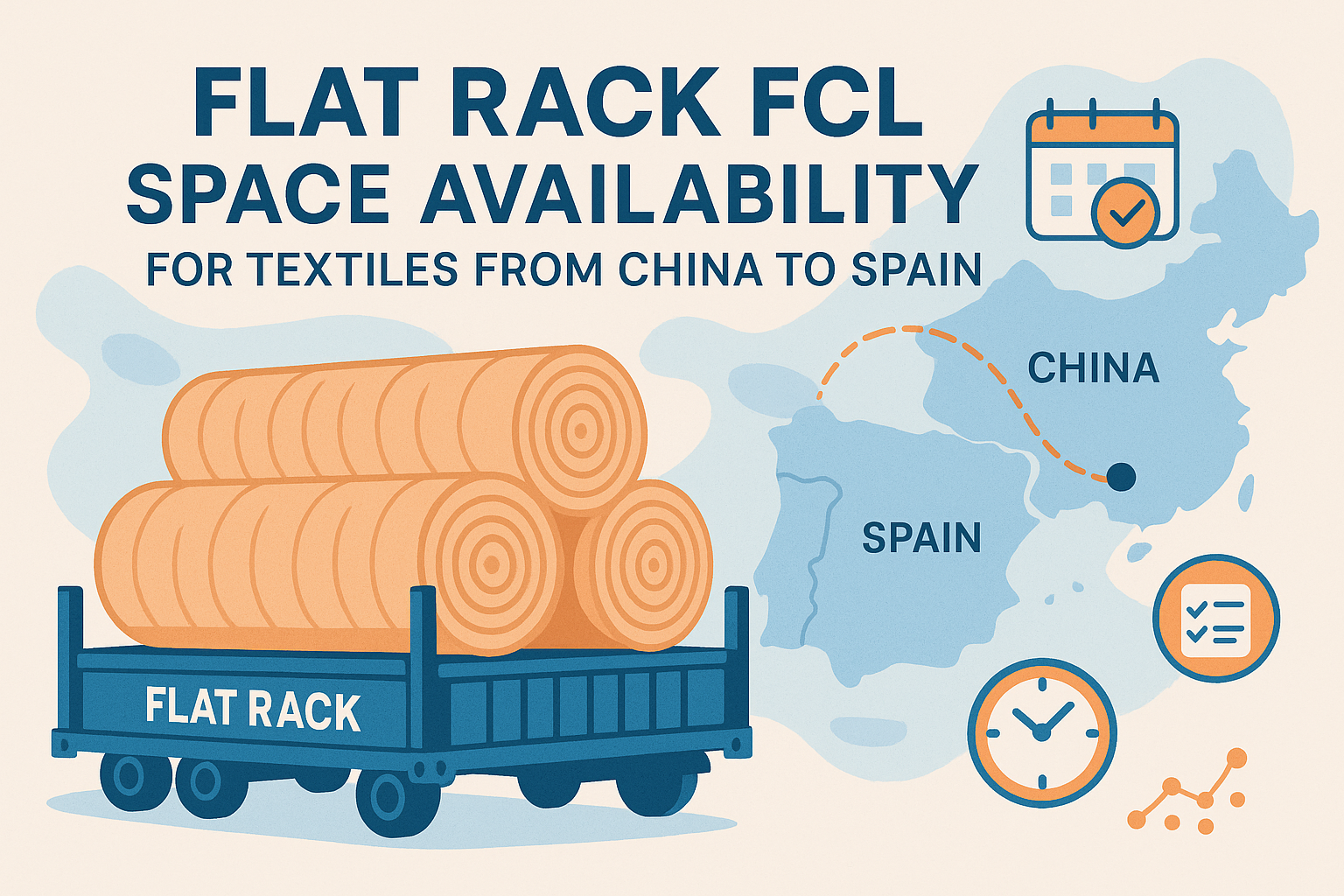
As textile shipments continue to expand across Europe, many exporters seek clarity on Flat Rack FCL space availability for textiles from China to Spain, particularly when equipment shortages disrupt production timelines. Therefore, this guide outlines the real drivers shaping space allocation, approval cycles, and load planning for oversized textile rolls and machinery. Moreover, importers can strengthen supply chain visibility by reviewing resources on our homepage, ensuring textile deliveries align with seasonal demand patterns.

What Determines Flat Rack FCL Space Availability for Textiles from China to Spain?
Flat Rack containers support oversized or long-length textile cargo that cannot fit efficiently inside standard FCL units. Therefore, space availability depends on equipment repositioning cycles, carrier allocation strategies, and seasonal textile production surges. Moreover, Spain’s strong textile distribution networks—Barcelona, Valencia, and Bilbao—require reliable capacity during peak sourcing seasons.
Core Influencing Factors
- Weekly Flat Rack equipment forecasts across major China ports
- Textile peak cycles in Zhejiang, Jiangsu, and Guangdong
- Spain-bound service frequency by different carriers
- Oversized cargo approval for long fabric rolls or machinery
- Port congestion at origin and destination terminals
Because Flat Rack units are limited, early planning significantly increases the likelihood of securing stable capacity.
How Does Equipment Availability Impact Textile Shipments?
Equipment availability shapes how quickly exporters can match production output to shipping schedules. Consequently, exporters producing wide fabric rolls or long textile machinery must book equipment earlier than standard FCL users. Moreover, carriers may temporarily reposition Flat Rack units to northern ports such as Qingdao or Tianjin, creating differences in availability across regions.
Equipment Considerations
Textile Dimensions
Long-length fabric rolls require special securing that affects gate-in timing.
Equipment Reposition Cycles
Since carriers balance equipment pools globally, availability fluctuates weekly.
Booking Windows
Because flat rack equipment availability for textile rolls changes frequently, reserving space 2–3 weeks in advance improves scheduling accuracy.

Why Do Textile Shipments Require Specialized Flat Rack Loading Strategies?
Textile cargo—especially machinery, large rolls, or reinforced bundles—needs tailored loading plans to prevent deformation or moisture damage. Therefore, exporters must align production teams, packing providers, and logistics partners to meet Flat Rack loading standards.
Key Loading Strategy Elements
- Anti-slip mats for large textile rolls
- Moisture-resistant wrapping for fabric bundles
- Customized blocking to prevent roll movement
- Balanced loading to manage vessel stability
Because loading quality directly affects cargo safety, optimizing the textile cargo loading strategy for flat rack containers ensures smoother approvals and fewer delays.
How Do China’s Origin Ports Affect Flat Rack FCL Space for Textiles?
Origin ports such as Shanghai, Ningbo, and Shenzhen maintain stronger Flat Rack equipment pools compared with smaller regional terminals. Therefore, exporters benefit from selecting flexible origin points when textile dimensions exceed standard container tolerances. Moreover, congestion levels influence how quickly oversized units can be lifted and secured before departure.
Typical Availability Pattern
| Origin Port | Space Availability | Notes |
|---|---|---|
| Shanghai | High | Frequent textile machinery shipments |
| Ningbo | Medium–High | Strong fabric export demand |
| Shenzhen/Yantian | Medium | Ideal for South China roll producers |
| Qingdao | Medium | Good for northern textile exporters |
Because origin-port flexibility increases approval chances, exporters should evaluate which regions offer the most predictable equipment supply.
Case Studies
Zhejiang Fabric Rolls → Valencia
Cargo Type: Long-length fabric rolls (oversized)
Container: 1×Flat Rack
Challenge: Equipment shortage at Ningbo during a textile export peak
Solution: Shifted origin to Shanghai + advanced booking
Transit Time: 28 days port-to-port
Outcome: Avoided rollover and kept downstream production on schedule
Insight: Flexibility with origin ports significantly increases space security for oversized textile rolls.
Textile Machinery (Guangdong → Barcelona)
Cargo Type: High-value textile machinery + reinforced accessories
Container: 1×Flat Rack
Challenge: Documentation delays and stricter carrier approval required
Solution: Verified technical drawings early + reserved equipment two weeks ahead
Transit Time: 27 days
Outcome: Achieved uninterrupted delivery for a Spanish production facility
Insight: Technical readiness dramatically improves equipment access and on-time discharge at destination ports.
Can Multimodal Transport Improve Supply Chain Flexibility for Textile Imports?
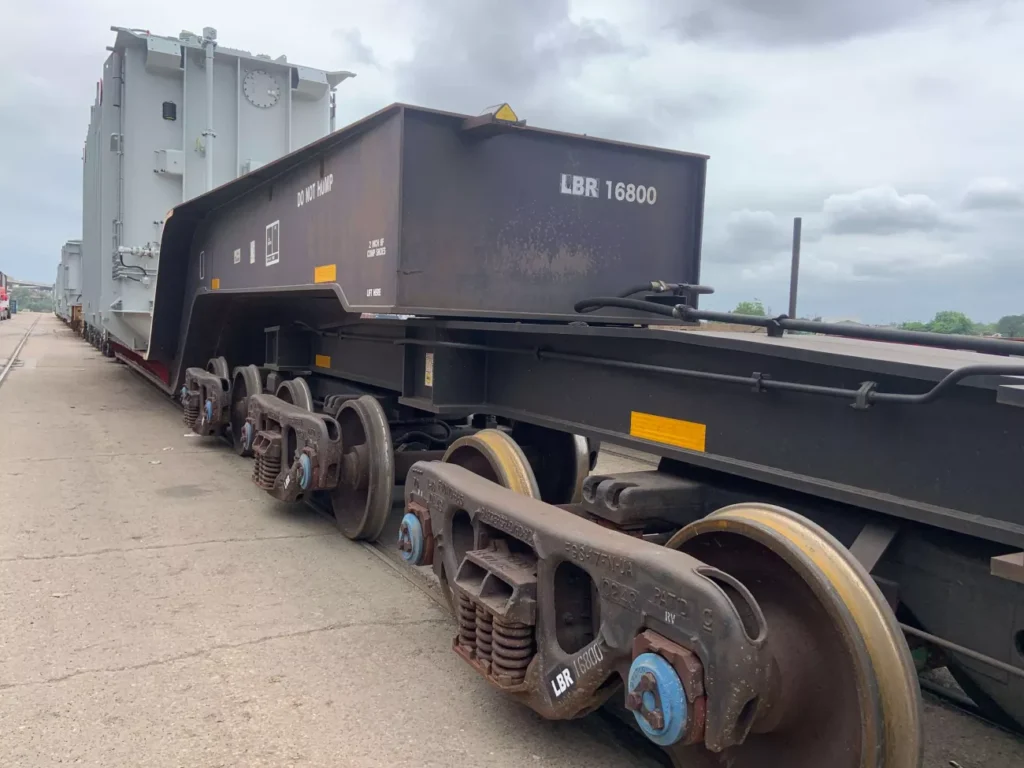
Yes. Multimodal transport enhances schedule alignment for textile retailers or textile mills in Spain that operate strict production calendars. Therefore, combining sea + rail or sea + inland trucking optimizes delivery while maintaining reasonable budgets. Moreover, multimodal routing helps avoid seasonal congestion in major Spanish ports.
Benefits of Multimodal Routing
- Faster inland delivery to Madrid and Zaragoza
- Reduced risk during peak Barcelona and Valencia congestion
- Better alignment with textile production cycles
- Lower last-mile handling risks for oversized rolls
Because multimodal options support tighter delivery windows, textile importers gain notable agility.
How Top China Freight Strengthens Textile Shipping Reliability
To help exporters secure space during high-demand cycles, Top China Freight offers proactive equipment tracking, Flat Rack booking guidance, and end-to-end visibility. Additionally, we coordinate upstream packing, port transfer, and documentation readiness through services such as door-to-door and FCL/LCL, ensuring textile cargo moves smoothly from mills to Spanish distribution centers.
How Do Freight Rate Trends Influence Flat Rack Space Availability?
Freight rates rise during textile production spikes, reducing equipment availability as exporters compete for Flat Rack units. Therefore, monitoring rate trends helps predict when space tightens. Moreover, carriers sometimes adjust allocations to prioritize heavy industrial exports over textile shipments.
Rate Trend Drivers
- European retail sourcing cycles
- China’s textile mill output
- Carrier repositioning strategies
- Seasonal congestion at Spain ports
Because the freight rates trend for flat rack cargo to Spain impacts availability, exporters should schedule shipments around known price cycles.
Conclusion
Ultimately, the Flat Rack FCL space availability for textiles from China to Spain depends on equipment reposition cycles, booking windows, textile production peaks, and port capabilities. Moreover, exporters who remain flexible with origin ports, prepare technical data early, and track rate trends consistently gain access to more stable Flat Rack space. Therefore, businesses aiming for predictable supply chain performance should collaborate with experienced logistics providers to maintain reliable equipment access.
Request A Free Quote
Start shipping smarter with TopChinaForwarder today! 🚢✨ Request a Free Quote 📝 and get a tailored logistics plan built around your cargo and timeline.
FAQ:
What causes space shortages for Flat Rack textile shipments?
Seasonal textile peaks, equipment repositioning, and carrier allocation caps create shortages.
How early should textile exporters book Flat Rack containers?
Booking 2–4 weeks early improves availability, especially for long fabric rolls or machinery.
Can all China ports handle Flat Rack textile cargo?
Most major ports can, though some require longer approval cycles for oversized rolls.
Are customs procedures strict for textile imports?
They require accurate HS codes and fabric descriptions but move smoothly when documents are correct.
How can exporters avoid shipment rollovers?
Early booking, proper documentation, and flexible origin-port planning reduce rollover risk.