
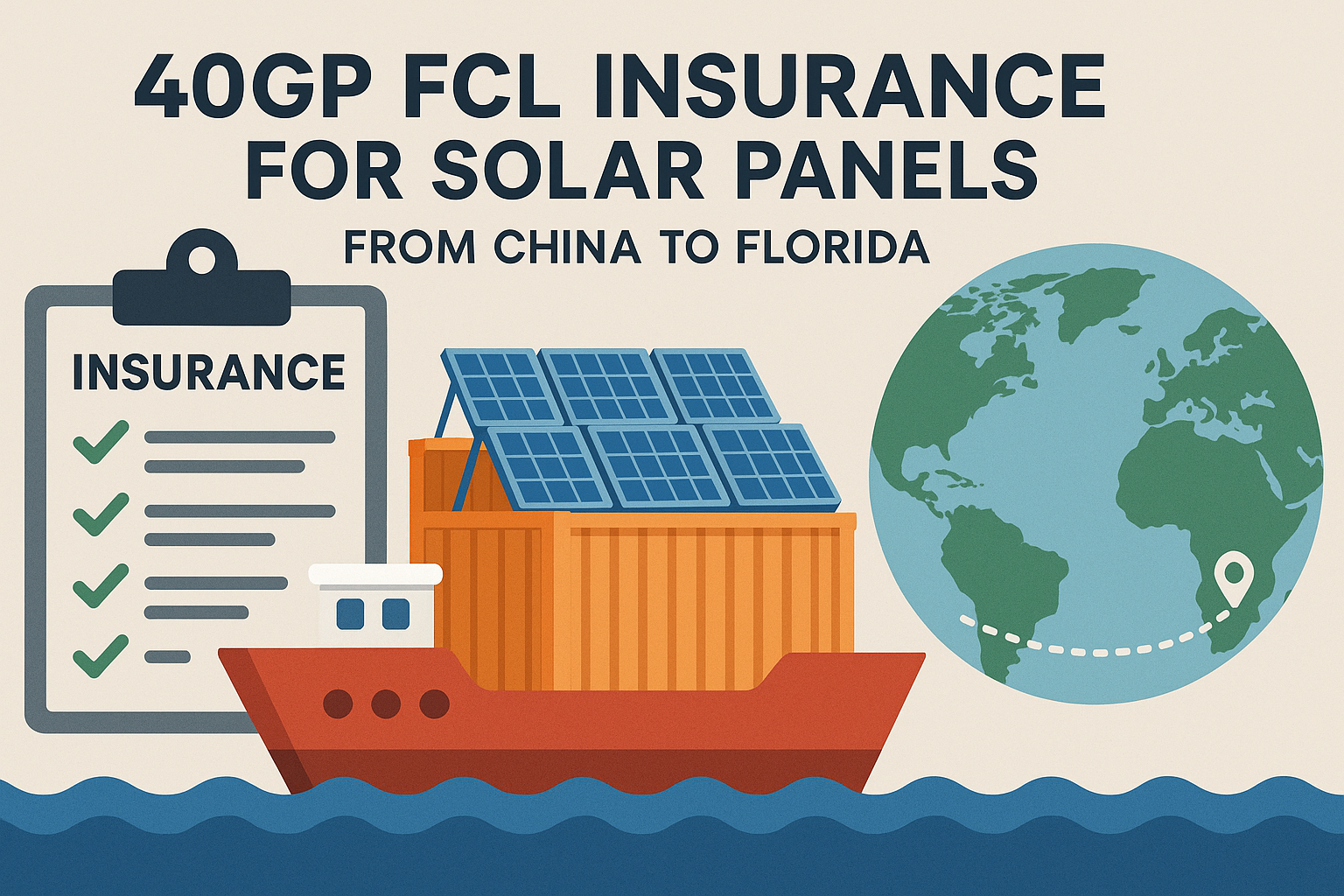
The demand for solar energy equipment has surged globally, but shipping fragile solar panels across oceans brings significant risk. Choosing 40GP FCL insurance for solar panels from China to Florida ensures full protection against loss, damage, or delay throughout the complex supply chain journey.

Why Is 40GP FCL the Ideal Option for Solar Panel Transport?
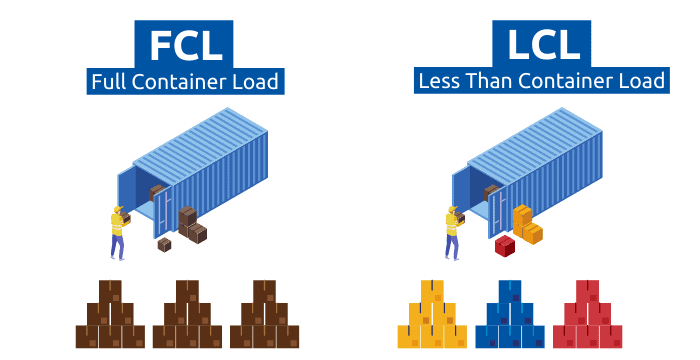
A 40GP (General Purpose) container provides ample space and structural strength to safely transport bulk solar panels. Unlike LCL, FCL eliminates shared-space risks.
| Comparison | FCL (40GP) | LCL |
|---|---|---|
| Capacity | 67.5 m³ | Shared |
| Risk Level | Low | High |
| Transit Stability | Excellent | Moderate |
| Cost Efficiency | Better for bulk | Higher per CBM |
| Insurance Cost | Lower per unit | Higher due to handling |
In addition, full container shipments reduce exposure to handling errors, ensuring solar panels arrive intact and ready for installation.
What Types of Insurance Are Available for FCL Shipments?
When shipping solar panels, choosing the right policy is essential. Most exporters use one of the following insurance types:
| Insurance Type | Coverage Description | Best For |
|---|---|---|
| All-Risk Policy | Covers all physical damage or loss | High-value solar panels |
| Free of Particular Average (FPA) | Covers major losses like sinking | Low-risk routes |
| Total Loss Only (TLO) | Covers complete loss | Low-cost cargo |
| War & Strike Clause | Adds political and labor protection | Global trade routes |
For fragile items like solar panels, an All-Risk policy is highly recommended. It safeguards your cargo against impact, theft, or moisture-related damages.
How Does the Insurance Process Work?
The FCL insurance process is simple but must be handled carefully.
- Cargo Evaluation: Determine value and risk type.
- Policy Selection: Choose an All-Risk or FPA plan.
- Premium Payment: Usually 0.3–0.5% of cargo value.
- Issuance: Receive an insurance certificate before sailing.
- Claim: In case of loss, submit documents within 3 days.
| Required Documents | Purpose |
|---|---|
| Bill of Lading | Confirms shipment |
| Commercial Invoice | Declares value |
| Packing List | Identifies goods |
| Insurance Policy | Proof of coverage |
| Survey Report | Supports claim |
Proper documentation ensures faster claim approval and payment.
What Are the Main Shipping Routes from China to Florida?
Solar panels exported from China typically move through major ports such as Shenzhen, Ningbo, and Shanghai, with Florida’s receiving ports being Miami, Jacksonville, and Port Everglades.
| Origin Port | Destination Port | Route | Transit Time | Frequency |
|---|---|---|---|---|
| Shenzhen | Miami | Trans-Pacific | 32–35 days | Weekly |
| Ningbo | Port Everglades | South China Sea–Panama Canal | 34–36 days | Weekly |
| Shanghai | Jacksonville | East China Sea–Panama Canal | 35–38 days | Weekly |
Therefore, understanding routes helps determine policy duration and coverage zone.
Real Case Studies: Safe Solar Panel Transport with FCL Insurance
🟦 Case 1: Shenzhen → Miami
- Cargo: 950 solar panels (26.8 tons)
- Mode: 40GP FCL, All-Risk coverage
- Cost: $3,200 freight + $260 insurance
- Duration: 34 days
- Result: Cargo delivered intact with zero claims
🟩 Case 2: Ningbo → Port Everglades
- Cargo: 1,100 solar panels for commercial project
- Mode: 40GP FCL with door-to-door insurance
- Cost: $3,400 freight + $300 insurance
- Duration: 36 days
- Result: Shipment delayed 2 days; insurance covered demurrage
What Risks Can Affect FCL Shipments of Solar Panels?
Even when using durable containers, solar panels are sensitive to multiple transport risks.
| Risk | Example | Preventive Measure |
|---|---|---|
| Handling Damage | Panel cracking during loading | Use corner guards and foam protection |
| Condensation | Moisture during voyage | Install desiccant packs and ventilated containers |
| Theft | Loss at transshipment ports | Use GPS-sealed containers |
| Delay | Port congestion or storms | Add delay coverage |
| Customs Hold | Random inspection delays | Use accurate documents |
Insurance helps mitigate financial exposure from these unpredictable incidents.
How to Reduce Costs While Keeping Full Protection
To balance cost and safety, shippers can:
- Bundle Freight + Insurance: Save up to 10% with freight-forwarder insurance packages.
- Negotiate Deductibles: A higher deductible reduces the premium.
- Annual Policy: Frequent exporters benefit from volume discounts.
- Route Planning: Shorter transits mean lower risk and cheaper coverage.
- Digital Tracking: Real-time monitoring reduces damage risks.
These measures ensure smart cost management without compromising protection.
Why Partner with a Professional Freight Forwarder?
A reliable logistics partner manages both insurance and shipment coordination, ensuring smooth customs clearance, correct documentation, and claim assistance.
Benefits include:
- Fast policy setup with major insurers (Ping An, Lloyd’s, PICC).
- Door-to-door service covering inland risks.
- Integrated digital tracking and reporting.
- Expert guidance in claim filing and risk management.
Partnering with a professional forwarder simplifies insurance procedures and guarantees a safe logistics experience.
Conclusion
In summary, securing 40GP FCL insurance for solar panels from China to Florida is a critical step in protecting valuable renewable energy assets. With comprehensive coverage, detailed documentation, and professional logistics support, exporters can prevent costly losses, reduce risk exposure, and ensure seamless delivery.
If you’re shipping solar panels, choose a trusted logistics provider offering all-risk FCL insurance for complete peace of mind from factory to port.
Request A Free Quote
Get started with TopChinaFreight today! 🚢✨ Simply Request a Free Quote 📝 to receive a customized shipping solution tailored to your needs. Our experts will provide the best rates 💰, fastest routes 🚀, and professional guidance 🌍 for your international logistics.
FAQs
Q1.What does 40GP FCL insurance cover for solar panels?
It covers partial or total damage, loss, or theft during transit between Chinese and Florida ports under All-Risk protection.
Q2.How long does FCL shipping from China to Florida take?
It usually takes 32–38 days depending on the origin port, vessel route, and customs processing conditions.
Q3.Is marine cargo insurance mandatory for solar panel exports?
Not required by law, but strongly advised since solar panels are high-value, delicate cargo vulnerable to sea risks.
Q4.What documents are needed to make an insurance claim?
You must provide the bill of lading, invoice, packing list, insurance policy, survey report, and a formal claim letter.
Q5.How much does 40GP FCL insurance cost?
Premiums typically range from 0.3%–0.5% of the declared cargo value, depending on coverage type and shipment duration.