
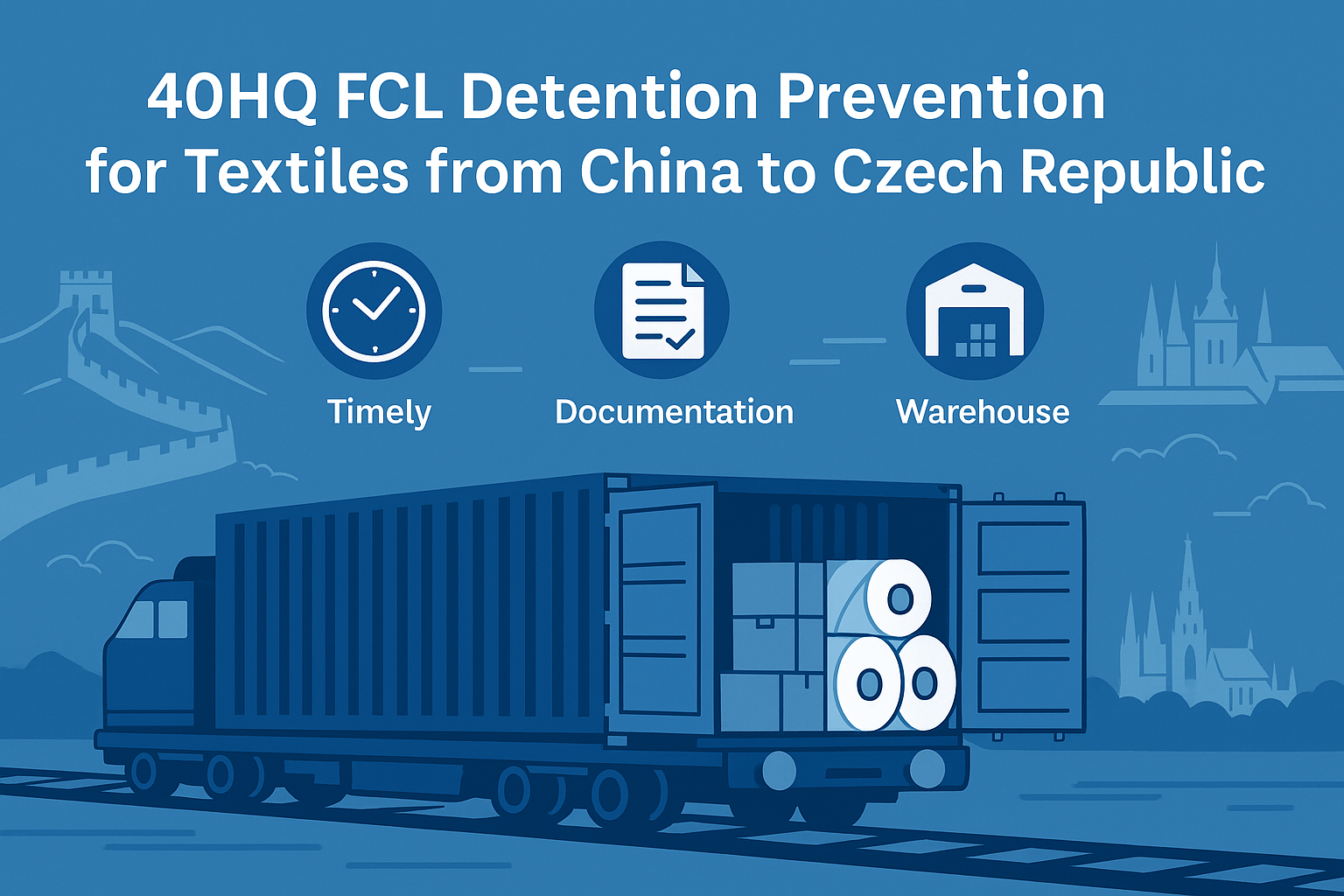
Because 40HQ FCL detention prevention for textiles from China to Czech Republic requires precise coordination across ports, rail hubs, and inland warehouses, many exporters struggle to keep containers moving efficiently; however, a structured operational plan can reduce delays dramatically. Moreover, businesses that rely on predictable textile supply chains can leverage expert guidance and planning tools offered through partners such as the Top China Freight homepage. Therefore, this guide breaks down the practical steps, documentation workflows, scheduling strategies, and handling techniques needed to avoid detention fees when shipping textiles to the Czech Republic.
What Causes Detention for Textile Containers Moving from China to the Czech Republic?
Although detention often appears as a simple timing issue, textile shipments face unique risks due to volume, package diversity, and frequent buyer-side warehouse congestion. Moreover, the China–Europe logistics corridor includes multiple handover points—port terminals, rail terminals, depots, and trucks—which increases operational sensitivity. Therefore, exporters should understand the main causes to prevent accumulating penalties.
Main Detention Triggers for Textile FCL Shipments
- Inaccurate or incomplete textile packing lists
- Late-release documentation from the exporter or buyer
- Rail congestion during China–EU peak seasons
- Warehouse receiving delays at Czech distribution centers
- Uncoordinated delivery scheduling or missing truck appointments
Additionally, multi-SKU textile cargo often requires extended unloading time, which further increases detention exposure.

How Accurate Documentation Helps Prevent 40HQ Detention for Textile Cargo
Because customs authorities and inland terminals rely on documentation for clearance and handling, even small discrepancies can slow down cargo movement. Moreover, textiles require detailed SKU-level data, especially when styles, colors, and packaging vary significantly. Therefore, maintaining document integrity reduces clearance friction.
Documentation Essentials for Textile FCL Loads
- Precise HS codes for different fabric types
- SKU-specific weight and dimension data
- Style and color breakdown aligned with packing list
- Invoice and packing alignment for each textile category
- Arrival notice accuracy for Czech importers
Furthermore, clear data reduces the likelihood of terminal disputes and accelerates pickup.
How to Plan Loading for a 40HQ Container of Textiles
Although textiles are lightweight, they create large volume variance. Moreover, inconsistent carton sizes can disrupt container geometry, causing wasted space or stability issues. Therefore, exporters should design packaging with loading efficiency in mind.
Loading Optimization Tips
- Standardize carton height for stable stacking
- Use stretch wrap to secure textile bundles
- Place heavier cartons along the base to avoid shifting
- Maintain clear labeling for fast unloading in Czech warehouses
- Balance weight to comply with China rail and EU road limits
Additionally, optimized loading reduces unloading time, which directly decreases detention risk.
Common Textile FCL Delays and Prevention Actions
| Delay Source | Impact | Prevention Method |
|---|---|---|
| Rail congestion | Late arrival | Book earlier departures; diversify routes |
| Warehouse backlog | Pickup delays | Schedule receiving windows in advance |
| Document errors | Customs hold | Align invoice/packing/B/L details |
| Packaging mismatch | Slow unloading | Standardize cartons; provide maps |
| Missed truck slots | Added fees | Confirm appointments 2–3 days ahead |
Because delays compound quickly across the China–EU route, exporters benefit from early, proactive planning.
How Rail Route Selection Impacts Detention Risk for Textile Cargo
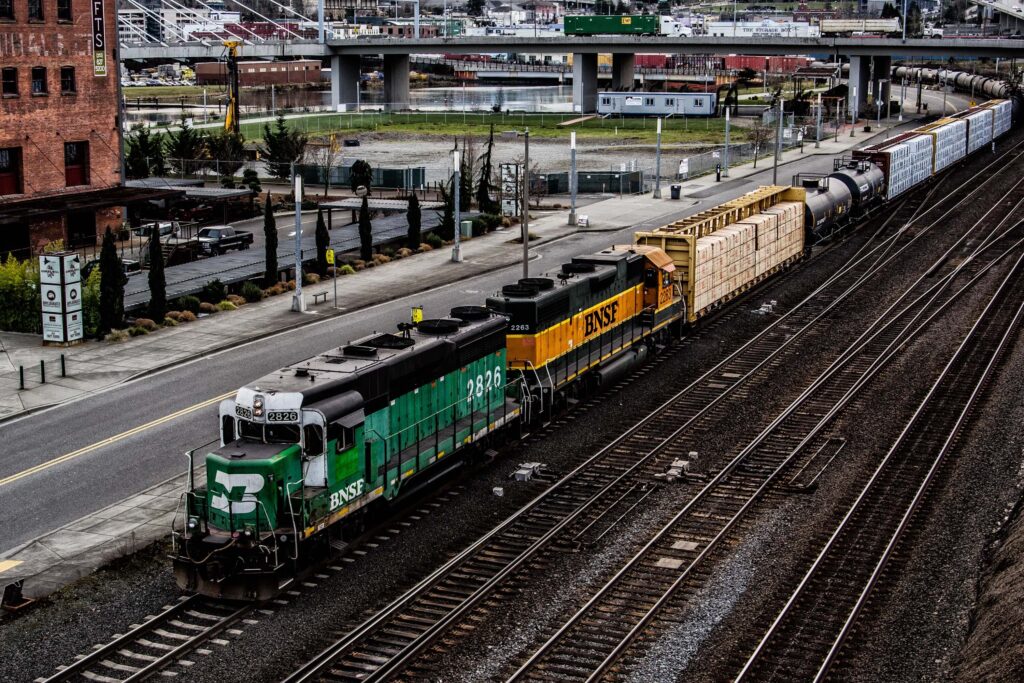
Although the China–Europe rail network is well-developed, each route experiences different congestion cycles. Moreover, textile exporters must factor in seasonal demand spikes in Poland, Germany, and Czech Republic. Therefore, choosing the most stable corridor reduces downstream delays.
Popular China–Czech Rail Options
- Chongqing → Duisburg → Czech Republic
- Xi’an → Malaszewicze → Prague
- Chengdu → Lodz → Brno/Prague
Additionally, exporters can reduce risks by booking early-week departures, which typically encounter fewer border delays.
Case Studies
Apparel Shipment to Prague Avoiding Detention
Origin: Guangzhou
Cargo: 40HQ of apparel (mixed SKUs)
Challenge: Warehouse backlog in Prague
Outcome: The importer pre-booked unloading labor and shared carton maps with the depot. Moreover, synchronized truck appointments reduced container stay time from 4 days to under 24 hours.
Apparel Shipment to Prague Avoiding Detention
Origin: Guangzhou
Cargo: 40HQ of apparel (mixed SKUs)
Challenge: Warehouse backlog in Prague
Outcome: The importer pre-booked unloading labor and shared carton maps with the depot. Moreover, synchronized truck appointments reduced container stay time from 4 days to under 24 hours.
How Top China Freight Helps Prevent 40HQ FCL Detention for Textile Shipments
Because textile supply chains require speed, consistency, and high document accuracy, Top China Freight provides structured solutions tailored for apparel and textile importers. Moreover, our teams coordinate multi-route options, document verification, unloading planning, and rail-truck synchronization. Additionally, companies shipping mixed textile loads may explore our integrated FCL/LCL services to manage SKU diversity and reduce congestion risks.
Key support includes:
- Early booking on stable China–EU rail corridors
- Pre-departure documentation checks
- Delivery-slot coordination in Czech depots
- Unloading workflow planning
- Real-time visibility tools
Because prevention is always cheaper than detention, expert planning protects supply chain budgets.
Recommended Scheduling Timeline for China–Czech Textile FCL Shipments
| Activity | Recommended Timing | Benefit |
|---|---|---|
| Finalize packing list | 2–3 days before CY cut-off | Avoids documentation delays |
| Submit shipping instructions | 48–72 hours before departure | Ensures B/L accuracy |
| Share ETA updates with buyer | Ongoing | Supports warehouse planning |
| Book Czech truck pickup | 24–48 hours before arrival | Secures slot availability |
| Confirm unloading labor | Before container arrival | Reduces depot dwell time |
Because timing influences every link in the supply chain, a standardized schedule dramatically lowers detention probability.
Conclusion
In conclusion, preventing 40HQ FCL detention for textiles from China to Czech Republic requires coordinated documentation, accurate packing, real-time visibility, and reliable rail–truck scheduling. Moreover, textile importers that adopt structured workflows and proactive planning consistently reduce idle time across terminals and depots. Therefore, exporters seeking to maintain on-time textile deliveries should invest in communication, preparation, and trusted logistics partnerships.
Request A Free Quote
Need a reliable logistics partner? Share your shipment details and we’ll provide a tailored quotation quickly and accurately.
FAQ:
What causes most detention for textile containers in the Czech Republic?
Late delivery scheduling, warehouse congestion, and packing list errors are the most common triggers.
How early should I book rail transport for textile FCL loads?
Ideally 1–2 weeks ahead, especially during Europe’s retail seasons.
Should I standardize carton sizes for textile cargo?
Yes. Standard cartons improve loading, speed up unloading, and reduce depot dwell time.
Why is Czech warehouse coordination important?
Because textile SKUs vary widely, warehouses need organized staging to unload quickly.
How do packing errors lead to detention?
Packing mistakes slow verification and may trigger customs checks.