
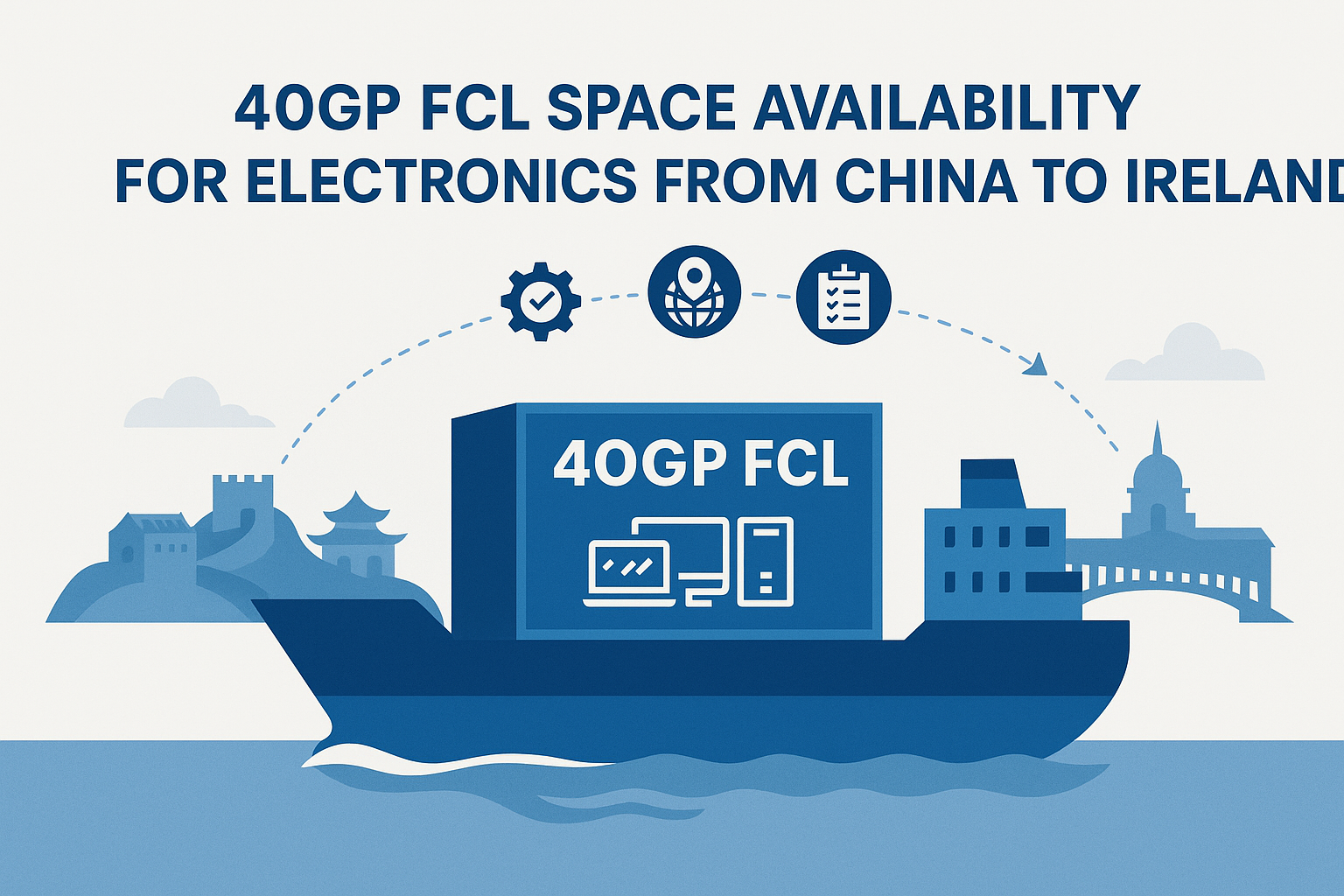
Because 40GP FCL space availability for electronics from China to Ireland continues to fluctuate with global demand, many exporters struggle to secure predictable capacity; however, practical planning and structured routing can dramatically improve success. Moreover, businesses wanting stability can coordinate early production, optimize booking windows, and work with reliable partners supported by tools such as the Top China Freight homepage. Therefore, this guide delivers actionable strategies to help electronics exporters secure consistent 40GP container space without unnecessary cost pressure.

Why 40GP FCL Space Availability Matters for Electronics Exporters
Electronics shipments—including household devices, smart appliances, consumer gadgets, and sensitive components—are volume-heavy and time-sensitive. Because Ireland’s market depends on extremely stable replenishment cycles for retail and distribution, container space shortages often disrupt inventory planning. Additionally, electronics are highly seasonal; therefore, sudden spikes in Europe’s retail demand influence 40GP FCL availability almost instantly.
Moreover, 40GP containers offer balanced cubic capacity and loading efficiency, making them the preferred choice for exporters needing predictable space, balanced freight rates, and optimal stability during ocean transport.
What Factors Reduce 40GP FCL Space Availability from China to Ireland?
Although overall China–Ireland trade flows remain strong, several operational variables cause space shortages. Furthermore, carriers frequently reassign equipment to higher-yield trade lanes, reducing 40GP availability along Northern Europe routes. As a result, exporters must understand the triggers behind capacity fluctuations to create a more resilient shipping schedule.
Key Limiting Factors
- Seasonal electronics demand surges in Q2–Q4
- Carrier equipment repositioning away from Ireland routes
- Congestion at Hamburg, Rotterdam, and Dublin feeder ports
- Documentation bottlenecks delaying space confirmation
- Over-length or overweight shipments limiting loading options
- Sudden freight rate changes affecting booking behavior
Because these challenges appear simultaneously, proactive capacity planning becomes essential.
How to Plan 40GP FCL Capacity for Electronics Exports Effectively
Although many exporters book containers only after production is complete, electronics freight requires earlier planning to protect capacity. Therefore, aligning procurement, assembly, packaging, and booking activities into a single timeline significantly improves booking reliability.
Practical Planning Actions
- Forecast weekly and monthly electronics volume.
- Confirm packaging dimensions to optimize 40GP loading.
- Compare China–Ireland route options for stability and cost balance.
- Reserve 40GP containers 2–3 weeks in advance during peak cycles.
- Validate customs information early to prevent filing delays.
- Use freight partners like Top China Freight to access stable routing and space management tools.
Additionally, clear communication with suppliers and Irish buyers keeps demand predictable and reduces booking pressure.
What Are the Most Reliable China–Ireland Shipping Routes for Electronics?
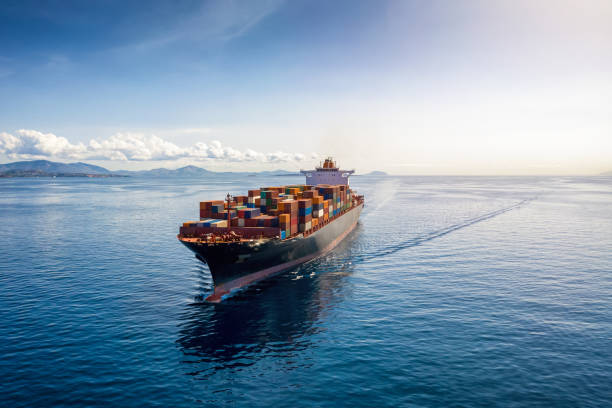
Although China–Ireland has no direct ocean route, feeder-linked European gateways provide consistent performance. Moreover, choosing stable transshipment ports helps electronics exporters avoid delays caused by port congestion or adverse weather.
Most Common Routing Patterns
- Shenzhen / Shanghai → Rotterdam → Dublin(Stable, predictable feeder schedule)
- Ningbo → Hamburg → Dublin(Reliable for high-volume electronics)
- Qingdao → Antwerp → Cork(Good option for Northern Ireland distribution)
Because transit times vary by carrier and season, monitoring schedules weekly ensures exporters maintain control over delivery windows.
Route Comparison: Transit Time & Indicative Cost Range
| China Origin → Ireland Entry Port | Transit Time (Days) | Indicative Cost Range (USD) | Notes |
|---|---|---|---|
| Shenzhen → Rotterdam → Dublin | 32–40 | 3,800–5,200 | Stable schedules |
| Ningbo → Hamburg → Dublin | 34–42 | 3,700–5,100 | Strong for electronics |
| Qingdao → Antwerp → Cork | 36–45 | 3,900–5,300 | Useful for mixed SKUs |
Case Studies
Electronics Shipment from Ningbo to Dublin
Origin: Ningbo
Destination: Dublin
Cargo: Mixed electronics (small appliances + smart devices)
Volume: 40GP, 67 cbm
Transit Time: 38 days
Outcome: By forecasting volume and securing space earlier, the exporter avoided Q3 shortages. Moreover, carton standardization improved loading density by 12%.
Large Appliances Shipment via Rotterdam Feeder
Origin: Shenzhen
Destination: Dublin via Rotterdam
Cargo: Large household appliances
Transit Time: 36 days
Outcome: Early booking ensured feeder availability, while improved customs accuracy prevented delays. Additionally, using structured routing reduced total cost per cbm.
How Ireland Customs Rules Influence FCL Space Planning
Although customs compliance does not directly affect vessel allocation, documentation quality affects booking acceptance, clearance speed, and storage costs. Therefore, exporters must prepare all materials thoroughly to avoid congestion penalties once containers land in Europe.
Customs Documentation Checklist
| Document | Purpose | Notes |
|---|---|---|
| Commercial Invoice | Confirms value and HS code | Must match packing list |
| Packing List | Confirms dimensions & weight | Essential for load planning |
| Certificate of Origin | Supports duty assessment | May reduce tariffs |
| CE Compliance Docs | Required for electronic goods | Prevents clearance delays |
| Bill of Lading | Transport contract | Ensure accurate consignee info |
How Delivery Scheduling Influences Space Availability
Because carrier space follows fixed weekly cut-offs, electronics exporters must coordinate factory readiness carefully. Therefore, aligning packaging, trucking, customs filing, and CY delivery prevents rollovers caused by timing gaps. Moreover, working backward from Irish retail delivery deadlines ensures that every upstream step remains synchronized.
To enhance coordination, exporters may leverage integrated delivery models such as door-to-door service or schedule optimization supported by cargo visibility tools.

Can Alternative Shipping Modes Support Electronics Exports?
Although 40GP FCL remains the primary mode, alternative solutions sometimes help when schedules tighten. For example, combining sea freight with short-haul air shipments can accelerate key components for urgent assembly needs in Ireland. Additionally, multimodal sea–rail combinations to the UK or mainland Europe occasionally shorten lead times when ports face delays.
Mode Comparison for Electronics Logistics
| Mode | Transit Time | Cost Level | Advantages | Limitations |
|---|---|---|---|---|
| 40GP FCL | 32–45 days | Medium | Economical, stable load size | Requires early booking |
| Sea–Rail | 28–35 days | Medium–High | Faster Europe entry | Limited Ireland feeders |
| Air Freight | 3–7 days | Very High | Fastest for urgent goods | High cost, low volume |
Because each mode serves a unique purpose, exporters should match logistics options to SKU value, launch cycles, and inventory deadlines.
Conclusion
To summarize, securing 40GP FCL space availability for electronics from China to Ireland requires early forecasting, packaging discipline, technology-based planning, and stable routing choices. Moreover, synchronized delivery scheduling and transparent communication help exporters maintain predictable capacity despite market volatility. Therefore, companies aiming for long-term reliability should integrate structured booking workflows and trusted logistics partners into their supply-chain strategy.
Request A Free Quote
Start shipping smarter with TopChinaForwarder today! 🚢✨ Request a Free Quote 📝 and get a tailored logistics plan built around your cargo and timeline.
FAQ:
How early should I book 40GP FCL space for electronics?
Booking 2–3 weeks early prevents shortages, especially during Q2–Q4 electronics demand spikes.
What causes most booking rejections for electronics shipments?
Incorrect dimensions, weight inaccuracies, or late documentation filing usually block approvals.
Which China ports offer the best 40GP availability for electronics?
Shenzhen, Ningbo, and Shanghai maintain stable equipment levels and reliable Europe-bound slots.
How does packaging affect container acceptance?
Uniform carton sizing, balanced weight, and reinforced pallets improve booking success.
Can 40GP FCL help reduce per-unit shipping cost?
Yes. For medium to large volumes, 40GP yields better cbm efficiency than 20GP or 40HQ.